
Official statement
What you need to understand
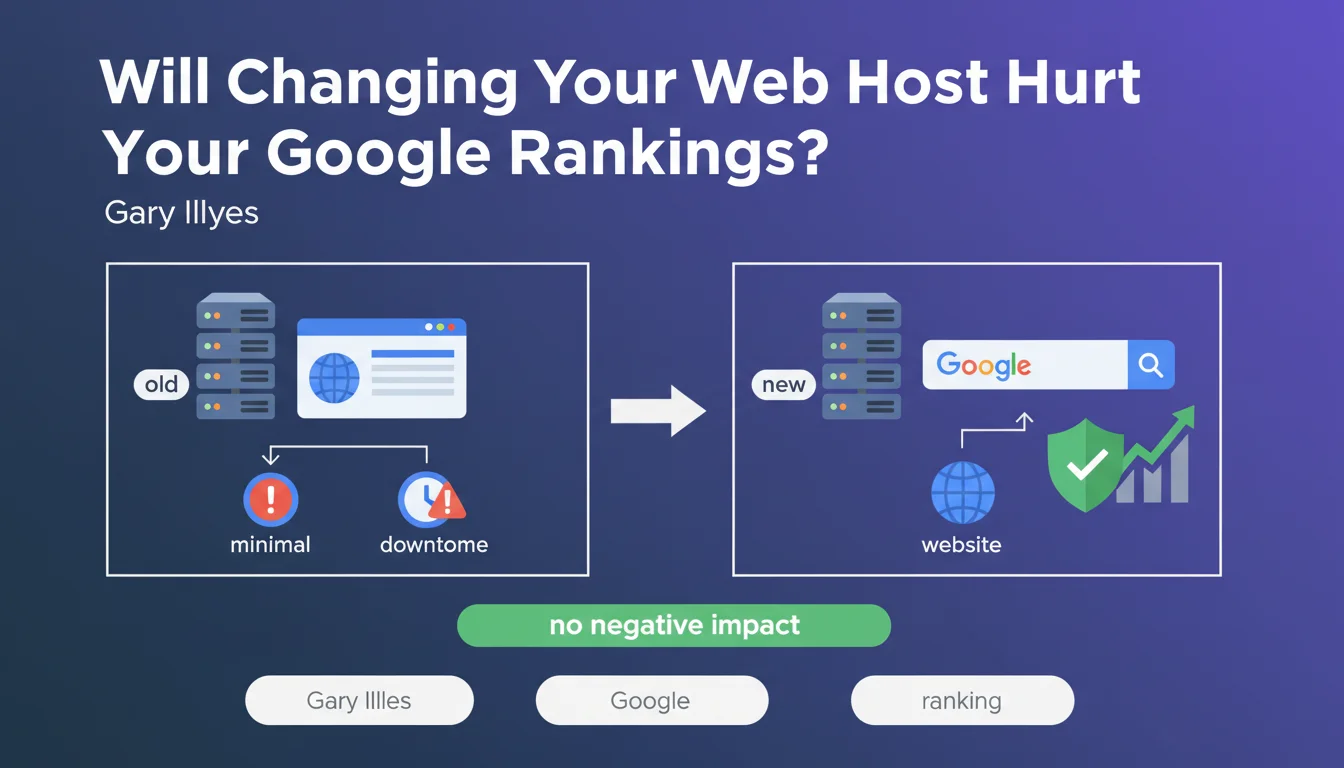
This official statement clarifies a recurring concern among SEO professionals: hosting migration does not in itself constitute a ranking demotion factor in Google. Contrary to certain beliefs, simply changing server infrastructure does not trigger an algorithmic penalty.
The crucial element emphasized concerns service continuity. Google does not penalize the change itself, but it can be affected by the technical consequences of a poorly executed migration: prolonged downtime, repeated server errors, or performance degradation. It's the quality of execution that determines SEO impact, not the decision to migrate.
Essential points to remember:
- Changing hosting providers is not a negative ranking signal for Google
- Brief and occasional service interruptions are tolerated by the algorithm
- Only prolonged or recurring unavailability can affect crawling and indexing
- The new host's performance can indirectly influence SEO (loading speed, Core Web Vitals)
- Service continuity remains the determining criterion for preserving your rankings
SEO Expert opinion
This position is perfectly consistent with field observations from recent years. Numerous well-planned hosting migrations proceed without visible impact on rankings, confirming that Google has tolerance mechanisms for temporary interruptions. The algorithm understands that websites sometimes require technical maintenance and does not apply automatic penalties for occasional interruptions.
However, several important nuances deserve to be mentioned. If the hosting change is accompanied by an IP address modification, a major geographic relocation of the server, or a significant degradation in response times, indirect impacts may occur. Similarly, a poor-quality host with frequent downtime will eventually compromise crawl budget and indexing freshness.
Practical impact and recommendations
- Schedule the migration outside peak traffic periods – Choose a maintenance window during low traffic to minimize user and crawler impact
- Reduce DNS TTL 48-72 hours before migration – Allows faster propagation during the change
- Fully prepare the target environment – Test all elements (redirects, SSL certificate, speed) before switching DNS
- Monitor Google Search Console intensively – Watch for crawl errors, indexing issues, and Core Web Vitals for 2-3 weeks post-migration
- Verify that performance is maintained or improved – Compare server response times (TTFB), Core Web Vitals, and crawl logs
- Keep server logs from the old host – Analyze Googlebot behavior before/after to detect any anomalies
- Implement robust uptime monitoring – Configure alerts to be notified immediately of any interruption
- Absolutely avoid interruptions exceeding a few hours – Plan a backup with the possibility of quick rollback
- Don't change other technical parameters simultaneously – No redesign, HTTPS migration, or URL restructuring at the same time
- Document the migration in Search Console – Use the change of address tool if applicable (domain change)
💬 Comments (0)
Be the first to comment.