
Official statement
What you need to understand
What exactly are Black Hat practices in SEO?
Black Hat practices refer to all SEO techniques that violate Google's guidelines. In link building, this includes massive link buying, private blog networks (PBNs), comment spam, or excessive link exchanges.
These methods aim to manipulate algorithms to achieve quick results, but they expose sites to severe penalties. Google is getting better and better at detecting them through its algorithms and can demote or completely deindex a site.
Why do some people continue using these techniques despite the risks?
The main reason is simple: these techniques can work temporarily and generate quick gains. In certain highly competitive sectors, the temptation is strong to obtain an immediate competitive advantage.
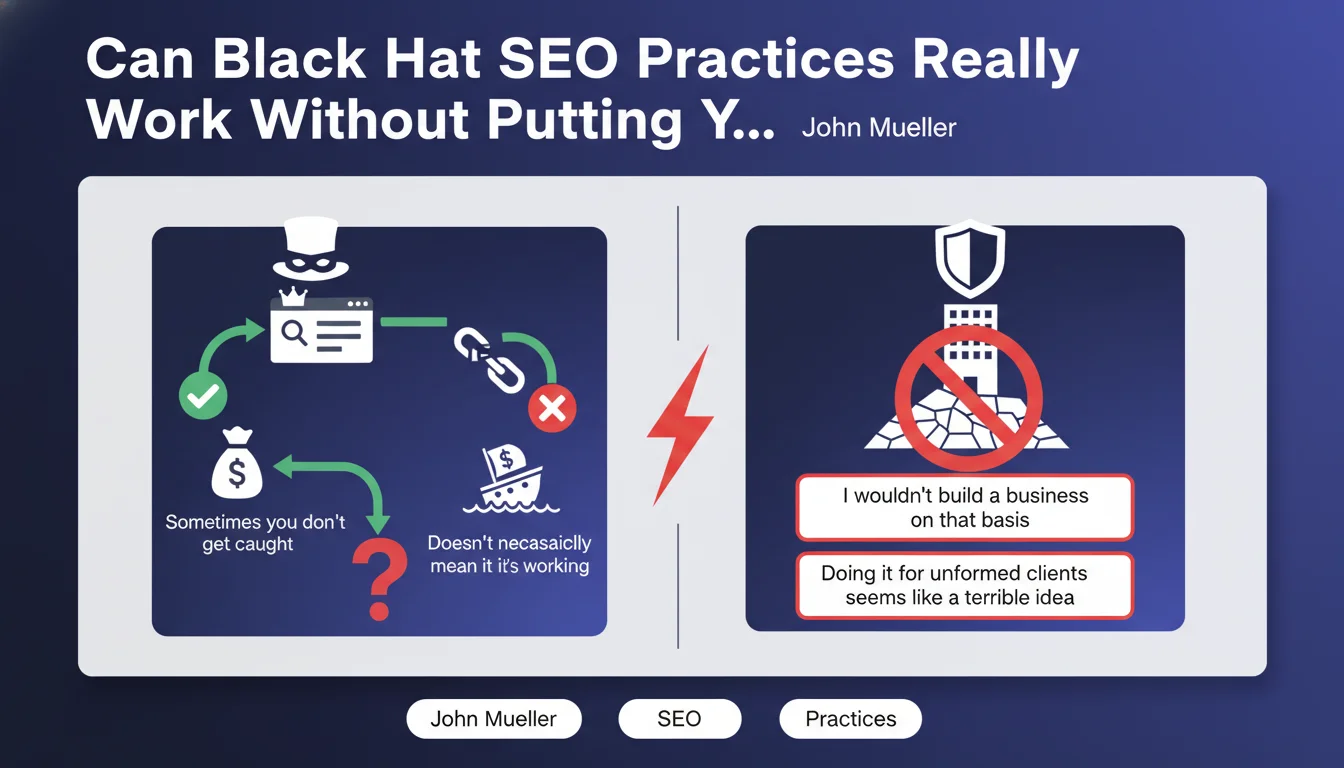
However, not being penalized doesn't mean the strategy works sustainably. Google can take months, even years, before detecting certain manipulations, creating a false sense of security.
What is Google's official position on these practices?
Google maintains an uncompromising and consistent position: manipulative practices are prohibited and risky. The message is clear for SEO professionals acting on behalf of clients.
Ethical responsibility is engaged when exposing uninformed clients to these risks without fully informing them of the potential consequences.
- Black Hat practices violate Google's guidelines and expose sites to sanctions
- A site can function temporarily with these techniques before being detected
- The absence of immediate penalty doesn't guarantee long-term effectiveness
- The SEO consultant's responsibility is engaged toward their clients
- Google is constantly improving its detection of manipulations
SEO Expert opinion
Is this statement consistent with what we observe in the field?
Absolutely. After 15 years of practice, I can confirm that the typical Black Hat cycle always follows the same pattern: rapid gains, deceptive stability period, then brutal collapse. Sites that survive long-term are the exception, not the rule.
Google's algorithms, particularly the Penguin and Spam Update releases, have become extremely sophisticated. What went unnoticed 5 years ago is now detected within weeks. The grace period is constantly shrinking.
Are there situations where the risk might be justified?
From a purely pragmatic perspective, certain specific business models can tolerate this risk: sites with limited lifespan, test projects, very ephemeral niches. But even in these cases, the ethical question remains.
For a sustainable business seeking to build a lasting brand and authority, the risk is never justifiable. The cost of a Google penalty (loss of traffic, revenue, reputation) far exceeds temporary gains.
What nuance should we add to Google's official discourse?
The boundary between White Hat and Grey Hat sometimes remains blurred. Certain techniques like guest posting or strategic link building can be viewed differently depending on their implementation. Google itself isn't always precise about these gray areas.
However, the guiding principle remains valid: if your strategy relies primarily on manipulation rather than creating real value, you're in a dangerous zone, regardless of the terminology used.
Practical impact and recommendations
How can you assess whether your current strategy involves risks?
Start with a complete audit of your link profile. Examine the origin, quality, and diversity of your backlinks. Obvious warning signs include sudden link spikes, over-optimized anchors, or links from thematically unrelated sites.
Use tools like Google Search Console, Ahrefs, or Majestic to analyze your profile. If more than 30% of your links come from questionable sources, you're in the danger zone.
What concrete actions should you take to secure your SEO?
The first step is to immediately stop any questionable practices in progress. Don't tell yourself "just a few more months": each additional day increases the risk and magnitude of a future penalty.
Next, clean up your existing link profile. Use Google's disavow file for toxic links you can't manually remove. This process can take several months but is essential.
Finally, pivot toward a sustainable White Hat strategy: quality content creation, digital press relations, authentic partnerships, solid technical optimizations. This approach takes more time but builds a lasting asset.
How do you build a compliant and effective link building strategy?
Prioritize absolute quality over quantity. A single link from a recognized media outlet in your sector is worth more than 100 links from questionable directories. Focus your efforts on authentic relationships with players in your ecosystem.
Develop a content marketing strategy that naturally attracts links: original studies, infographics, free tools, comprehensive guides. Linkbaiting remains the safest and most effective method in the long term.
- Audit your link profile with Google Search Console and professional third-party tools
- Identify and document all suspicious or artificial links in your backlink profile
- Immediately cease any link buying or spam campaigns
- Create a disavow file for toxic links impossible to remove
- Implement an editorial calendar focused on high-value content
- Develop authentic partnerships with legitimate players in your sector
- Train your teams in SEO best practices compliant with guidelines
- Regularly monitor your link profile to detect any suspicious additions
- Document your strategy to justify your actions to Google if necessary
💬 Comments (0)
Be the first to comment.