
Official statement
What you need to understand
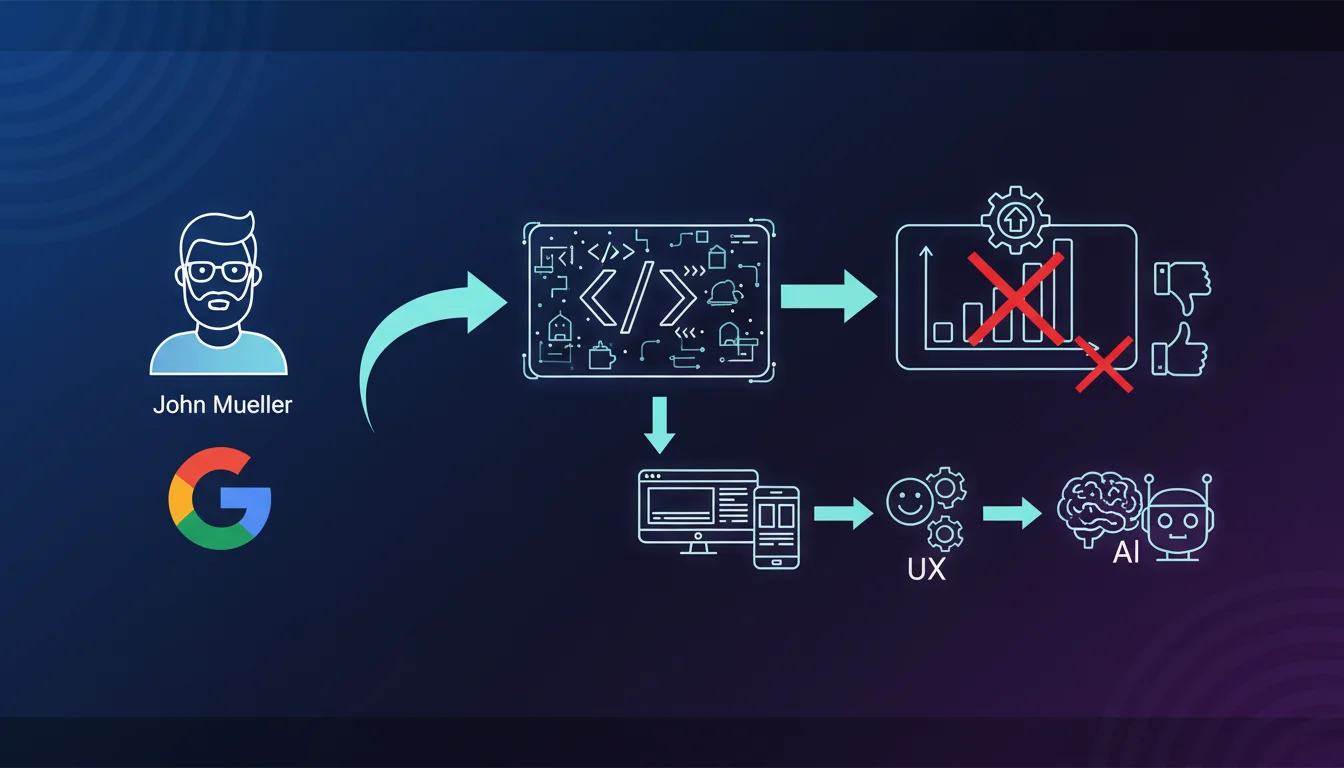
Google has just reaffirmed a clear position: implementing structured data (Schema.org, JSON-LD, etc.) has no direct impact on positioning in organic search results. This statement from John Mueller serves as an important technical reminder for SEO practitioners.
Structured data primarily serves to enable rich display features in SERPs: review stars, product prices, recipes, FAQs, events, breadcrumbs, etc. These visual enhancements do not modify the ranking algorithm itself.
A reassuring point: poor implementation does not result in a penalty on positioning. Google simply deactivates the affected rich snippets if the tags are incorrect or misleading. The site maintains its organic ranking.
- Structured data does not directly influence positions in search results
- Their primary role is activating enriched visual features (rich snippets)
- Incorrect implementation removes enhancements but does not penalize rankings
- These tags remain important for improving visibility and click-through rate in SERPs
SEO Expert opinion
This statement is consistent with what we've been observing in the field for several years. Indeed, adding Schema.org to a page doesn't magically propel it to first position. Rankings remain determined by traditional factors: content, backlinks, expertise, user experience.
However, an important nuance regarding indirect impact must be made. A site that displays stars, prices, or FAQs directly in results generally achieves a better click-through rate (CTR). Now, a high CTR can send positive signals to Google about a page's relevance, thus creating a virtuous circle for positioning.
Furthermore, certain features like the Knowledge Graph or carousels absolutely require structured data to be eligible. In these specific cases, their absence excludes you from certain premium visibility opportunities.
Practical impact and recommendations
- Maintain your structured data implementations on all eligible content (products, articles, events, FAQs, recipes, etc.)
- Prioritize Schema.org types that generate visible and attractive rich snippets in your sector
- Test your tags regularly with the Google Rich Results Test tool to detect errors
- Don't spam with misleading data: follow the guidelines to avoid removal of enhancements
- Leverage structured data as a CTR driver, not as a direct ranking factor
- Focus your main SEO efforts on content, authority, and user experience to genuinely improve your positions
- Monitor new Schema.org types eligible for rich snippets to remain visually competitive
- Document your implementations to facilitate maintenance and future evolutions
Optimizing structured data, while not directly impacting rankings, requires sharp technical expertise and constant monitoring of Google guidelines evolutions. Between choosing the right Schema types, their correct implementation, validation testing, and performance tracking in Search Console, the process can quickly become time-consuming. For sites with high commercial stakes, working with a specialized SEO agency ensures professional implementation and optimizes the return on investment of these enhancements, while freeing up time to focus on other strategic visibility levers.
💬 Comments (0)
Be the first to comment.