
Official statement
What you need to understand
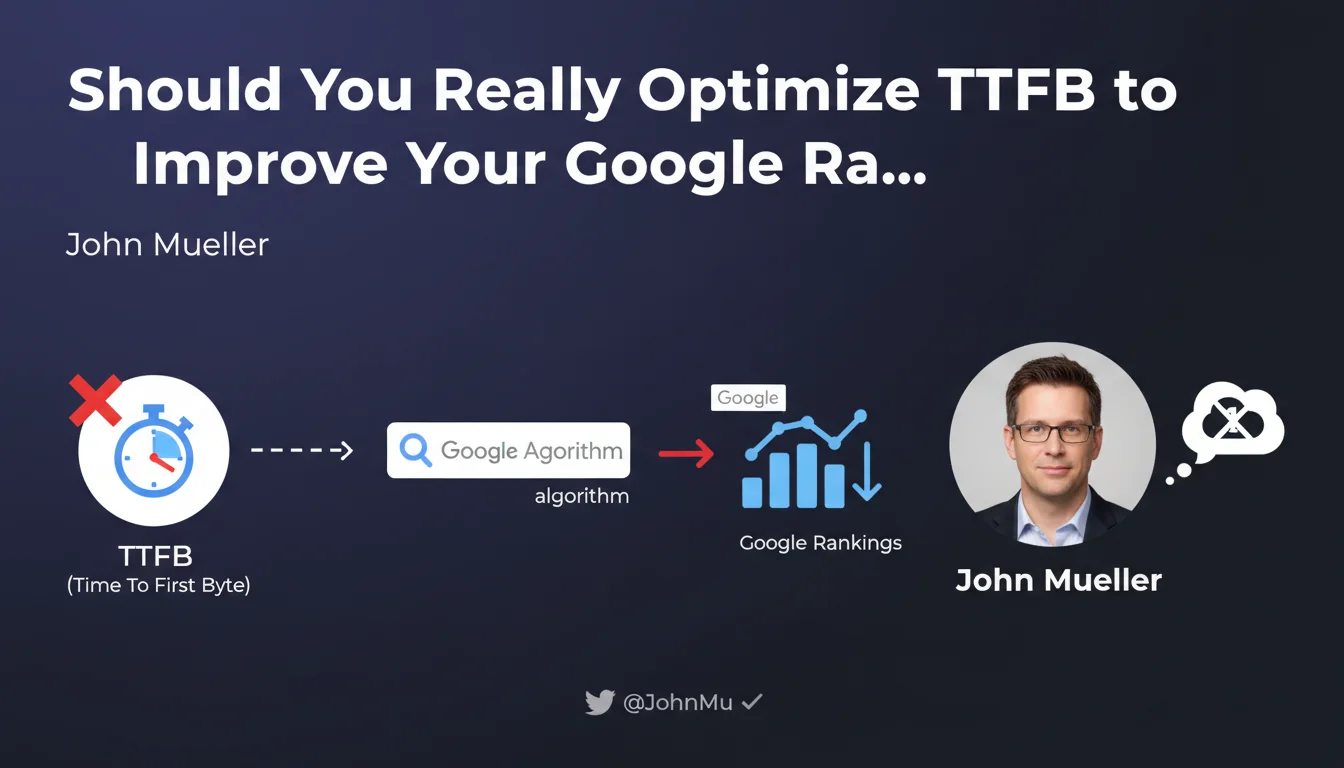
TTFB (Time To First Byte) measures the delay between a browser's request and the receipt of the first byte of data from the server. For years, this criterion has been considered an important SEO factor by many professionals.
Google clarifies its position: TTFB is not used as a ranking signal in its algorithm. This technical metric plays no direct role in evaluating the relevance of a page for a given query.
This statement challenges a widespread belief in the SEO industry. It illustrates the gap that sometimes exists between persistent SEO myths and the technical reality of Google's algorithm.
- TTFB is not a direct ranking factor
- Google prioritizes other metrics to evaluate performance
- TTFB remains relevant for overall user experience
- This metric remains a good indicator of a site's technical health
SEO Expert opinion
This statement is consistent with Google's evolution toward metrics focused on real user experience. Rather than measuring server responsiveness, Google prefers to evaluate what users actually perceive.
Core Web Vitals (LCP, FID, CLS) have specifically replaced old technical metrics like TTFB. These indicators measure the lived experience: main content display speed, responsiveness to interactions, visual stability.
However, an important nuance: a very slow TTFB can indirectly impact SEO. If your server takes 5 seconds to respond, the LCP (Largest Contentful Paint) will necessarily be degraded, and it's the latter that will affect your rankings.
Practical impact and recommendations
In summary: Don't completely neglect TTFB, but place it in the correct hierarchy of priorities. Focus your optimization efforts on the metrics that truly matter to Google and your users.
- Prioritize Core Web Vitals optimization (LCP, FID, CLS) rather than TTFB in isolation
- Maintain a reasonable TTFB (under 600ms) without obsessing over it, as it indirectly influences the real metrics
- Use TTFB as a health indicator for your hosting infrastructure and server
- Fix extreme TTFB (over 2 seconds) that penalizes user experience and crawling
- Invest in high-performance hosting and infrastructure adapted to your traffic
- Optimize your database and server-side code to improve overall response times
- Regularly measure your performance with PageSpeed Insights and Search Console to track metrics that truly impact SEO
- Don't justify an optimization budget solely based on TTFB to your clients or management
Technical optimization of a website requires a comprehensive approach and sharp expertise to identify the true performance levers. These trade-offs between different technical metrics can prove complex and require a fine understanding of Google's algorithmic priorities. For a truly effective optimization strategy customized to your specific context, guidance from a specialized SEO agency can help you concentrate your resources on optimizations with real high impact.
💬 Comments (0)
Be the first to comment.