
Official statement
What you need to understand
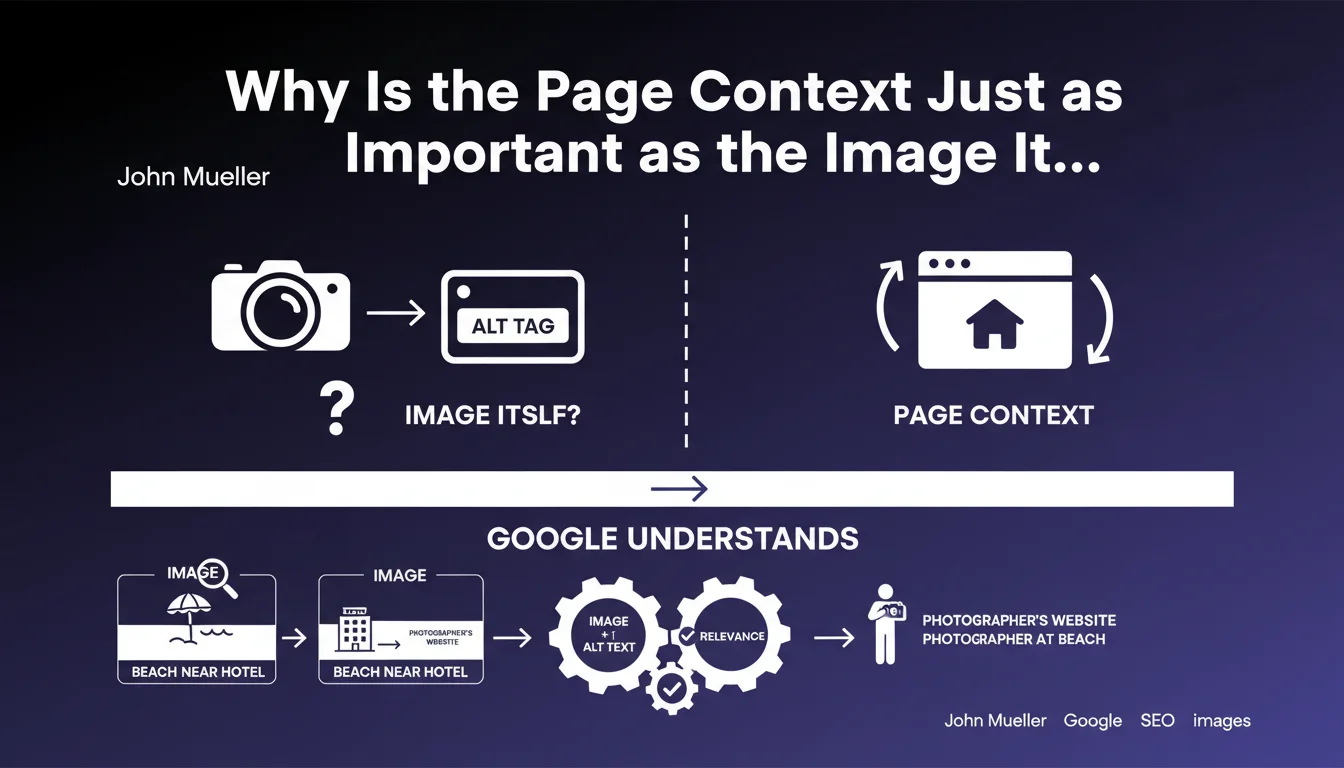
Google doesn't simply analyze an image in isolation. The search engine evaluates the image within its overall semantic environment, meaning the content of the page that hosts it.
This contextual approach allows Google to disambiguate the meaning and intent behind each image. The same beach photo can have completely different meanings depending on whether it appears on a hotel website, a photographer's portfolio, or a travel blog.
The algorithm therefore combines multiple signals: the image's alt tag, the surrounding text content, the page's general theme, and the domain's authority on a given topic. This holistic approach ensures that image search results better match user intent.
- The page context is just as determining as the image itself for ranking in Google Images
- The semantic environment helps Google understand the image's relevance for a specific query
- The same image can be interpreted differently depending on the editorial context surrounding it
- Thematic consistency between the image, its description, and the page content is paramount
SEO Expert opinion
This statement confirms a reality that SEO practitioners have been observing for years: Google Images operates in a much more sophisticated way than simple keyword matching in alt attributes. The algorithm leverages natural language processing capabilities to create a semantic graph around each image.
In practice, we indeed observe that images hosted on pages with strong thematic authority rank better than similar images on less relevant pages. A crucial point often overlooked: the text immediately surrounding the image (paragraphs before/after, caption) carries particularly significant weight.
It's also important to note that this contextual approach fits within Google's broader strategy of evaluating quality and relevance at the entire page level, not just at the level of isolated elements. This is consistent with the search engine's overall evolution toward deep semantic understanding.
Practical impact and recommendations
Following this statement, here are the concrete actions to implement to optimize your image SEO:
- Audit semantic consistency: verify that each image is placed on a page whose text content is in perfect alignment with what the image represents
- Enrich contextual content: develop detailed paragraphs around your important images, using rich vocabulary and semantically related terms
- Optimize captions: add descriptive captions (
figcaptiontag) that reinforce the contextual understanding of the image - Refine structured markup: use Schema.org (ImageObject) to provide additional contextual metadata
- Avoid catch-all pages: don't place images of different themes on the same page, as this dilutes contextual relevance
- Create dedicated pages for your strategic images: a page specifically optimized around a given theme will give more weight to the images it contains
- Analyze internal linking: links pointing to the page hosting the image also contribute to establishing the thematic context
- Verify textual proximity: place relevant keywords within the 100-200 words directly surrounding the image
In summary: Optimization for Google Images is no longer limited to the technical attributes of the image. It requires a comprehensive editorial strategy where each image is integrated into a coherent and enriched semantic environment.
This approach demands a thorough analysis of content architecture and a potential redesign of how images are distributed across your site. Given the complexity of these cross-optimizations between textual content, semantic structuring, and image processing, working with a specialized SEO agency can prove valuable for establishing a personalized strategy and achieving sustainable results in Google Images.
💬 Comments (0)
Be the first to comment.