
Official statement
Other statements from this video 14 ▾
- □ Why do your Core Web Vitals optimizations take 28 days to show up in Search Console?
- □ Does AMP really ensure good Core Web Vitals?
- □ Does referral traffic really affect Google rankings?
- □ Why do your Lighthouse scores never reflect your users' reality?
- □ How does the geolocation of your visitors affect your Core Web Vitals?
- □ How can a small site truly compete with the giants of SEO?
- □ Does the product review update only apply to specialized review sites?
- □ Do poor comments really drag down the ranking of the entire page?
- □ Should you really create separate XML sitemaps by country for multilingual content?
- □ Should you really worry if the homepage doesn't appear at the top for a site: query?
- □ Does Google really calculate an EAT score for your website?
- □ Does the noindex tag really block the crawling of your pages?
- □ Does robots.txt really prevent the indexing of your pages?
- □ Do Core Web Vitals really only serve to separate tie results?
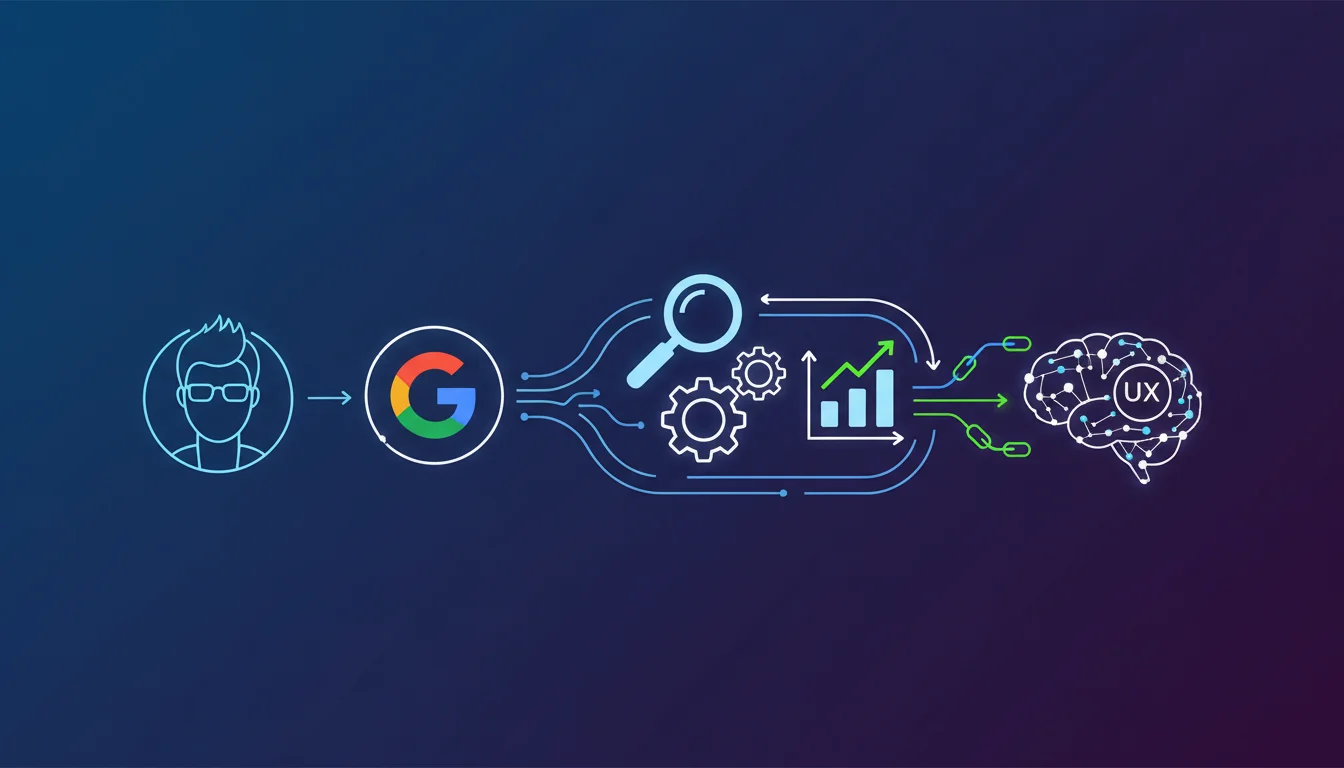
Google has confirmed that the Page Experience update will not function in real-time at launch. The engine will need to accumulate 28 days of CrUX data before adjusting signals — an inescapable timeline. Specifically, if you optimize your Core Web Vitals today, expect a one-month latency before Google considers it in rankings. No instant miracles.
What you need to understand
Why is there an inescapable 28-day delay?
The Chrome User Experience Report (CrUX) collects real-world data on the actual performance of websites. Google relies on these metrics to evaluate user experience — not on synthetic lab tests. CrUX aggregates data over sliding 28-day windows. This is a technical constraint, not an arbitrary choice. The engine needs a sufficient volume of observations to neutralize momentary variations — a traffic spike, a slow page on a Tuesday night, a temporary bug. Without this smoothing, the signals would be too volatile to be actionable in ranking. Traditional algorithm updates (Panda, Penguin in their recent versions) run continuously in the core algorithm. You fix a thin content issue, and you can see an impact as soon as the next recrawl happens. No need to wait for an update window. Page Experience, on the other hand, relies on a data source external to the index — CrUX. Google does not control the refresh frequency: the data comes in with a 28-day delay. Therefore, the update cannot be faster than its source. This is a structural limit, not an editorial decision. To be precise: the 28-day delay concerns Core Web Vitals (LCP, FID, CLS), which represent the majority of the weight of Page Experience. Other signals — HTTPS, mobile-friendliness, absence of intrusive interstitials — are evaluated in near real-time during crawl. In other words, if you switch your site to HTTPS today, Google can quickly include it in its evaluation. But if you optimize your LCP, wait 28 days for the new CrUX data to influence the ranking. The desynchronization between signals can create side effects in correlation analyses.How does this differ from other updates?
Does this latency apply to all Page Experience signals?
SEO Expert opinion
Does this statement align with what we observe in the field?
Yes, absolutely. Tests conducted on sites that drastically improved their Core Web Vitals consistently show a 4 to 6-week delay before any visible impact in the SERPs. This is not coincidental — it is exactly the time needed for CrUX to accumulate 28 days of new data, and then for Google to integrate that in its next update cycle. Mueller's transparency on this point is welcome. Too many SEOs expected an immediate effect post-optimization, much like what can happen after correcting an indexing issue or duplicate content. Here, the very nature of the data source imposes inertia — and it's important to know this to avoid drawing hasty conclusions regarding the effectiveness of optimizations. This is where it gets tricky. If you optimize your Core Web Vitals on May 1, launch a content overhaul on May 15, and gain 10 positions on June 5, how do you attribute that gain? The CrUX data from May 1 to 28 will only be integrated at the end of May / beginning of June. It is impossible to neatly untangle the effects. Practically, this means you must isolate Page Experience optimizations over time if you want to measure their actual impact. Launching a link building campaign, a semantic overhaul, and a CWV optimization simultaneously prohibits any reliable causal analysis. [To be verified]: Google has never publicly communicated the exact weight of Page Experience in ranking — so even with controlled timing, quantifying its pure contribution is challenging. No. The CrUX delay is inescapable for all sites, regardless of size or authority. Even a site crawled daily by Googlebot will have to wait for CrUX to refresh its data — crawling and Page Experience evaluation are two distinct processes. However, be cautious: some sites may not have sufficient CrUX data (too low traffic, ineligible pages). In this case, Google is likely using origin-level data or alternative heuristics. But Mueller does not specify how these particular cases are handled — or whether the delay remains the same. [To be verified] for low-traffic sites.What are the implications for attributing performance gains?
Are there cases where this rule does not apply?
Practical impact and recommendations
What should you do practically if you are launching CWV optimizations?
First, incorporate the minimum 28-day delay into your roadmaps and client reporting. If a client asks for results in two weeks, that’s physically impossible with Page Experience. Explain the CrUX constraint from the beginning — it avoids misunderstandings and unrealistic promises. Then, isolate your projects. If you are optimizing Core Web Vitals, avoid launching heavy actions on content, linking, or the site structure in parallel. You want to be able to accurately attribute gains (or the absence of gains) to your performance optimizations. A clean A/B test requires only one variable modified at a time — and in this case, the variable already has an integrated 28-day latency. Use the Core Web Vitals report in Search Console as your sole reference. It is the only source that accurately reflects the CrUX data that Google uses for ranking. PageSpeed Insights, Lighthouse, WebPageTest — all these tools are useful for diagnosing, but they do not guarantee that Google will see the same thing 28 days later. Monitor monthly progress, not daily. Checking your metrics every day makes no sense with a source that refreshes every month. Set up a monthly follow-up appointment — for instance, the first week of the month — to compare the new CrUX data with the previous month. Document each optimization with its production date: this allows you to trace back 28 days when you observe a change in CrUX. Do not panic if you do not see any movement in the first 15 days. This is normal. Do not over-optimize either: stacking CWV optimizations weekly creates a layered effect where you no longer know what worked. Wait for CrUX to validate one project before launching the next. Also, avoid confusing correlation with causation. If your rankings rise three weeks after an LCP optimization, it might be due to a hundred other factors — seasonality, competitive actions, unannounced core updates. The only certainty: if CrUX does not yet reflect your optimizations, Page Experience cannot be the cause. Wait for the 28 to 45-day window post-optimization to draw conclusions.How can you track progress without drowning in metrics?
What mistakes should you avoid during the latency period?
❓ Frequently Asked Questions
Combien de temps faut-il attendre après une optimisation CWV pour voir un impact dans Google ?
Les données PageSpeed Insights sont-elles en temps réel ?
Si mon site n'a pas de données CrUX, suis-je pénalisé pour Page Experience ?
Peut-on accélérer la prise en compte des optimisations CWV par Google ?
Les autres signaux Page Experience (HTTPS, mobile-friendly) sont-ils aussi soumis à ce délai ?
🎥 From the same video 14
Other SEO insights extracted from this same Google Search Central video · published on 09/04/2021
🎥 Watch the full video on YouTube →
💬 Comments (0)
Be the first to comment.