
Official statement
What you need to understand
What practice is Google denouncing here?
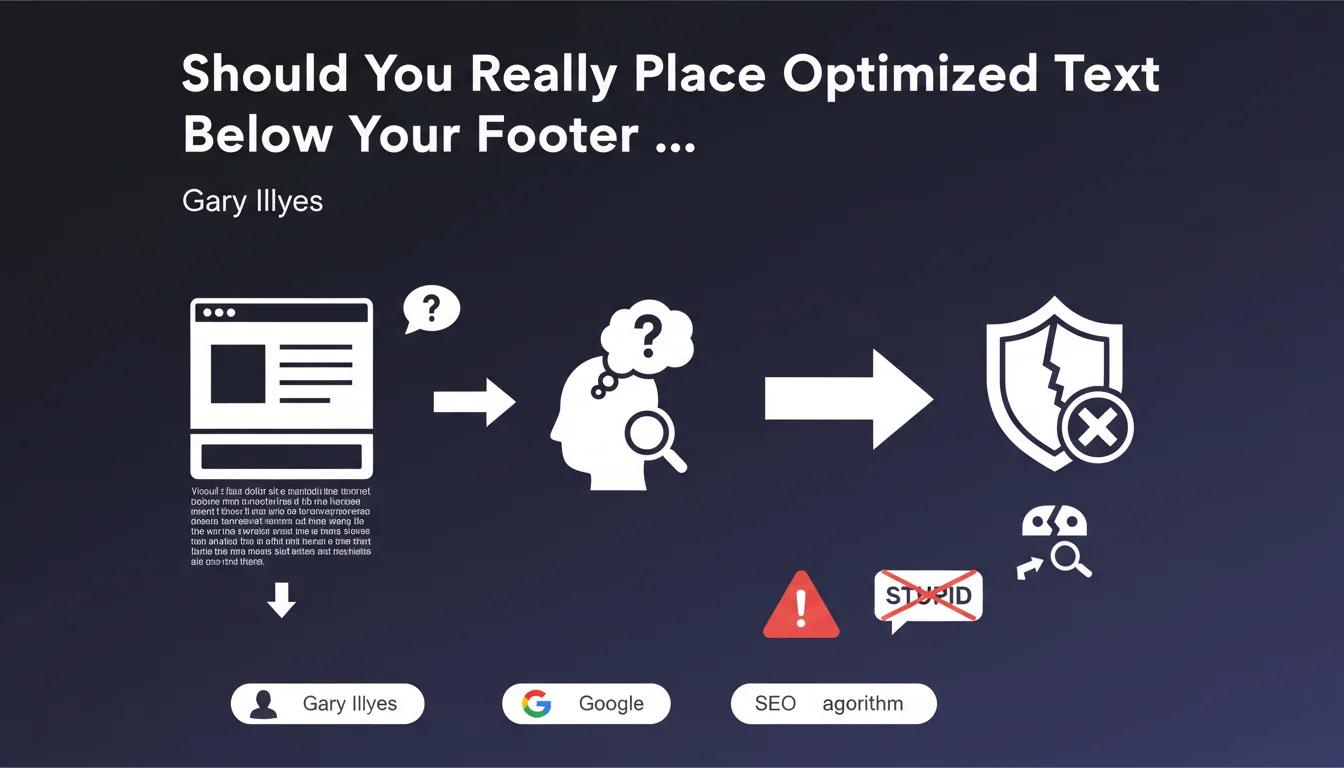
Some SEOs place optimized textual content below their pages' footer, underneath all the classic visible elements. These sentences generally contain over-optimized keywords and have no value whatsoever for the user.
This technique aims to manipulate the algorithm by adding invisible or barely visible content. Google considers this practice as pure spam, belonging to black hat SEO techniques that have been outdated for over 15 years.
Why does Google call this practice stupid?
The term used by Gary Illyes reflects the total ineffectiveness of this approach. Google has been capable for a long time of detecting hidden content or content strategically placed to deceive the algorithm.
Sites using this technique directly expose themselves to algorithmic penalties during updates. It's a maximum-risk practice for zero, or even negative, benefit.
What are the concrete risks involved?
- Automatic algorithmic penalties during Core Updates or quality updates
- Manual actions for spam if Google's quality team detects the manipulation
- Loss of professional credibility if you're an SEO professional and your own site uses these techniques
- Organic traffic collapse with no possibility of quick recovery
- Need for a long and costly disavowal and cleanup process
SEO Expert opinion
Is this condemnation consistent with Google's algorithm evolution?
Absolutely. Since Panda in 2011, then with successive evolutions up to the helpful content and EEAT systems, Google has been prioritizing authentic user experience. Text below the footer is the antithesis of this philosophy.
Modern algorithms analyze the content's position in the DOM, its visual importance, and user behavior. Hidden text below the footer generates zero engagement, which constitutes an obvious negative signal for Google.
Why do some SEO professionals persist in these obsolete practices?
This persistence often reveals a lack of continuous training or a purely quantitative approach to SEO. Some practitioners apply recipes they read 10-15 years ago without updating their knowledge.
There's also a cargo cult SEO phenomenon: reproducing practices observed elsewhere without understanding the context or danger. The fact that penalized sites temporarily continue to rank creates a misleading illusion of success.
Are there exceptions where placing content at the bottom of pages is acceptable?
Yes, when this content provides genuine informational value. For example, an FAQ section at the bottom of pages, a contextual summary for category pages, or relevant supplementary information are legitimate.
The fundamental difference lies in the intent: if the content is created for the user and genuinely improves their experience, it's acceptable. If it's solely intended for Google's robots, it's pure manipulation.
Practical impact and recommendations
How can I identify if my site uses this bad practice?
Systematically audit your footer areas across all your templates. Look for text blocks that seem disconnected from the rest of the page and contain an unusual density of keywords.
Use your browser's code inspector to check if textual content appears after the main footer tag. Also check the applied CSS styles: any attempt to make text invisible or barely visible is a red flag.
What should I do if I discover manipulative text below my footer?
Remove it immediately, without waiting. The longer you keep this content, the more you risk a penalty. The correction must be applied to all affected pages simultaneously.
After removal, submit your main pages for quick reindexing via Search Console. Monitor your organic performance during the following 4-6 weeks to detect any positive or negative impact.
What are legitimate alternatives for optimizing the bottom of pages?
- Create a contextual FAQ section that answers users' real questions
- Add complementary editorial content with genuine added value, not keyword stuffing
- Integrate strategic internal links to relevant related content
- Develop summaries or practical guides at the bottom of category pages if it serves the user
- Use structured data to enrich your snippets rather than adding invisible text
- Prioritize quality over quantity: less content but better targeted and more useful
- Test user engagement with tools like Hotjar to validate that your content is actually being read
Text below footer with manipulative intent is a suicidal practice in 2024. Google easily detects these attempts and sanctions them severely. The current philosophy of SEO is based on authenticity and user value, not on obsolete technical tricks.
Modern optimization requires a holistic and strategic approach: information architecture, editorial quality, user experience, and EEAT signals. These optimizations require deep expertise and constant monitoring of algorithmic evolutions. For companies looking to secure and maximize their organic visibility, support from a specialized SEO agency enables structured implementation of these best practices, while avoiding technical and strategic pitfalls that could permanently compromise your performance.
💬 Comments (0)
Be the first to comment.