
Official statement
What you need to understand
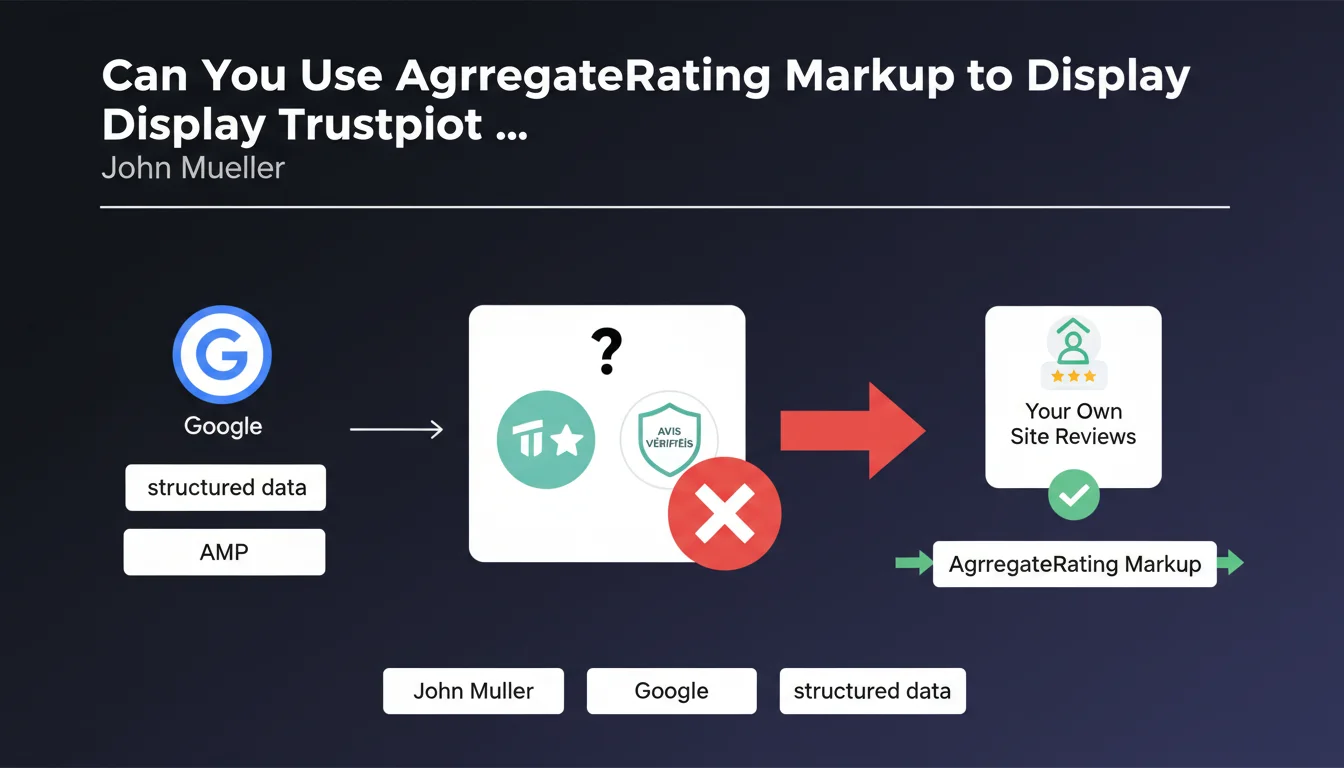
Google establishes a clear distinction between reviews collected directly on your site and those from third-party platforms like Trustpilot, Avis Vérifiés, or Yelp. This rule directly impacts the use of AggregateRating structured data.
Specifically, you should only mark up with schema.org the authentic reviews published natively on your own domain. Ratings and comments hosted on external sites, even if they concern your business, should not be marked with these structured tags.
This policy aims to guarantee the transparency and authenticity of rich snippets displayed in search results. Google wants to prevent sites from artificially manipulating their reputation by displaying stars from sources they don't directly control.
- Allowed: Marking up reviews collected and hosted on your own site
- Prohibited: Marking up reviews from Trustpilot, Avis Vérifiés, imported Google Reviews
- Risk: Manual penalties or deindexing of rich snippets in case of non-compliance
- Exception: No official exception is mentioned for this rule
SEO Expert opinion
This directive is consistent with field observations over several years. Many sites that marked up third-party reviews have indeed lost their stars in the SERPs, sometimes accompanied by manual actions notified in Search Console.
The important nuance concerns the boundary between display and markup. You can absolutely display Trustpilot widgets visually on your pages to reassure your visitors. The problem only arises when you mark up these external reviews with structured data to attempt to generate rich snippets.
A particular point of attention: some WordPress plugins or e-commerce solutions automatically add these tags when integrating third-party review widgets. Regular technical verification is therefore necessary.
Practical impact and recommendations
- Audit all your pages containing AggregateRating or Review markup with Google's Rich Results Test tool
- Identify the exact origin of each marked-up review: own site or third-party platform
- Immediately remove all structured markup pointing to Trustpilot, Avis Vérifiés, or similar reviews
- Check third-party plugins and modules that could automatically add these problematic tags
- Implement a native review collection system directly on your site (dedicated forms, post-purchase)
- Maintain the visual display of third-party review widgets for customer reassurance, but without structured data markup
- Clearly document the markup policy in your system to avoid future regressions
- Regularly monitor Search Console to detect any manual actions related to reviews
- Train your technical teams on review markup best practices to avoid errors
The correct management of structured data and the implementation of a compliant review system represent a complex technical project, balancing schema.org implementation, compliance with Google guidelines, and conversion optimization. To ensure a comprehensive approach without risk of penalty, support from a specialized SEO agency allows you to precisely audit your situation, identify all non-compliance points, and deploy an optimized review strategy that strictly respects Google's requirements while maximizing your visibility in rich results.
💬 Comments (0)
Be the first to comment.