
Official statement
What you need to understand
What is an indexing sandbox and why did Google implement one for Caffeine?
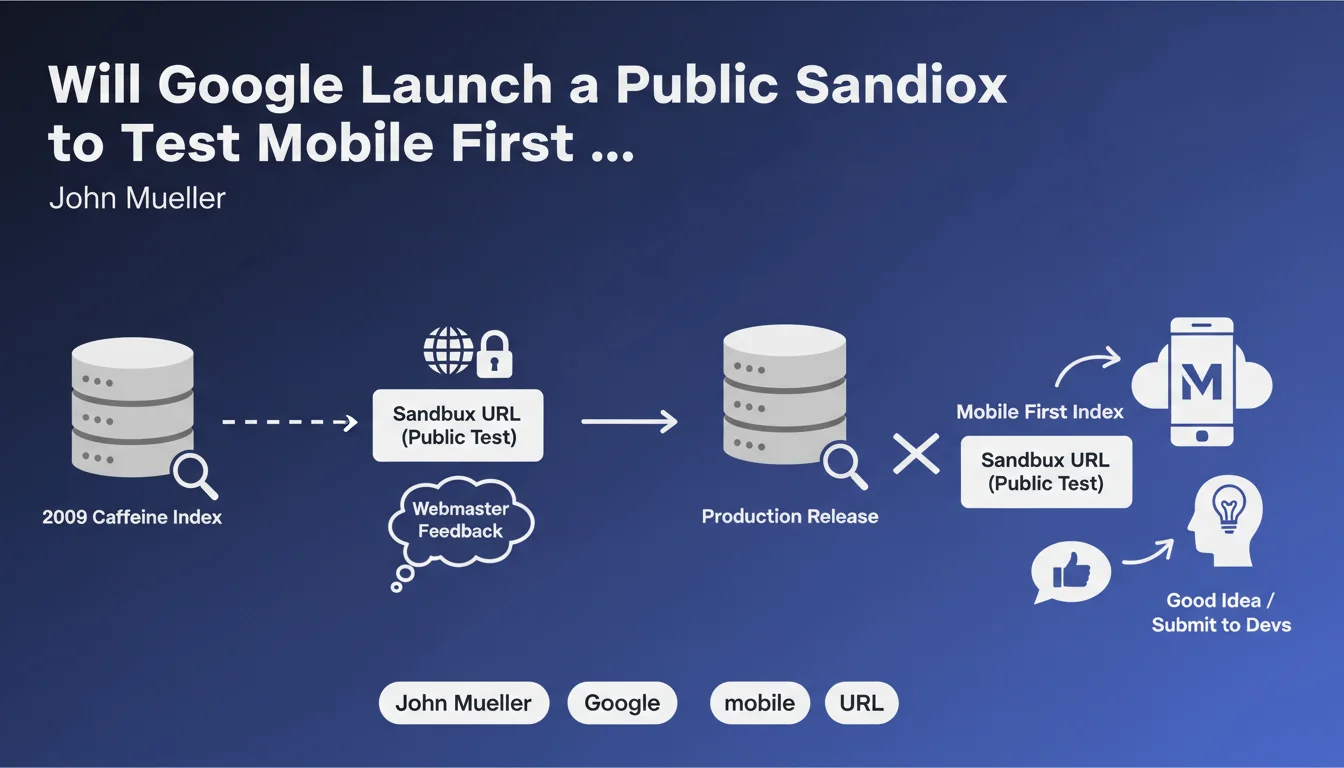
In 2009, during the rollout of Caffeine, Google had created a parallel version of its index that was publicly accessible. This sandbox allowed webmasters to test their site on the new infrastructure before its final deployment.
The objective was twofold: gather field feedback from SEO professionals and identify potential problems before the complete switchover. This collaborative approach enabled a smoother transition to Caffeine.
What does John Mueller propose regarding the Mobile First Index?
John Mueller responded on Twitter that a public sandbox for Mobile First was not planned in the immediate future. However, he acknowledges that it's a good idea and that he would submit it to the development teams.
This statement dates from a period when the Mobile First Index deployment was progressive and concerned many sites. A sandbox could have helped webmasters anticipate the impacts of the migration.
Why does this information remain relevant today?
Although the Mobile First Index is now generalized, this statement illustrates Google's philosophy regarding major technical migrations. It shows that Google may consider public testing approaches for major changes.
- Transparency: Google evaluates requests from the SEO community for major migrations
- Precedent: The Caffeine sandbox remains the reference example of a successful public test
- Anticipation: Future infrastructure changes could potentially benefit from similar testing environments
- Reality: Despite the interest, Google does not systematically offer this type of sandbox for every evolution
SEO Expert opinion
Was this public sandbox approach really necessary for Mobile First?
In hindsight, the progressive rollout of the Mobile First Index ultimately played the role of an implicit sandbox. Google migrated sites in successive waves, allowing problems to be identified and corrected progressively.
The major difference with Caffeine lies in the nature of the change: Caffeine modified the technical indexing infrastructure, while Mobile First changed the version of the site being crawled. Existing tools (Search Console, Mobile-Friendly Test) were largely sufficient to anticipate the impact.
What lessons can we learn from this statement for future updates?
This statement reveals that Google remains open to suggestions from the SEO community, even if it doesn't always implement them. The teams prioritize based on technical complexity and real impact on webmasters.
For SEO professionals, this means you need to remain proactive in providing feedback and use official channels to communicate needs. However, you shouldn't count on a sandbox for every major change.
In what cases might Google reconsider the idea of a public sandbox?
A public sandbox would be relevant for fundamental changes to the ranking algorithm or indexing architecture, similar to Caffeine. For example, a major overhaul of JavaScript processing or a new semantic understanding system.
On the other hand, for progressive evolutions like Core Updates or continuous algorithmic adjustments, a sandbox wouldn't provide sufficient value. Google then prioritizes documentation, official communications and progressive rollouts.
Practical impact and recommendations
What should you take away from this statement for your current SEO strategy?
The main lesson is that you should never wait for an official testing environment to prepare your site for Google's evolutions. Adopt a proactive approach of continuous monitoring and optimization.
Systematically use the tools provided by Google (Search Console, PageSpeed Insights, Rich Results Test) to audit your site regularly. These tools generally reflect the criteria that Google will value in its future evolutions.
How can you anticipate major future algorithm changes without a sandbox?
Implement structured SEO monitoring of Google's official announcements (official blog, spokesperson Twitter accounts, technical documentation). Major evolutions are generally announced several months in advance.
Test your site under varied conditions: different devices, slow connections, with JavaScript disabled, etc. This approach will allow you to identify potential weaknesses before they impact your visibility.
- Follow Google's official announcements on their channels (blog, Twitter, YouTube)
- Audit your site regularly with Search Console and identify warnings
- Test the mobile and desktop version of your site with official Google tools
- Document current performance (rankings, traffic, Core Web Vitals) to measure the impact of future updates
- Maintain a solid technical architecture and optimal loading times
- Prioritize user experience on mobile, as it's now the reference for indexing
- Participate in SEO communities to share observations during progressive rollouts
Should you prepare differently for the next major evolutions?
Adopt a defensive and offensive strategy simultaneously. First fix identified technical problems (crawl errors, mobile-usability issues, Core Web Vitals), then proactively optimize for emerging trends.
Maintain technical flexibility: your site must be able to evolve quickly. Modern architecture, clean code and a well-mastered technical stack are your best allies in the face of algorithmic evolutions.
💬 Comments (0)
Be the first to comment.