
Official statement
What you need to understand
Who Are Google's Quality Raters Really?
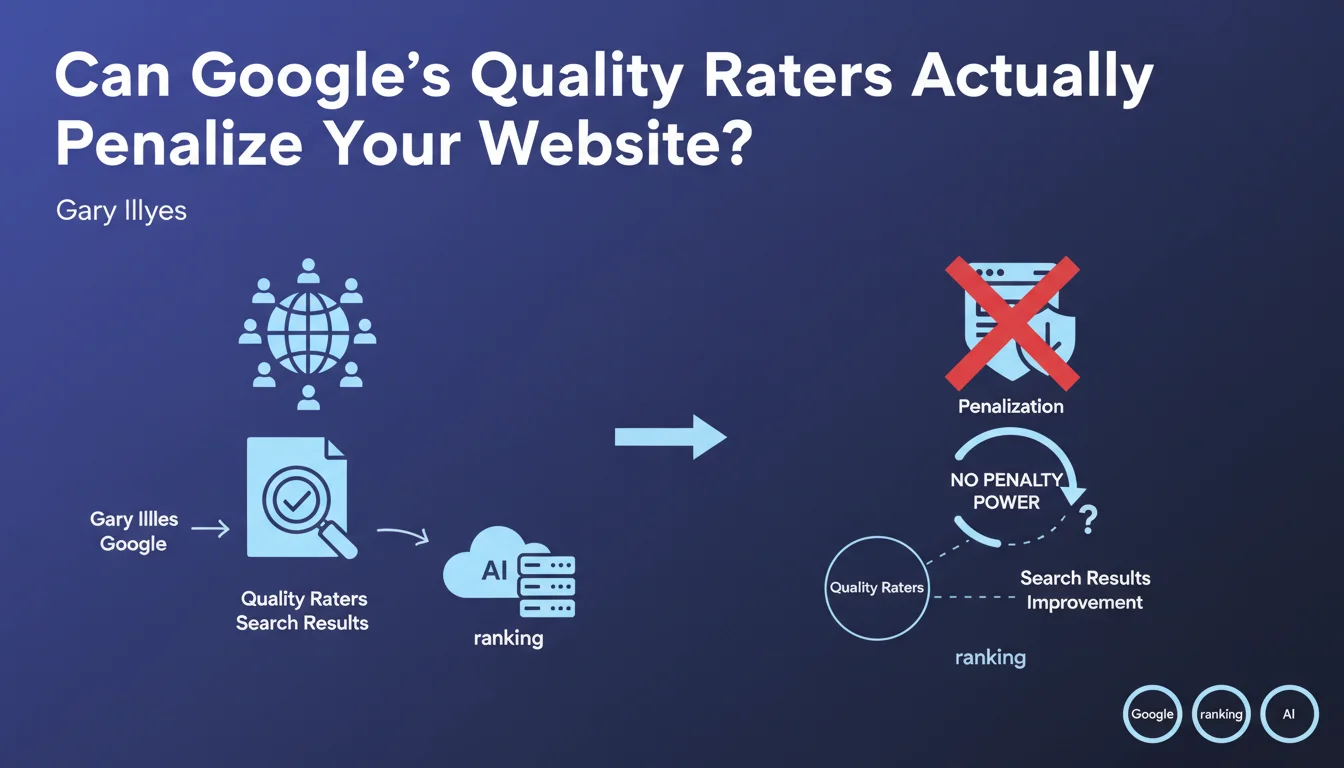
Quality Raters are human evaluators employed by Google throughout the entire world. Contrary to popular belief, they are not concentrated solely in the United States, but are present in dozens of different countries.
Their mission is to evaluate the quality of search results by putting themselves in the shoes of a local user. They follow detailed guidelines to rate the relevance and quality of pages proposed by the algorithm.
What Is the True Role of Quality Raters in Rankings?
This is where a frequent confusion must be clarified: Quality Raters do not directly influence the positioning of websites. They cannot penalize or favor a specific site.
Their work consists of evaluating the performance of the algorithm itself. Google uses their feedback to improve its ranking systems on a global scale, not to adjust the rank of a particular site.
Why Does Google Deploy Quality Raters in Multiple Countries?
The international dimension of Quality Raters addresses a crucial need: understanding cultural and linguistic variations. A relevant result in France is not necessarily relevant in the United States or Japan.
This approach allows Google to refine its algorithm for each geographical context and adapt its understanding of local search intent. It's an ongoing quality improvement process for the search engine as a whole.
- Quality Raters are present in many countries, not just the United States
- They evaluate the quality of results without directly influencing positions
- Their role is to improve the algorithm, not to sanction individual sites
- They cannot penalize or favor a specific site
- Their feedback is used for overall improvement of the search engine
SEO Expert opinion
Does This Statement Change Our Understanding of SEO?
This clarification from Gary Illyes confirms what SEO experts have been observing for a long time. The Quality Rater Guidelines are a valuable public document, but their impact is indirect and progressive.
The confusion often comes from the fact that Quality Rater criteria (such as E-E-A-T) are indeed found in the algorithm. But it's the algorithm that ranks sites, not the evaluators themselves. This is a correlation, not a direct causality.
Should You Still Follow the Quality Rater Guidelines for SEO?
Absolutely. Even though Quality Raters don't directly rank your site, their guidelines reveal the quality criteria that Google seeks to reproduce algorithmically.
It's a valuable roadmap for understanding what Google considers quality content. Optimizing according to these principles therefore remains relevant, as the algorithm evolves to reflect these standards.
However, you shouldn't become obsessed with them. These guidelines are one indicator among others, not an absolute checklist to follow blindly.
What Are the Main Misconceptions That Need to Be Debunked?
The first mistake is believing that a Quality Rater can "flag" your site to get it penalized. This is completely false. Their work is statistical and anonymized; they evaluate sets of results.
The second confusion concerns the link between rater scores and positions. If your site drops in rankings, it's not because of a Quality Rater, but because of an algorithmic evolution based on thousands of signals.
Practical impact and recommendations
How Should You Adapt Your SEO Strategy Following This Clarification?
The first concrete action is to consult the Quality Rater Guidelines as a strategic document. Read them to understand what Google considers high-quality content, but without panic.
Focus on the E-E-A-T criteria (Experience, Expertise, Authoritativeness, Trustworthiness) which are at the heart of these guidelines. They represent the direction the algorithm is taking in the medium term.
Don't forget the international aspect: if you're targeting multiple countries, ensure your content is culturally and linguistically adapted, not simply translated.
What Mistakes Should You Absolutely Avoid?
Don't fall into the trap of believing that a one-time poor ranking means a Quality Rater has "rated you negatively." Fluctuations are normal and multifactorial.
Avoid over-optimizing your site solely for the guidelines at the expense of real user experience. Quality Raters evaluate what a real user perceives, not a technical checklist.
Don't neglect technical and off-page signals either. Quality Raters represent only one facet of the SEO ecosystem, not its entirety.
What Should You Concretely Do to Align Your Site with These Principles?
Start with an E-E-A-T content audit. Evaluate whether your pages clearly demonstrate the expertise, authority, and trustworthiness expected in your field.
Strengthen authority signals: detailed author biographies, mentions of qualifications, transparency about your organization, citations from reliable sources.
- Download and study the latest version of the Quality Rater Guidelines
- Conduct an E-E-A-T audit of your main content
- Add or improve author pages with their qualifications
- Verify the transparency of your legal notices and contact information
- Identify YMYL (Your Money Your Life) content requiring enhanced expertise
- Adapt your content to cultural specificities if you're targeting multiple countries
- Solicit reviews and testimonials to strengthen trust
- Create content demonstrating real experience, not just theoretical knowledge
💬 Comments (0)
Be the first to comment.