
Official statement
What you need to understand
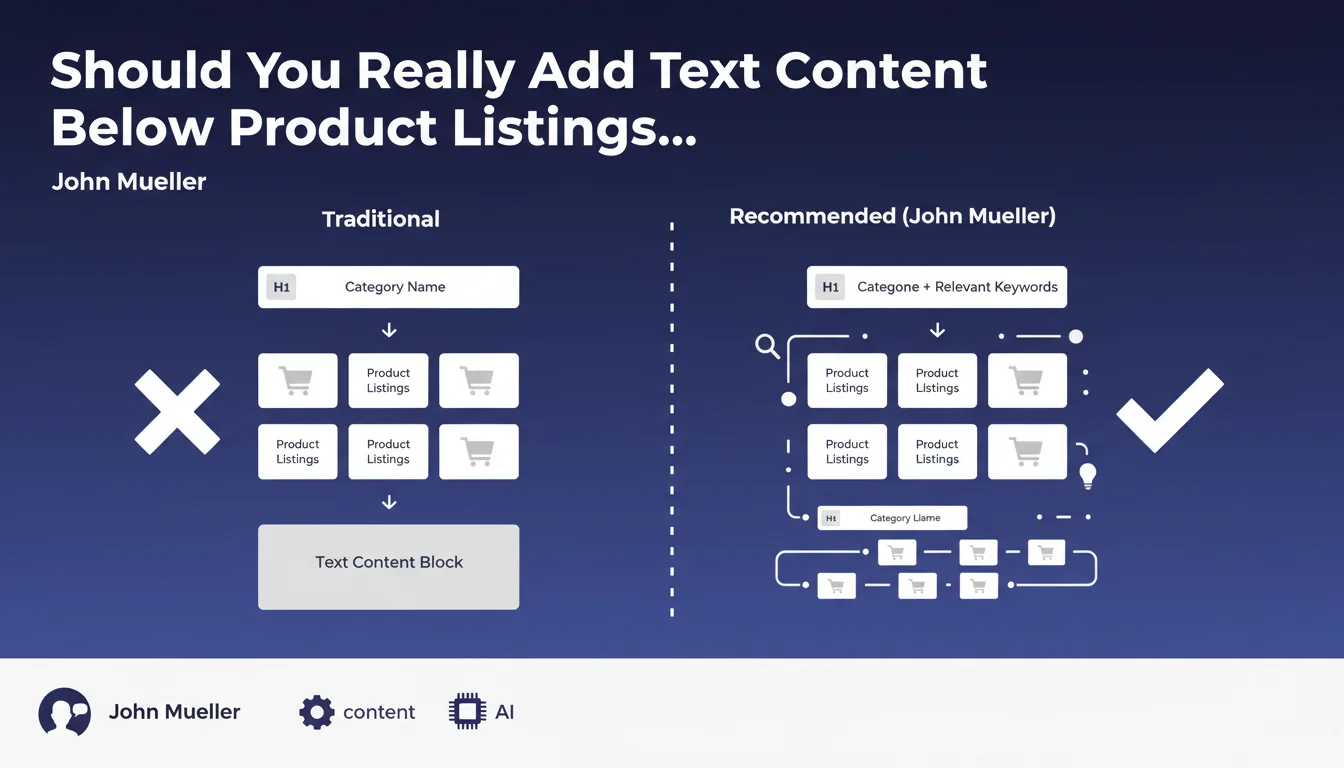
Google is questioning a very widespread SEO practice: the systematic addition of text blocks at the bottom of e-commerce category pages. For years, SEOs have stuffed these pages with textual content, thinking they were optimizing their rankings.
The statement specifies that this practice is not necessarily beneficial, especially when the added text is of poor quality. Google is particularly targeting generic content, copied from Wikipedia, or with no real connection to the displayed products.
The algorithm now favors relevance and real usefulness of content for the user, rather than simply the presence of text. A generic 500-word block provides no added value if nobody reads it.
- Low-quality text or text with no direct connection to the category can be counterproductive
- "Fluff" content or content copied from external sources should be avoided
- Content placement plays a crucial role in its perceived usefulness
- Descriptive elements of the products themselves (ALT images, captions) are just as important
- A collapsible accordion at the top of the page is preferable to a block at the bottom
SEO Expert opinion
This position from Google is perfectly consistent with the algorithm's evolution toward user experience quality. In practice, we do indeed observe that category pages with useful and well-placed content perform better than those with invisible generic text at the bottom of the page.
Important nuance: Google is not saying that textual content is useless. It's saying that poor-quality, poorly positioned content serves no purpose. Expert, original text that genuinely helps users understand the category and choose their products remains a major SEO asset.
The recommended approach of an accordion at the top of the page is particularly relevant because it makes content accessible without pushing products out of view. This solution reconciles SEO and UX, allowing content to be indexed while preserving the shopping experience.
Practical impact and recommendations
- Audit your existing category pages: identify generic, copied, or barely relevant text blocks
- Delete or rewrite "fluff" content that provides no real added value
- Create original and expert content: buying guides, selection criteria, usage advice specific to the category
- Implement collapsible accordions at the top of the page rather than text blocks at the bottom
- Optimize ALT attributes for all product images with precise and unique descriptions
- Add short captions under each product to semantically enrich the page
- Test the impact on conversions: the best SEO content should not harm sales
- Prioritize strategic categories: focus your efforts on pages with high traffic potential
- Train your writers to create relevant e-commerce content, not filler
In summary: Content quality and relevance now take precedence over the simple presence of text. Favor useful, well-positioned content (accordion at the top), and enrich all page elements (ALT, captions).
This overhaul of category page content architecture requires in-depth strategic thinking: balance between SEO and conversion, category prioritization, consistent editorial line. These optimizations often touch the core of your e-commerce platform and involve complex technical choices. Support from an SEO agency specialized in e-commerce can prove invaluable for auditing your existing setup, defining the best content strategy for your sector, and coordinating implementation with your technical and editorial teams.
💬 Comments (0)
Be the first to comment.