
Official statement
What you need to understand
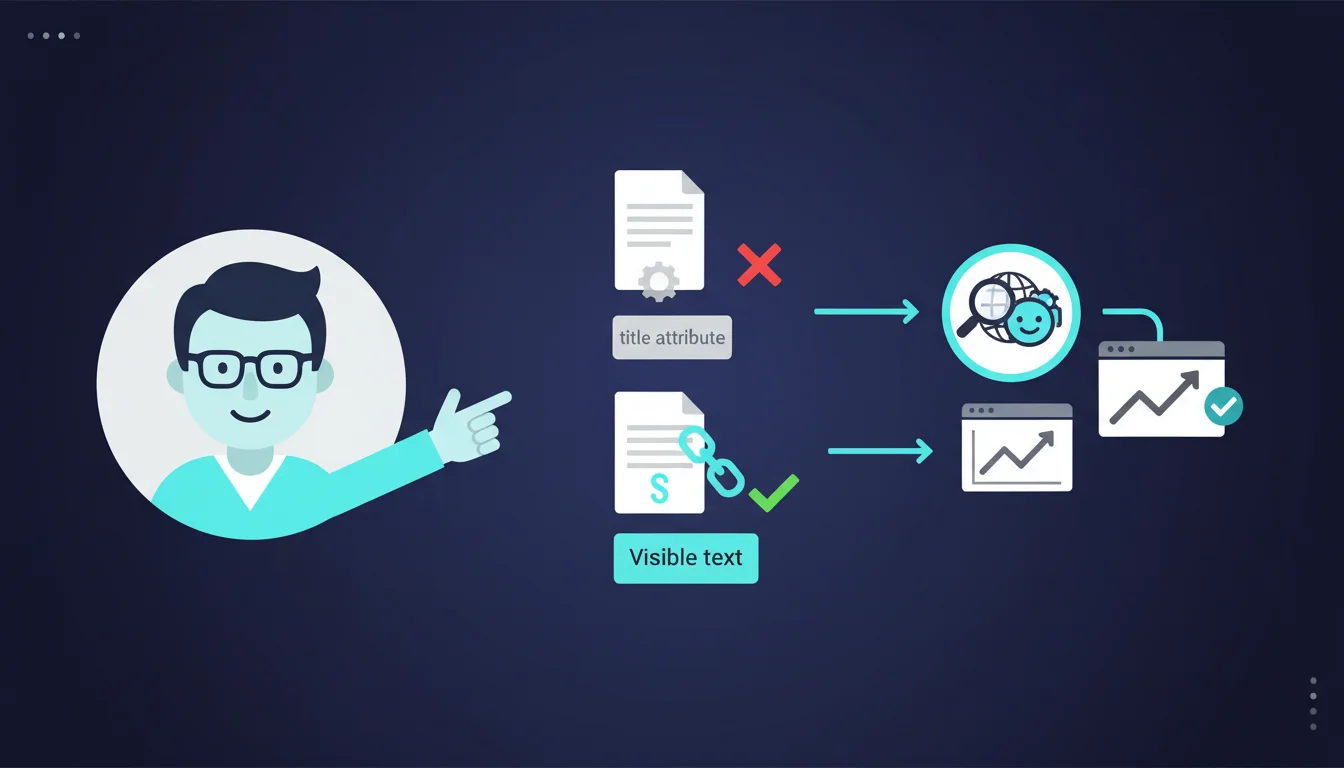
Visible anchor text is the clickable element of a hyperlink that users can see directly on the page. Google emphasizes the importance of prioritizing this visible text rather than relying solely on the title attribute (the tooltip that appears on hover).
This recommendation is explained by the fact that search engines primarily analyze visible content to understand the nature and relevance of a link. The title attribute, while useful for accessibility, carries only limited weight in the ranking algorithm.
Descriptive and visible anchor text allows Google to better understand the context of the destination page and establish relevant semantic connections between content. It's a fundamental relevance signal for natural search engine optimization.
- Visible text takes priority over hidden attributes like title
- Descriptive anchoring improves contextual understanding of links
- This practice simultaneously benefits SEO and user experience
- Generic links like "click here" provide little semantic value
SEO Expert opinion
This recommendation aligns perfectly with field observations from the past 15 years. Sites using descriptive and visible anchors have consistently demonstrated better performance in terms of link juice transmission and thematic relevance.
However, nuance is needed: the title attribute retains its usefulness for web accessibility and can contain complementary information without redundancy. The mistake would be to neglect it entirely, but indeed, it should never compensate for the absence of visible and relevant anchor text.
Beware of over-optimization: visible anchor text doesn't mean keyword stuffing. Naturalness and diversity of anchors remain essential to avoid algorithmic penalties related to artificial link profiles.
Practical impact and recommendations
- Audit all your internal and external links to identify those using only title attributes without visible text
- Replace generic anchors ("here", "click", "learn more") with descriptive texts incorporating semantic context
- Create anchors of 3 to 7 words that naturally describe the destination page content
- Vary your anchor formulations to maintain a natural and diversified link profile
- Keep the title attribute for accessibility, but as informational supplement, never as a substitute
- Verify that your clickable images have descriptive alt attributes serving as anchor text
- Avoid excessive repetition of the same exact anchor text on multiple links pointing to the same page
- Document your internal linking guidelines to maintain consistency across the entire site
In summary: visible anchor text represents a fundamental SEO lever that is often underutilized. Its optimization requires a methodical approach affecting information architecture, content writing, and internal linking strategy.
Consistent implementation of these best practices across an entire website requires deep technical and editorial expertise. For large-scale projects or complex sites, support from a specialized SEO agency enables establishing an optimal anchoring strategy and avoiding the pitfalls of over-optimization, while ensuring implementation that complies with current algorithmic requirements.
💬 Comments (0)
Be the first to comment.