
Official statement
What you need to understand
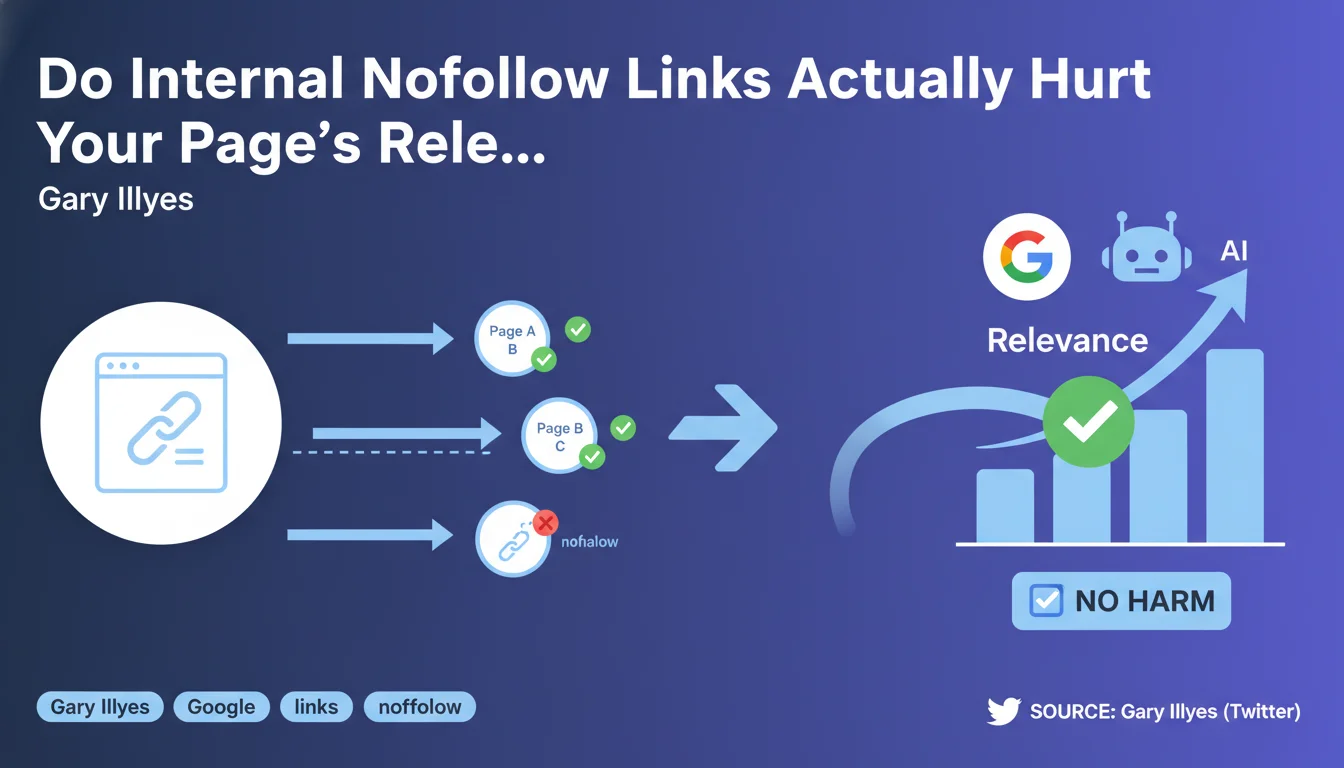
Nofollow links are HTML links accompanied by the rel="nofollow" attribute that tell search engines not to follow these links or pass authority through them. According to John Mueller, these links transmit no signals to Google, whether positive or negative.
This clarification is important because some webmasters worry about receiving nofollow links from low-quality sites and consider using Google's disavow tool. However, if these links transmit no signals, they cannot harm the target site's rankings.
The link disavow tool (Disavow Tool) was created to allow webmasters to report toxic dofollow links to Google that could penalize their site. But using it for nofollow links is therefore unnecessary.
- Nofollow links transmit no SEO signals, positive or negative
- Disavowing a nofollow link provides no additional benefit
- This action is not harmful but constitutes a waste of time
- The disavow tool should be reserved for toxic dofollow links
SEO Expert opinion
This position from Google is perfectly consistent with what we've observed in the field for years. Nofollow links have always been designed to be ignored by the ranking algorithm, even though their role has slightly evolved with the sponsored and ugc attributes.
However, there is an important nuance to add: since March 2020, Google treats nofollow, ugc, and sponsored attributes as "hints" rather than absolute directives. This means Google can choose to consider them in certain cases, particularly for discovering new pages. However, in terms of authority transmission and ranking, these links remain effectively neutral.
Practical impact and recommendations
- Don't waste time disavowing nofollow links, even if they come from low-quality sites
- Prioritize auditing dofollow links in your link profile cleanup strategy
- Use the disavow tool only for toxic dofollow links likely to trigger a penalty
- Monitor your link profile with tools like Google Search Console to identify truly problematic links
- Document your disavow actions by maintaining a file of processed links and the reason for their disavowal
- Periodically reassess your disavow file (every 6-12 months) to remove obsolete entries
In-depth analysis of a link profile and distinguishing between genuine toxic links and false positives require specialized expertise and considerable time. Evaluation criteria constantly evolve, and improper use of the disavow tool can sometimes cause more harm than good.
For sites with a complex link history or that have suffered negative SEO attacks, guidance from a specialized SEO agency can prove valuable. These professionals have the tools and experience necessary to conduct a comprehensive audit and implement a customized and secure cleanup strategy.
💬 Comments (0)
Be the first to comment.