
Official statement
What you need to understand
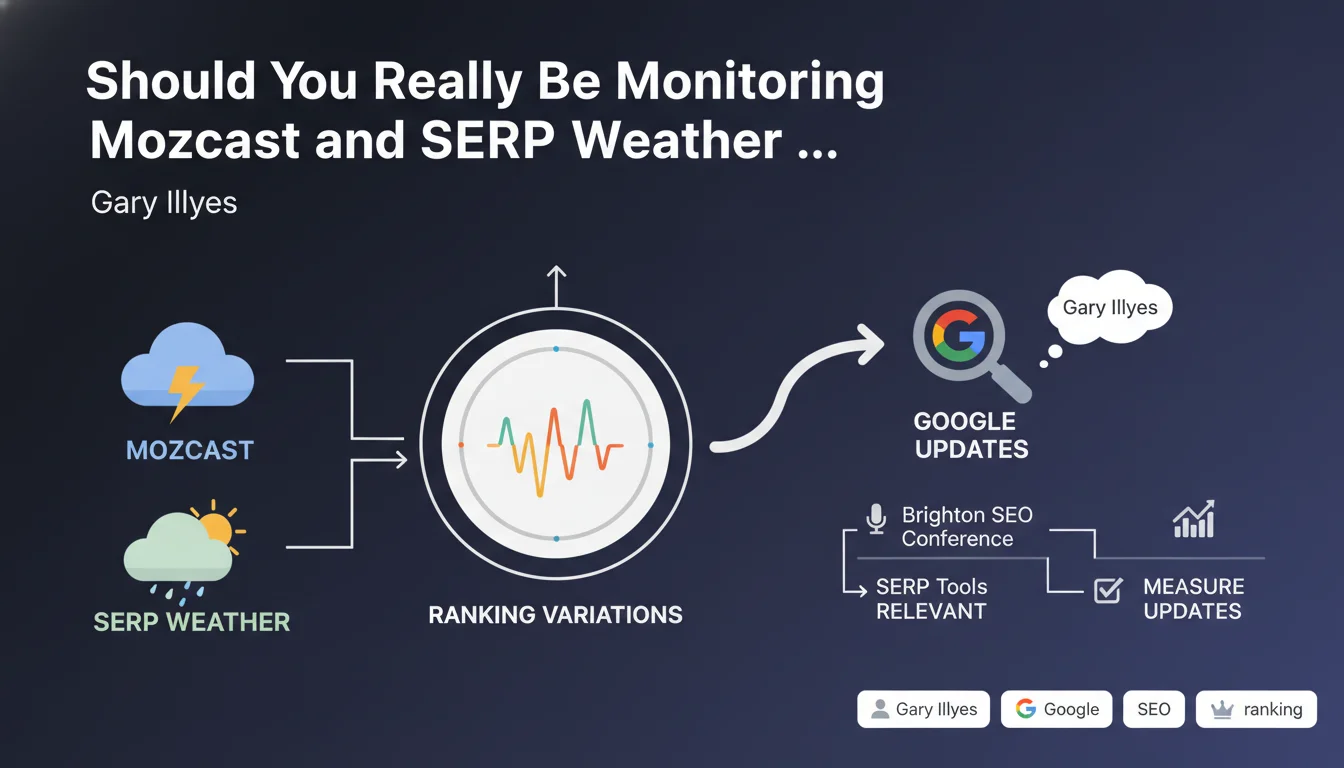
Google officially validates the usefulness of SERP monitoring tools like Mozcast, which measure daily fluctuations in search results. These platforms analyze thousands of keywords to detect significant ranking variations.
These tools work like weather forecasting for search results: they indicate when Google is rolling out major algorithmic updates. A high score generally signals that an update is underway, which can explain sudden changes in your keyword rankings.
The recognition of these tools by an official Google representative is a strong signal of their legitimacy. However, they should be considered as indicators among others, not as absolute truth.
- SERP weather tools detect Google updates in real-time
- They help contextualize sudden traffic losses or gains
- Each tool uses its own methodology and its own set of keywords
- They don't replace the analysis of your own Search Console data
- Their consultation should be regular to identify trends
SEO Expert opinion
This official validation confirms what experienced SEOs have been observing for years: tools like Mozcast, SEMrush Sensor, or Rank Ranger are indeed relevant. They help distinguish whether a traffic drop comes from a problem on your site or from a global algorithmic update.
However, an important nuance must be added: these tools primarily reflect English-speaking and competitive sectors. Their data may be less representative for specific niches or French-speaking local markets where fluctuation patterns differ.
In my practice, I find that cross-referencing multiple sources (Mozcast + SEMrush Sensor + real client data) offers the most reliable view. A single tool can sometimes generate false positives.
Practical impact and recommendations
- Check at least one SERP weather tool daily (Mozcast, SEMrush Sensor, Algoroo)
- Set up alerts to be notified when fluctuations exceed a certain threshold
- In case of sudden traffic drop, check these tools first before modifying your strategy
- Document correlations between detected spikes and your own performance variations
- Use multiple tools in parallel to get a more complete view
- Integrate this data into your client reports to explain temporary variations
- Don't react impulsively: wait 7-10 days after a major update before adjusting your strategy
- Set up a dashboard combining SERP weather + Search Console + Analytics for a 360° view
The proper monitoring and interpretation of these algorithmic signals require sharp expertise and daily vigilance. Setting up an effective monitoring system, cross-referencing the right data sources, and knowing how to distinguish normal fluctuations from real penalties represents a considerable time investment. For businesses that want professional and responsive analysis of these signals, support from a specialized SEO agency provides access to proven expertise and advanced monitoring tools, while freeing your teams to focus on your core business.
💬 Comments (0)
Be the first to comment.