
Official statement
What you need to understand
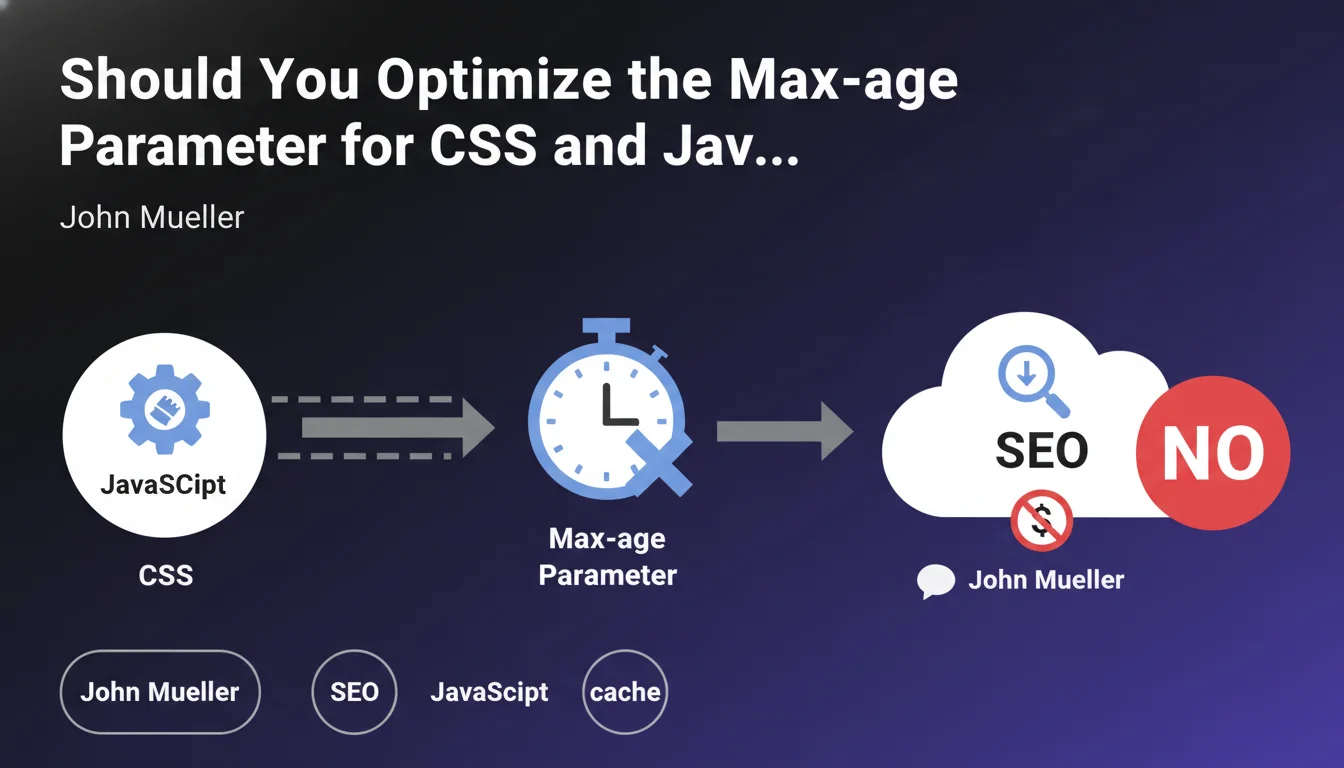
Google has clarified its position regarding the Max-age parameter used in HTTP headers to manage resource caching. According to this official statement, the search engine does not take this parameter into account when crawling and indexing CSS and JavaScript files.
The Max-age parameter is part of the Cache-Control directives that tell browsers and servers how long a resource can be kept in cache. In a traditional web optimization context, this parameter is crucial for improving page loading performance on the user side.
This clarification from Google means that the Googlebot crawler does not respect these cache directives in the same way as a standard browser. The crawler will systematically retrieve the most recent versions of resources, regardless of the defined caching instructions.
- Googlebot ignores the Max-age parameter for CSS and JavaScript files
- This directive remains important for user experience and browser-side performance
- The Google crawler always retrieves up-to-date versions of resources, regardless of cache configuration
- No direct SEO impact related to optimizing this parameter for static resources
SEO Expert opinion
This statement is perfectly consistent with the observed behavior of Googlebot for several years. As an SEO expert, I have always observed that the Google crawler adopts a more aggressive approach than standard browsers to obtain the most recent versions of resources.
It is important to nuance this observation: although Google ignores Max-age, resource loading speed remains a ranking factor through Core Web Vitals. Poor cache configuration can therefore indirectly impact SEO by degrading the actual user experience, even if Googlebot is not affected by these parameters.
Practical impact and recommendations
- Maintain optimal Max-age configuration to improve your site's performance for real visitors
- Do not rely on browser cache to hide or delay Google's detection of changes in your CSS/JS files
- Test your resource changes quickly: Google will likely detect them faster than expected, regardless of your cache directives
- Focus on Core Web Vitals where caching plays a crucial role in user experience and therefore indirect SEO
- Use other methods if you wish to control Googlebot's access to certain resources (robots.txt, X-Robots-Tag)
- Regularly verify that your critical files (CSS/JS) are properly crawlable and not blocked by other directives
Optimal management of HTTP headers, cache directives, and their combined impact on user experience and natural search rankings requires in-depth technical expertise. These configurations affect server infrastructure, web performance, and indexing strategies. For sites with significant commercial stakes, working with a specialized SEO agency provides access to a comprehensive audit and personalized support to implement a coherent strategy that optimally takes all these parameters into account.
💬 Comments (0)
Be the first to comment.