
Official statement
What you need to understand
When an e-commerce business distributes its products simultaneously on its own site and on marketplaces like Amazon, eBay or Cdiscount, it mechanically creates a duplicate content situation. If the product descriptions are identical, Google must choose which version to display in its results.
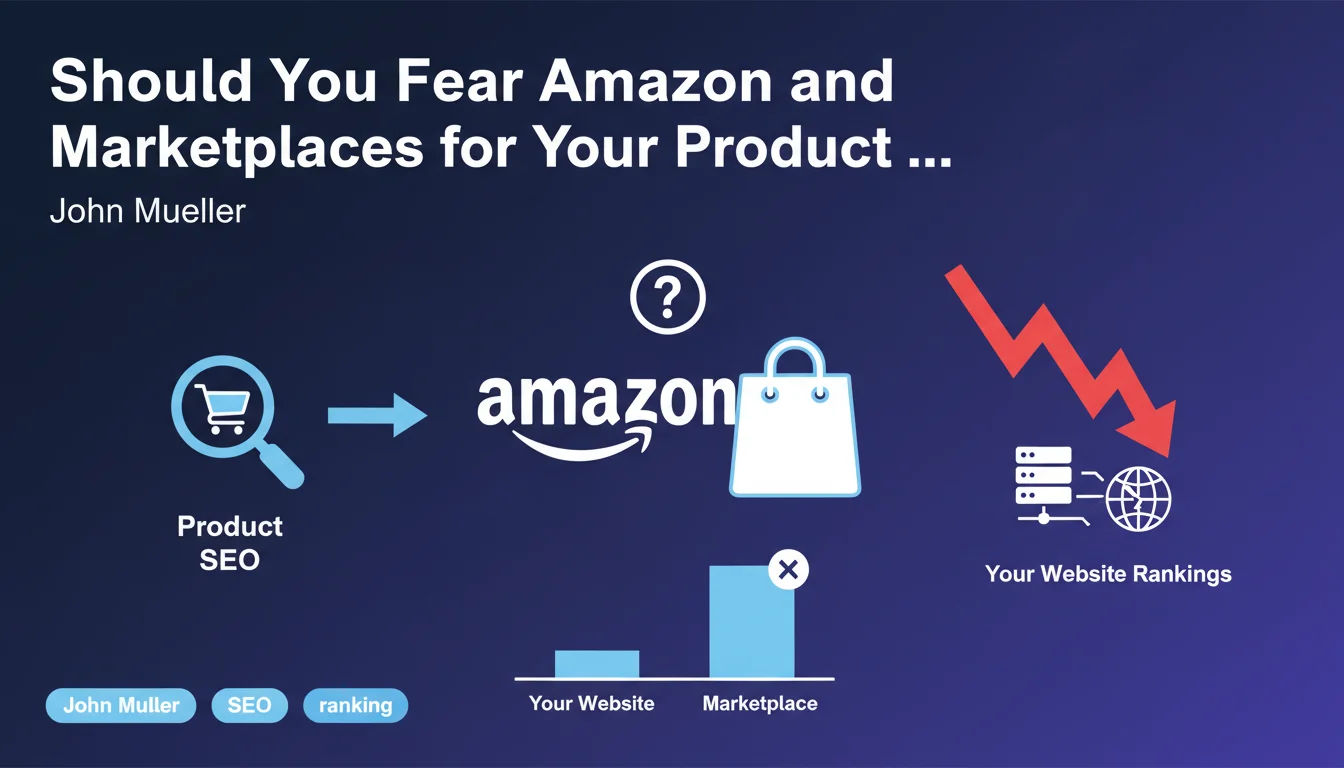
This statement confirms that Google does not apply a punitive penalty for duplicate content in this context. It's more of a filtering phenomenon: a single URL will be favored for each query. The problem? Marketplaces generally have significantly higher domain authority.
In practice, marketplace product pages often capture the visibility at the expense of the original merchant site. The brand owner thus finds themselves in direct competition with their own distribution channels for organic visibility.
- No Google penalty in the strict sense, but a filtering of results
- Marketplaces benefit from authority that is generally superior
- The original site may lose visibility on its own products
- The decision represents a strategic trade-off between sales volume and SEO control
SEO Expert opinion
This position perfectly reflects what we observe in the field. Marketplaces do indeed dominate product SERPs in the majority of competitive sectors. Their domain authority, the richness of their UGC content (customer reviews), and their massive internal linking give them a structural advantage.
However, there are important nuances depending on the context. For established brands with strong brand recognition, the official site can maintain its visibility through branded queries. Similarly, for niche or technical products, truly differentiated and in-depth content can prevail over the generic descriptions of marketplaces.
Practical impact and recommendations
- Systematically differentiate your content: write unique and enriched descriptions for your site, more detailed than those on marketplaces
- Capitalize on long-tail queries: create buying guides, comparisons, and expert content that marketplaces don't produce
- Leverage your brand: work on SEO for queries including your brand name to capture this qualified traffic
- Structure your data: implement Schema.org Product with all attributes (reviews, stock, price) to maximize your presence in rich snippets
- Build your authority: obtain quality backlinks to your product pages to strengthen their legitimacy in Google's eyes
- Monitor cannibalization: regularly track your positions versus those of marketplaces on your strategic keywords
- Evaluate overall ROI: analyze whether the sales volume generated by marketplaces compensates for the loss of organic visibility on your site
The coexistence between an e-commerce site and marketplace presence requires a sophisticated SEO strategy to avoid losing all organic visibility. It's not simply about duplicating content, but about building real and measurable differentiation.
Given the complexity of these strategic trade-offs and the technical nature of the required optimizations (structured data, content architecture, link strategy), many e-commerce businesses choose to rely on an SEO agency specialized in e-commerce to develop a customized approach that preserves their visibility while capitalizing on marketplace volumes.
💬 Comments (0)
Be the first to comment.