
Official statement
What you need to understand
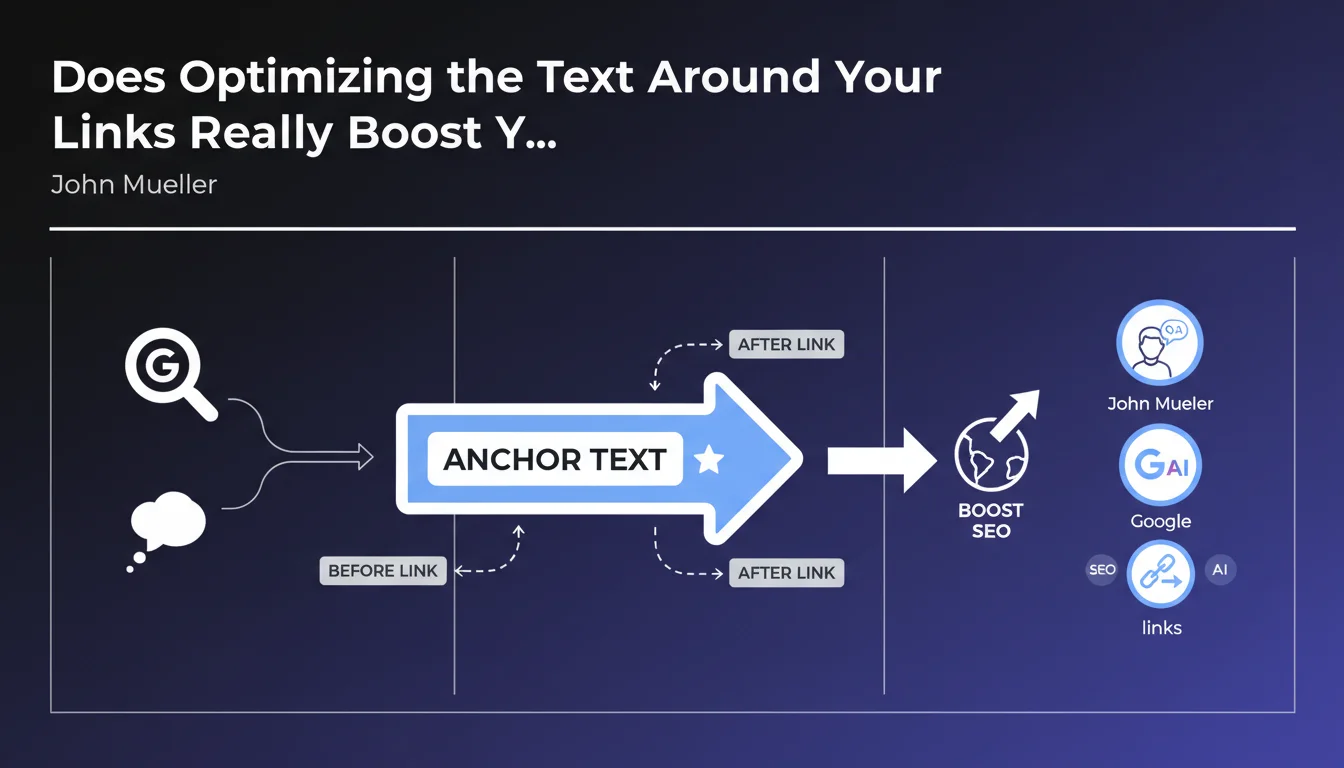
Google analyzes much more than just the clickable text of your links. The algorithm also examines the surrounding context to understand the relevance and theme of the link.
Concretely, this means that the paragraph containing your link contributes to its interpretation by search engines. The text before and after provides additional semantic clues.
However, it's important to keep in mind that the anchor remains the priority element in the analysis. Context plays a secondary role, primarily serving to refine Google's understanding.
- The link anchor remains the strongest ranking signal
- The surrounding textual context provides complementary information
- Semanticized links (integrated into sentences) are richer in context
- Bullet lists offer less semantic context than paragraphs
SEO Expert opinion
This statement confirms what SEO practitioners have been observing for years in the field. Links placed within editorial content generally perform better than those isolated in footers or sidebars.
An important nuance: the impact of context varies depending on the type of link. For internal linking, rich context helps Google understand the thematic architecture of your site. For backlinks, context reinforces the topical relevance of the link.
In certain cases, such as navigation links or CTAs, context is less important because the intent is different (navigation vs. thematic referencing).
Practical impact and recommendations
- Integrate your links into written paragraphs that naturally develop the related subject
- Avoid lists of links without context in footer or sidebar for your strategic pages
- Write 1-2 sentences before and after each important link to create a coherent semantic environment
- Optimize the link anchor first before worrying about the surrounding context
- Use thematically related vocabulary in the paragraph containing your link
- Audit your internal linking to identify isolated links that would benefit from more context
- For your pillar content, systematically favor semanticized links within the body text
- Don't artificially over-optimize: the text must remain natural and provide value to the reader
Implementation: Contextual optimization of links requires a thorough editorial review of your site and a sophisticated internal linking strategy. This task can prove time-consuming and complex, particularly on large-scale sites. For effective and consistent optimization of your link architecture, support from a specialized SEO agency can save you valuable time and guarantee measurable results tailored to your industry.
💬 Comments (0)
Be the first to comment.