
Official statement
What you need to understand
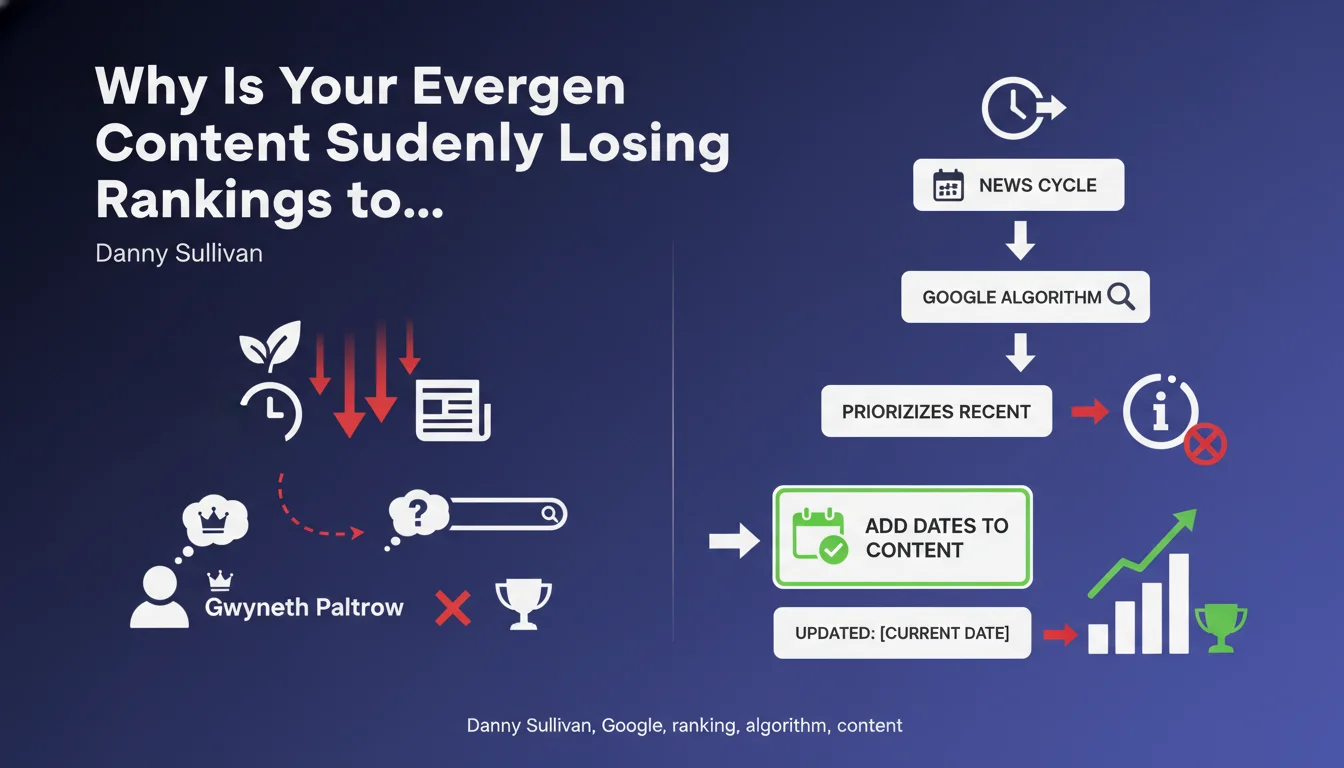
Google systematically prioritizes freshness when a topic is in the news. Even if your evergreen content is comprehensive, optimized, and well-positioned under normal circumstances, it will be temporarily demoted in favor of recent articles covering current events.
This official statement confirms algorithmic behavior observed for years: the QDF (Query Deserves Freshness) algorithm automatically detects spikes in media interest and adjusts search results accordingly. During these periods, Google considers that users' search intent primarily focuses on immediate news.
Google's key recommendation is to add visible dates to your content. This allows the algorithm to understand that content has been recently updated and may therefore be relevant in the current context.
- News temporarily takes precedence over the quality and comprehensiveness of evergreen content
- Visible dates are a crucial signal for the freshness algorithm
- This phenomenon is temporary: once the news cycle passes, evergreen content regains its positions
- Regular content updates can help it benefit from the freshness boost
SEO Expert opinion
This statement is perfectly consistent with what we observe daily in the SERPs. The QDF algorithm's behavior is not new, but Google's explicit confirmation about the importance of dates is valuable for SEO practitioners.
However, several important nuances deserve highlighting. Not all types of queries are affected in the same way: generic informational queries ("biography of X") will be less affected than queries showing news intent ("X trial" or "X latest news"). Moreover, the duration of the phenomenon varies depending on the media magnitude of the event.
It's also important to note that certain types of evergreen content (definitive guides, foundational tutorials, reference data) can maintain reasonable visibility even during news spikes, especially if they're enriched with a section dedicated to the latest news.
Practical impact and recommendations
- Implement visible dates on all your content pages (publication date AND last update date)
- Structure your dates with structured data (schema.org Article with datePublished and dateModified) to facilitate their understanding by Google
- Create a hybrid content strategy: maintain your evergreen content while quickly publishing news articles when your topic is subject to media events
- Update your evergreen content substantially when it's related to current news: add a dedicated section, update statistics, integrate the latest developments
- Monitor trends in your sector with Google Trends to anticipate news spikes and prepare fresh content in advance
- Avoid changing only the date without actual content modification: this could be perceived as manipulative
- Don't panic if your evergreen content temporarily loses positions during a news cycle: it's normal and reversible
- Optimize the publication speed of your news content to maximize the freshness window
In summary: The coexistence between evergreen content and news content requires a sophisticated strategic approach. Dates must be managed carefully, updates must be substantial, and publication timing must be optimized.
This complex orchestration between freshness and permanence, between editorial reactivity and technical optimization, demands specialized expertise and constant monitoring of algorithmic signals. For sites facing recurring news challenges or managing a large volume of evergreen content, support from a specialized SEO agency can prove decisive in maximizing visibility throughout the entire news lifecycle, while preserving the positioning of reference content.
💬 Comments (0)
Be the first to comment.