
Official statement
Other statements from this video 1 ▾
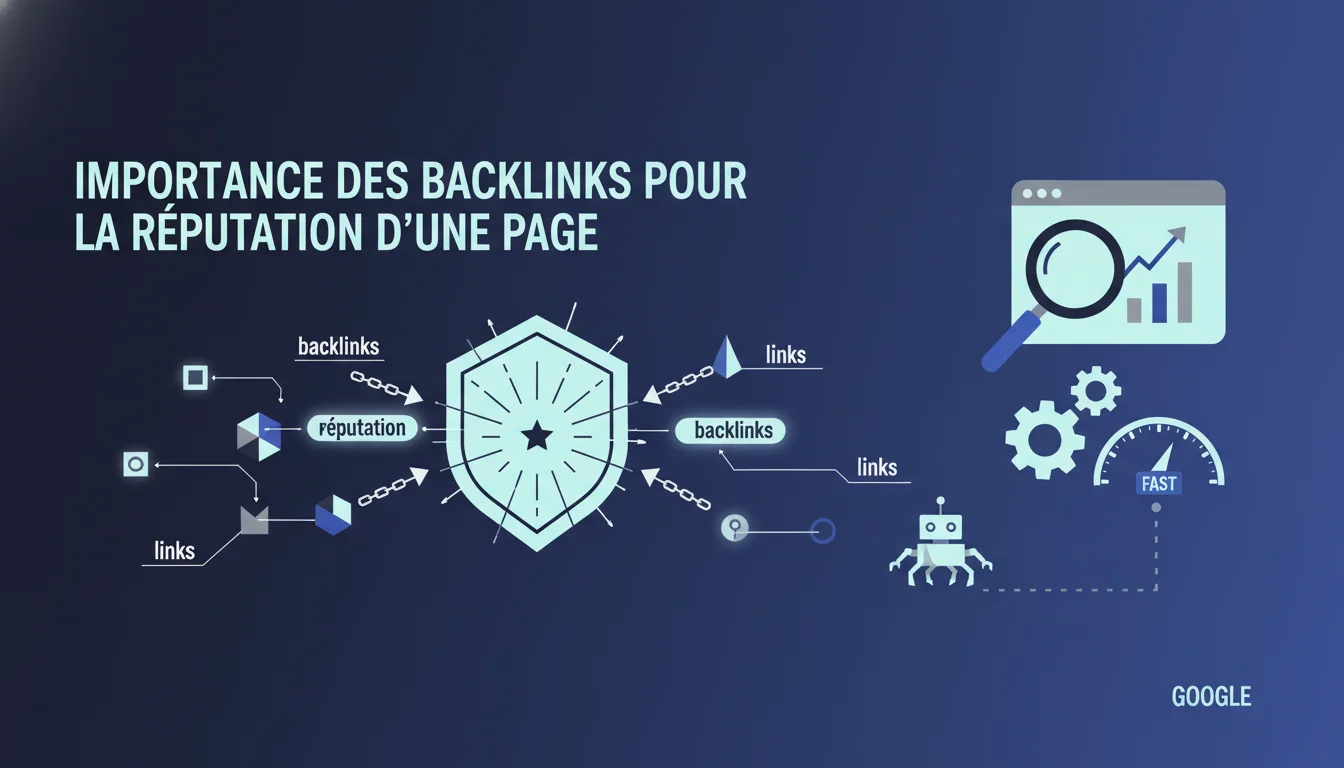
Google reaffirms that backlinks and their reputation remain essential for assessing a page's credibility, even on platforms like Twitter. This statement confirms that implicit PageRank continues to influence the algorithm, even if Google now avoids naming it directly. For practitioners, this means that the quality of incoming links remains a major structural lever, beyond trendy aspects like content or user experience.
What you need to understand
Why does Google still emphasize backlinks as a reputation signal?
This statement reminds us of a fundamental point: the Web is still a structure of links, and Google uses this architecture to rank information. Backlinks function like votes of confidence between pages. The more links a page receives from reputable sources, the more credit Google gives it to rank for competitive queries.
What is interesting here is that Google explicitly mentions Twitter (now known as X) as a site subjected to the same rules. Historically, nofollow links from social media were excluded from PageRank calculation. But since the reform of link attributes and the introduction of the concept of “hints”, Google can choose to consider some social signals if they provide an indication of real popularity or reliability.
How does Google concretely assess the reputation of a backlink?
Google examines several dimensions: the authority of the source (PageRank of the issuing site), the thematic relevance between the two pages, the link anchor, the editorial context surrounding the link, and the position of the link within the page. A footer link or a sidebar link counts less than an editorial link within the main text.
The notion of reputation also incorporates recurrence: a domain that regularly receives backlinks from varied sources sends a signal of lasting legitimacy. Conversely, a sudden spike of links from low-quality sites triggers alerts in Google's anti-spam systems.
Do all backlinks have the same value for visibility?
No. A backlink from an authoritative site in your field can be worth 50 or 100 times more than a link from a generic directory. Google uses machine learning models to refine this weighting, but the basic principle remains that PageRank: the juice passed depends on the strength of the issuing site and the number of outgoing links it contains.
Nofollow, ugc, or sponsored links can convey a signal of contextual notoriety, but their direct weight on ranking is less than that of an editorial dofollow link. Google is careful not to publicly detail these nuances, but field tests confirm this hierarchy.
- Editorial dofollow backlinks from authoritative thematic sites remain the backbone in competitive SEO.
- Source diversity (unique referring domains) matters just as much, if not more, than the raw volume of links.
- Links from social or UGC platforms can provide a complementary popularity signal, but do not replace classical netlinking.
- The speed of acquiring backlinks must remain natural to avoid algorithmic penalties.
- Link anchors should be varied and contextual: too many optimized exact match anchors trigger anti-spam filters.
SEO Expert opinion
Is this statement consistent with what we observe on the ground?
Yes, and it's a welcome reminder. For several years, Google has amplified discussions around user experience, Core Web Vitals, and “helpful” content, to the point where some practitioners have wondered if backlinks still matter as much. The answer is clear: they remain a structural pillar of ranking, especially for competitive commercial or informational queries.
The audits I regularly conduct confirm that a site with a strong backlink profile consistently outperforms a competitor with better content but fewer links. Content opens doors, but backlinks push pages to the top of the ranking. This is especially true in saturated sectors like finance, health, or e-commerce.
What nuances should we bring to this assertion by Google?
Google deliberately remains vague about the relative weight of backlinks compared to other factors. In some less competitive niches, a site can rank well with few inbound links, if the content perfectly meets the search intent and competition is low. But as competitiveness increases, backlinks become decisive again.
Another nuance: Google speaks of “backlink reputation”, not just their number. This means that 10 links from authoritative sites are worth much more than 1000 links from link farms or PBNs (Private Blog Networks). SEO practitioners should thus prioritize quality over quantity and accept that netlinking requires time and resources.
Finally, the mention of Twitter is interesting but [To be confirmed] in practice. Links from social networks are almost always nofollow or ugc. If Google uses them as a reputation signal, it is probably indirectly: a highly shared page on Twitter can attract natural editorial backlinks, which will transmit PageRank. The social link acts as a catalyst, not a direct lever.
In what cases does this rule not fully apply?
For branded queries (navigational searches like “Nike shoes”), backlinks matter less: Google favors the brand entity and on-site signals. Similarly, for ultra-local queries (“plumber Paris 11th”), geographic proximity and Google My Business reviews weigh more than traditional backlinks.
Sites with strong brand authority (Amazon, Wikipedia, national media) also benefit from a trust bonus that allows them to rank without as many backlinks as lesser-known sites. Google incorporates off-web notoriety signals (brand searches, direct traffic) that reduce dependence on inbound links.
Practical impact and recommendations
What concrete actions should you take to improve the reputation of your backlinks?
First, audit your current link profile. Use tools like Ahrefs, Majestic, or SEMrush to identify your referring domains, their authority, and the quality of anchors. Identify toxic links (spammy, off-topic, link farms) and disavow them via Google Search Console if necessary. Regular cleaning prevents your profile from being polluted by negative signals.
Next, focus on acquiring editorial links from authoritative sites in your sector. This involves content strategies (case studies, infographics, exclusive data), digital press relations, guest blogging on quality media, or partnerships with sector influencers. The goal is to create resources that others want to cite naturally.
What mistakes should be avoided in a netlinking strategy?
Never buy links in bulk on platforms like Fiverr or PBN networks. Google detects these patterns and penalizes them heavily. Links should come from active sites, with real traffic, a healthy backlink profile themselves, and a theme consistent with yours.
Also avoid over-optimized anchors: if 80% of your backlinks point with the anchor “buy iPhone 15 cheap,” Google will understand it's artificial. Aim for a natural mix: brand, naked URL, generic anchors (“click here,” “learn more”), and only 10-20% of optimized anchors.
How can I check if my backlink profile remains healthy and effective?
Regularly monitor your Trust Flow vs Citation Flow (Majestic): a too large gap signals an artificially inflated profile. Analyze the acquisition curve of your referring domains: a linear and steady growth is healthier than a sudden spike. Also check that your best backlinks remain active (links can disappear if a page is deleted or if the site migrates without redirects).
Use Google Search Console to detect spam spikes: if you see hundreds of new backlinks from unrelated Russian or Asian sites, it is likely negative SEO. Disavow them quickly to prevent them from polluting your profile. Finally, compare your domain authority (Domain Rating with Ahrefs, Domain Authority with Moz) to that of your direct competitors: this gives you a relative gauge of your linking strength.
- Audit your backlink profile every 3 months to spot toxic or lost links.
- Prioritize quality over quantity: aim for 5 authority links rather than 50 weak links.
- Diversify sources: varied referring domains, coherent themes, no concentration on a single site.
- Create linkable content: case studies, data, infographics, free tools.
- Monitor acquisition velocity: stay within a natural curve, without artificial spikes.
- Vary anchors: natural mix of brand, naked URL, generic and optimized anchors.
❓ Frequently Asked Questions
Les backlinks depuis les réseaux sociaux comme Twitter comptent-ils vraiment pour le SEO ?
Combien de domaines référents faut-il pour ranker sur une requête concurrentielle ?
Un site peut-il ranker correctement sans backlinks en 2025 ?
Comment savoir si un backlink est de qualité avant de le chercher ?
Faut-il désavouer systématiquement les backlinks spam ?
🎥 From the same video 1
Other SEO insights extracted from this same Google Search Central video · duration 0 min · published on 08/05/2009
🎥 Watch the full video on YouTube →
💬 Comments (0)
Be the first to comment.