
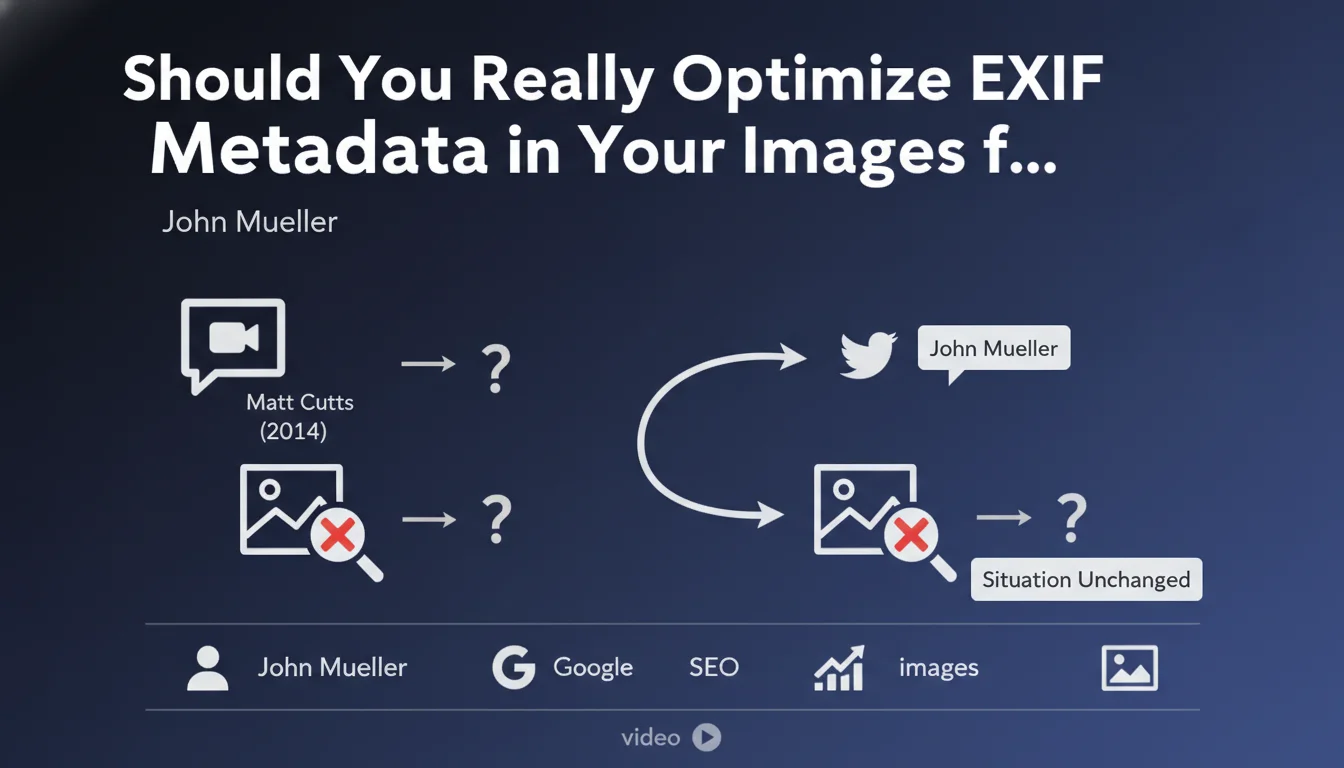
Official statement
What you need to understand
Google has clarified an important point: adding images to a web page does not constitute a direct ranking factor. There is no automatic "SEO bonus" simply because a page contains visuals.
This clarification aims to deconstruct a widespread myth that images = better positioning. A page with images is not inherently better ranked than an identical page without images.
However, the reality is more nuanced. Images contribute indirectly to SEO through several mechanisms:
- Semantic enrichment via ALT attributes that reinforce content understanding
- Improved user experience which can reduce bounce rate and increase time spent
- Content diversification that better responds to complex search intents
- Additional traffic opportunities via Google Images
- Better structuring of information that facilitates reading and comprehension
The quality of textual content remains the fundamental foundation. Images cannot compensate for poor or irrelevant content.
SEO Expert opinion
This statement is perfectly consistent with what we observe in the field. Images are not a magic ranking factor, but their indirect impact is very real and measurable in most performance analyses.
The essential nuance lies in the concept of quality mixed content. Pages that perform best generally combine optimized text with relevant and well-integrated images. This performance is explained by positive behavioral signals rather than by an algorithmic "image bonus".
There are, however, notable exceptions. For certain queries with strong visual intent (recipes, tutorials, e-commerce products), the absence of images can be prohibitive because it doesn't meet user expectations, which negatively impacts engagement metrics.
Practical impact and recommendations
General recommendation: Integrate images as a component of an overall content strategy, not as a miraculous positioning solution.
- Always prioritize textual content quality before investing in visual production
- Add images only when they provide informational value or facilitate understanding
- Systematically optimize ALT attributes with precise and contextual descriptions (no keyword stuffing)
- Compress and adapt image formats (WebP, lazy loading) to preserve loading performance
- Structure your images with appropriate structured data when relevant (products, recipes, articles)
- Analyze the SERPs of your target queries to identify whether well-positioned competing pages use visuals extensively
- Never sacrifice loading speed to add decorative images without added value
- Create original images rather than systematically using generic stock photos
- Think about Google Images traffic as a complementary acquisition channel by correctly naming your files
Image optimization requires a delicate balance between editorial added value, technical performance, and semantic consistency. This multidimensional approach demands cross-functional expertise touching content, development, and UX.
For sites with large volumes of visual content or complex technical challenges, support from a specialized SEO agency allows you to establish an optimization strategy adapted to your sector and avoid costly mistakes in terms of performance and accessibility.
💬 Comments (0)
Be the first to comment.