
Official statement
What you need to understand
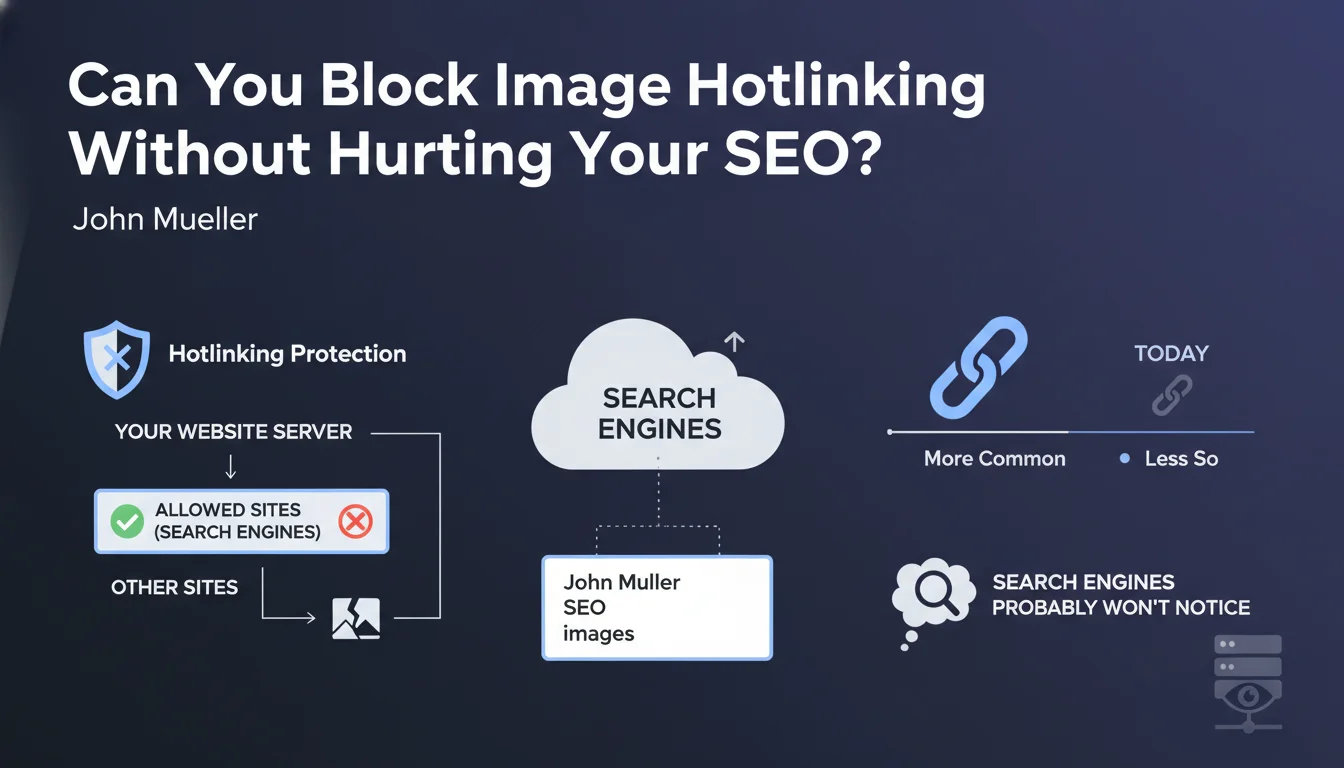
Hotlinking (or "leeching") refers to the practice where other websites directly display your images by using their URL hosted on your server. This consumes your bandwidth without generating traffic to your site.
Google confirms here that it is perfectly acceptable to block this practice while creating exceptions for search engines. Concretely, you can configure your server to deny the display of your images to third-party sites, while allowing Googlebot and other crawlers to access them normally.
This technique generally relies on HTTP referrer analysis, which indicates the origin of the request. By blocking unauthorized external referrers, you protect your resources without impacting your organic search rankings.
- Blocking hotlinking does not negatively affect your SEO if search engines remain authorized
- This practice was more widespread in the 2010s when bandwidth was more expensive
- Search engines generally do not detect the implementation of this protection
- Configuration is typically done via .htaccess, nginx, or CDN rules
SEO Expert opinion
This statement is consistent with what we have been observing in the field for years. Hotlinking remains a real problem, particularly for sites rich in quality visual content: e-commerce, portfolios, news sites, or image banks.
An important nuance: if your SEO strategy relies on the virality and sharing of your visuals, overly strict blocking can be counterproductive. Some "stolen" images generate indirect backlinks and brand awareness. You must therefore balance protection and distribution.
Mueller's remark about the decline of this practice is explained by the massive adoption of CDNs and the decrease in bandwidth costs. Nevertheless, for high-traffic sites or those with heavy images, protection remains financially relevant.
Practical impact and recommendations
- Configure your hotlink protection via .htaccess (Apache) or nginx.conf by creating a whitelist including search engine user-agents (Googlebot, Bingbot, etc.)
- Test the accessibility of your images with Google Search Console's URL Inspection tool after implementation
- Monitor your server logs for a few weeks to identify any legitimate crawlers mistakenly blocked
- Add exceptions for social platforms (Facebook, Twitter, LinkedIn) if you want your visuals to display correctly when shared
- Implement subtle watermarking rather than complete blocking if your goal is intellectual property protection while allowing distribution
- Avoid completely blocking requests without a referrer as some browsers and privacy extensions remove this information
- Document your configuration to facilitate future server migrations or CDN changes
Implementing optimal hotlink protection requires a thorough understanding of server configurations and their potential impacts on crawling. Inadequate settings can inadvertently block crawlers or harm the indexing of your visual content. For sites with a significant volume of strategic images, working with an experienced SEO agency allows you to implement this protection securely, while preserving and optimizing your visibility in Google Images.
💬 Comments (0)
Be the first to comment.