
Official statement
What you need to understand
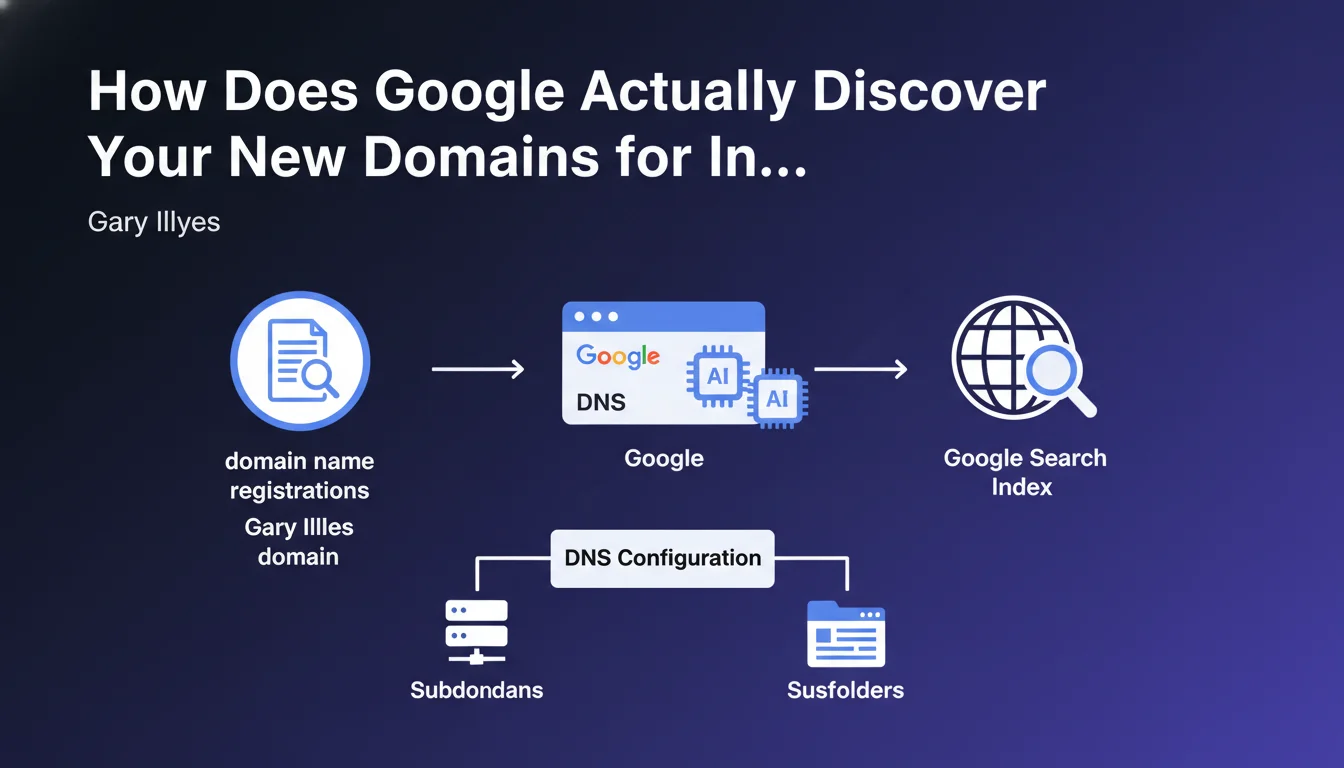
Google uses domain name registries as a discovery source to identify new websites to crawl and index. Specifically, when a domain is registered or renewed, this information is accessible through WHOIS databases and public registries.
This discovery method is complementary to other techniques used by Google: crawling existing links, XML sitemaps, Google Search Console, and external signals. It allows Google to be particularly responsive to new web properties.
This practice, although dating back to 2004, remains current and emphasizes the importance of technical configuration from the launch of a new domain. For subdomains versus subfolders, the distinction lies in the DNS configuration that determines how Google treats them.
- Google actively consults domain registries to discover new sites
- This discovery adds to traditional crawling methods
- DNS configuration influences how subdomains are treated
- A new domain can be discovered quickly after its registration
SEO Expert opinion
This confirmation indeed aligns with field observations: many new domains receive visits from Googlebot within days of their registration, even without external links or active submission. This responsiveness is explained by this registry monitoring.
However, it's important to nuance: discovery doesn't mean rapid indexing. A newly registered domain, even if discovered quickly, must prove itself in terms of content, trust, and quality signals before being fully indexed and ranked. The "sandbox" period remains a reality for new domains.
Regarding the subdomains vs. subfolders debate, the mention of DNS configuration confirms that Google can treat them differently depending on the technical context. Subfolders generally remain preferable for concentrating the main domain's authority.
Practical impact and recommendations
- Prepare your site BEFORE domain registration: architecture, quality content, technical aspects
- Configure Google Search Console immediately after registration to control indexing
- Submit an XML sitemap as soon as you launch to effectively guide the initial crawl
- Ensure that robots.txt and meta robots tags are correctly configured before discovery
- Check a domain's history before purchase (Archive.org, Wayback Machine, link profiles)
- For new projects, favor subfolders over subdomains unless there's a technical necessity
- Avoid leaving an empty or under-construction site accessible during domain registration
- Implement substantial, quality content from launch to maximize the impact of the first visit
- Configure DNS correctly to avoid discovery and accessibility issues
The optimal setup of a new domain requires precise coordination between technical aspects, content, and SEO strategy. These multiple dimensions can prove complex to orchestrate simultaneously, particularly for ambitious projects. Support from a specialized SEO agency helps secure this critical phase, avoid costly launch mistakes, and implement best practices from the domain's first days of life.
💬 Comments (0)
Be the first to comment.