
Official statement
What you need to understand
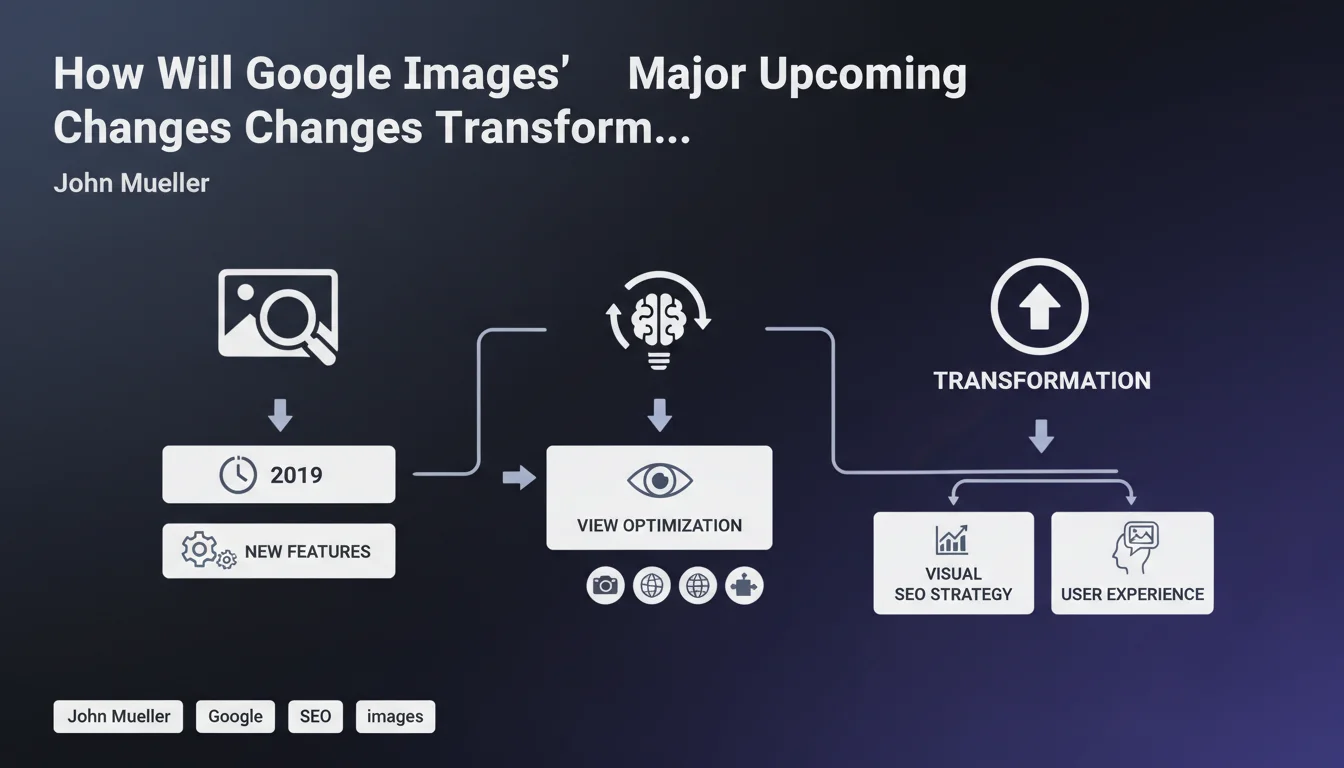
Google has announced that Google Images will undergo major modifications in how it operates. This statement remains deliberately vague, but it suggests a significant evolution in the way images will be indexed, ranked, and displayed.
The context is important: Google Images has undergone several interface changes in recent years that have considerably reduced the traffic sent to source sites. Images can now be viewed without leaving the Google ecosystem, which poses a real challenge for webmasters.
This announcement also comes in a context of increased competition with Bing, which is preparing its own innovations in image search. Google could be seeking to take back the initiative in this often-neglected area.
- Major changes coming to Google Images without specifics on their exact nature
- New approach to optimization of images will be necessary
- Traffic from Google Images has already been significantly reduced for several months
- Announcement may be motivated by competition with Bing in this segment
- Anticipation necessary to adapt your visual SEO strategy in 2019
SEO Expert opinion
This announcement should be taken seriously despite its vague nature. Google often uses this type of preventive communication to prepare the SEO community for upcoming changes, particularly when these modifications are likely to impact established strategies.
However, caution is warranted: the fact that Google Images already generates little traffic to sites since previous interface modifications puts the urgency into perspective. For many sites, Google Images is no longer a major source of qualified visitors, unlike a few years ago.
The real strategic question is whether these changes will aim to improve user experience at the expense of traffic to sites, or whether they will instead seek to restore a better balance. The current trend rather suggests the former hypothesis.
Practical impact and recommendations
- Maintain your current optimizations: relevant alt tags, descriptive file names, quality images and appropriate format (WebP, compression)
- Diversify your visual traffic sources: don't rely solely on Google Images, explore Pinterest, Bing Images and social networks
- Implement ImageObject structured data to enrich the context of your images in Google's eyes
- Optimize the editorial context around your images: captions, adjacent paragraphs, relevant section headings
- Actively monitor Google Search Console Performance section to detect any changes in traffic coming from Google Images
- Prepare for evolution by documenting your current metrics to measure the real impact of future changes
- Invest in original images and high quality rather than generic stock photos
- Test different formats and ratios to identify what performs best in your sector
In summary: adopt an active observation posture while strengthening the fundamentals of your image SEO. Don't neglect this channel, but don't rely solely on it for your traffic.
Implementing a comprehensive and sustainable image SEO strategy requires sharp technical expertise, constant monitoring of developments and a rapid adaptation capacity. Given the increasing complexity of multichannel optimization and the ever-growing number of signals to master, working with a specialized SEO agency can prove beneficial to receive personalized support and maximize your return on investment in a constantly changing environment.
💬 Comments (0)
Be the first to comment.