
Official statement
Other statements from this video 4 ▾
- □ Is Google finally addressing the technical complexity that plagues e-commerce sites?
- □ What technical problems are really dragging down e-commerce sites in Google search results?
- □ Does Google really offer free tools to help e-commerce businesses identify their SEO problems?
- □ Why does Google refuse to provide platform-specific SEO recommendations for e-commerce solutions?
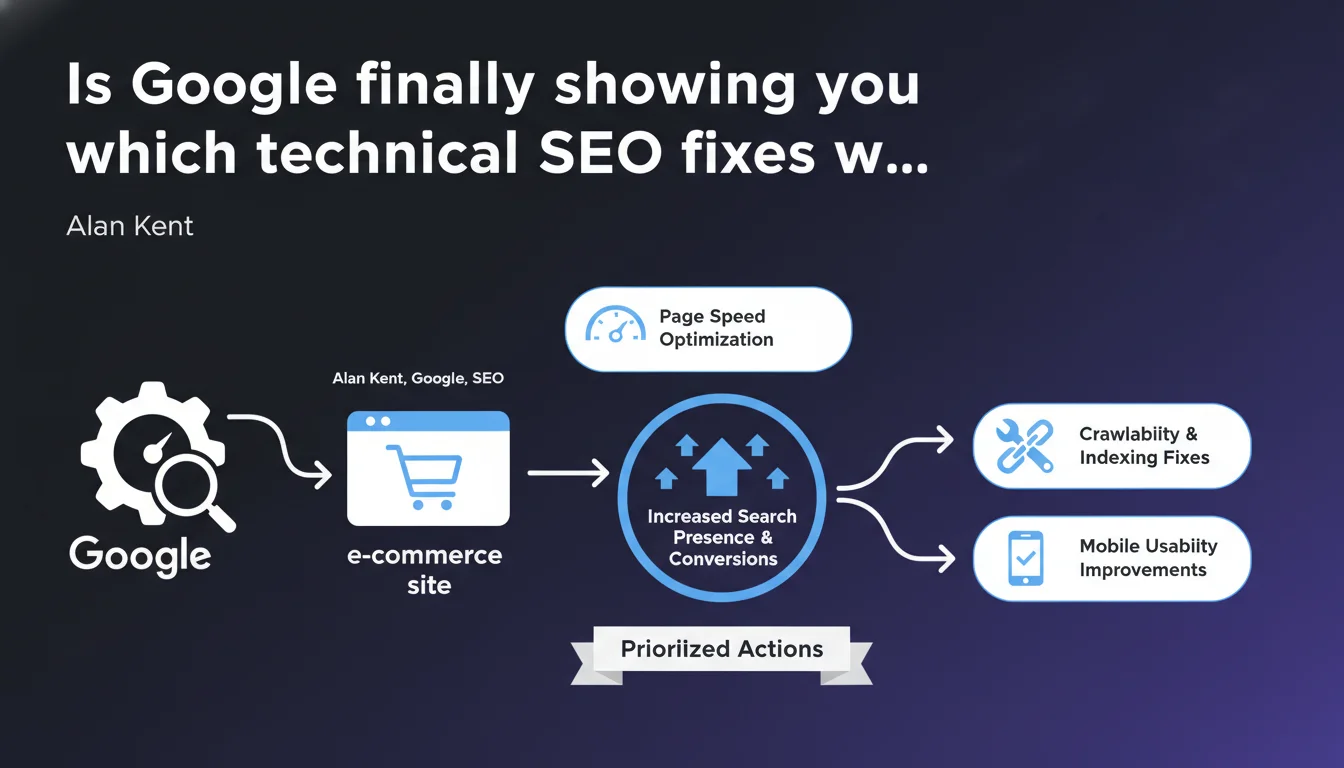
Google has released a guide to help e-commerce teams identify which technical SEO areas deserve priority attention. The goal: streamline efforts and concentrate resources where they'll have the biggest impact on Search visibility. A pragmatic approach that finally acknowledges not all technical projects are created equal.
What you need to understand
Why is Google suddenly paying attention to e-commerce technical priorities?
Google figured out something simple: e-commerce teams are drowning in technical recommendations. Speed optimization, structured data, internal linking, facet management, canonical tag placement — the list goes on forever.
The problem? Not all of these actions carry the same weight. Some are critical, others are cosmetic. This stance marks a shift: Google is implicitly admitting that its own engine isn't perfect when facing complex e-commerce architectures, and teams need guidance to avoid wasting time on low-impact details.
What's Google's concrete proposal in this approach?
Google wants to help you identify which technical areas merit priority exploration. Not some universal checklist — those don't exist. Rather, a methodology to separate what truly matters from what can wait.
The idea: start with your site's current state, its real problems (catalog size, crawl time, coverage rate, user behavior), then evaluate which initiatives will deliver the best ROI.
How does this stance differ from Google's usual messaging?
It's rare to see Google adopt such a pragmatic tone. Usually the official line is: "Build a fast site, create great content, earn clean links, and everything will be fine." Here, they're acknowledging that resources are limited and tradeoffs are necessary.
That nuance matters. It signals Google is starting to grasp the real constraints SEO teams face in enterprise settings: tight budgets, packed roadmaps, political decisions. And the idea of optimizing "everything at once" is a myth.
- Google acknowledges that not all technical optimizations have equal impact
- The proposed approach is contextual: it depends on your site's state, not a generic checklist
- This position implies that some common SEO recommendations may be secondary depending on context
- The underlying message: better to do 3 things well than 10 things poorly
SEO Expert opinion
Is this approach really new or just repackaged advice?
Let's be honest: prioritizing SEO initiatives is something we already do. Any experienced consultant knows a raw audit with 200 recommendations is useless without hierarchy. What's changing is that Google is making it official.
The risk? This "prioritization aid" could become another black box. If Google starts suggesting priorities through Search Console or other tools, on what criteria? Will their recommendation algorithm be transparent? Or will we end up with generic advice that doesn't match our ground reality?
What limitations should you anticipate in this messaging?
Google talks about "helping identify" priority areas. But how, exactly? Through documentation? Automated tools? Personalized recommendations in GSC? [To be verified] — this statement remains vague on the "how".
Another point: Google tends to recommend initiatives that benefit Google. Classic example: "improve your Core Web Vitals." Sure, it helps user experience. But is that always the #1 priority for a site with 50% of its catalog unindexed due to crawl budget problems? Probably not.
When doesn't this logic apply?
If your e-commerce site has critical indexation problems (canonical loops, noindex on strategic pages, robots.txt blocking entire sections), you don't need prioritization help. You need to fix those errors. Period.
Prioritization becomes relevant once the foundations are solid and you're deciding between several advanced optimization initiatives. Not before. So be wary of messaging that suggests you can "prioritize" before cleaning up technical fundamentals.
Practical impact and recommendations
What concrete steps should you take to prioritize effectively?
First step: audit your overall technical health. Crawl budget, coverage rate in GSC, page speed, server logs. You need to know where you stand before deciding where to go.
Next, identify your bottlenecks. If 30% of your catalog isn't being crawled, that's probably your #1 priority. If everything's indexed but category pages are slow, that's different. Prioritization flows from analysis, not from a checklist.
What mistakes should you avoid in this process?
Classic mistake: blindly following automated recommendations from GSC or third-party tools without contextualizing them. These tools flag "issues" that are sometimes false positives or details with zero real impact.
Another trap: trying to optimize everything at once. You don't have the budget, resources, or time. Better to execute one initiative thoroughly, measure impact, then move to the next. Agile methodology, essentially.
- Analyze your server logs to understand Googlebot's actual behavior on your site
- Check the GSC coverage report: which pages are excluded and why?
- Identify high-business-value site areas with low SEO visibility
- Cross-reference SEO data with business data: optimization impact is measured in qualified traffic and conversions, not just rankings
- Document each initiative and its estimated ROI: you'll need to defend your priorities internally
- Test on a limited scope before rolling out at scale
How do you keep this prioritization relevant over time?
E-commerce SEO priorities evolve. What was critical 6 months ago might be solved or become secondary. Revisit your technical roadmap every quarter.
Track key metrics: organic traffic, impressions, clicks, average positions on strategic categories, SEO conversion rate. If an initiative shows no measurable impact after 3 months, it probably wasn't a priority — or was poorly executed.
❓ Frequently Asked Questions
Google fournit-il une méthodologie précise pour cette priorisation ?
Cette approche s'applique-t-elle uniquement aux gros sites e-commerce ?
Faut-il attendre les recommandations de Google avant d'agir ?
Les recommandations automatiques de Google sont-elles toujours pertinentes ?
Comment mesurer l'impact d'un chantier technique priorisé ?
🎥 From the same video 4
Other SEO insights extracted from this same Google Search Central video · published on 13/04/2022
🎥 Watch the full video on YouTube →
💬 Comments (0)
Be the first to comment.