
Official statement
What you need to understand
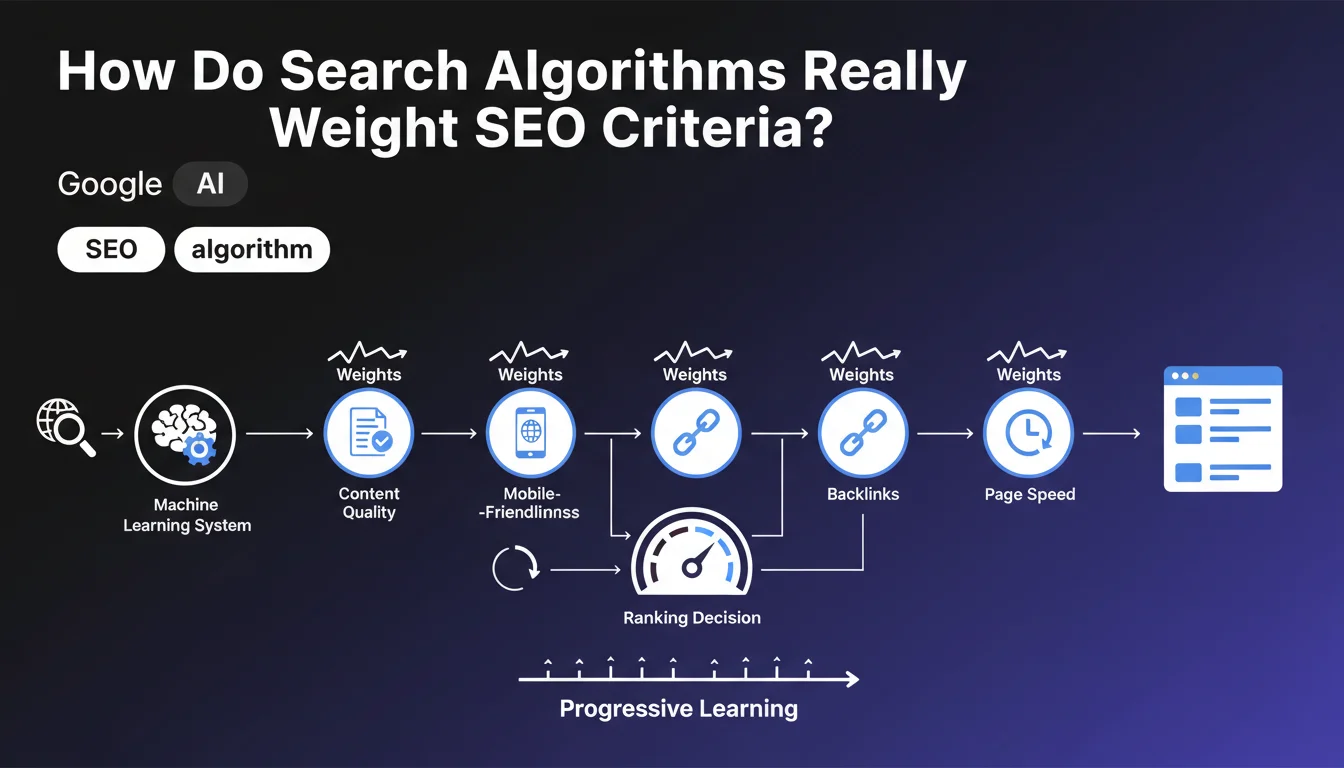
Modern search engines use machine learning to automatically adjust the weight of each relevance criterion. Unlike older generations of algorithms with fixed weightings, no one can say precisely what weight any given signal has at any particular moment.
This automation means that the algorithm continuously learns and refines its weightings based on observed results. Engineers define the objectives and constraints, but it's the ML systems that determine the optimal weights to maximize user satisfaction.
A crucial aspect often overlooked: these weightings vary dynamically depending on the search context. An informational query won't value the same signals as a transactional or navigational query.
- Criteria weights change automatically via machine learning
- No engineer knows the exact weightings at any instant T
- Weights vary according to query type and detected intent
- Reverse engineering becomes virtually impossible with these adaptive systems
- The algorithm continuously optimizes its weightings based on results
SEO Expert opinion
This statement corresponds perfectly with what we've been observing in the field for several years. The ranking fluctuations we see no longer follow predictable patterns, which confirms this dynamic and contextual approach.
I regularly observe that the same site can excel on certain informational queries thanks to its in-depth content, while struggling on commercial queries where other factors dominate. This validates the hypothesis that the algorithm adjusts its priorities according to intent.
An important nuance to add: while precise weightings are opaque, the major signal categories remain identifiable. We know that content, links, user experience, and technical factors still matter, even if their relative importance fluctuates.
Practical impact and recommendations
Facing these adaptive algorithms, your SEO strategy must prioritize balance and diversity rather than excessive optimization of a single lever. Here are the concrete actions to implement:
- Develop a holistic SEO approach covering all pillars (technical, content, authority, UX) rather than over-optimizing a single aspect
- Analyze your performance by search intent clusters, not just globally
- Stop searching for the "magic formula" or perfect ratio—focus on overall quality
- Test and measure continuously: what works today may evolve tomorrow
- Create content that genuinely meets user needs according to their detected intent
- Monitor your competitors by query segment to identify contextually valued factors
- Invest in analytics tools that allow you to segment your data by query type
- Adapt your optimizations depending on whether you're targeting informational, navigational, or transactional queries
In summary: The era of universal SEO recipes is over. Success now relies on a balanced, adaptive, and user-centered strategy.
This growing algorithmic complexity and the need to finely adapt your strategy according to contexts require sharp expertise and constant monitoring. If you want to maximize your visibility without dedicating considerable internal resources to these permanent adjustments, the support of a specialized SEO agency can allow you to benefit from a structured approach and proven methodologies, specifically adapted to your industry and business objectives.
💬 Comments (0)
Be the first to comment.