
Official statement
What you need to understand
CLS (Cumulative Layout Shift) is one of the three Core Web Vitals metrics that measures the visual stability of a page. It detects unexpected shifts of elements during loading, which can degrade user experience.
With the legal obligation to display cookie consent banners (GDPR), many SEO professionals were concerned about a negative impact on this metric. The sudden appearance of a banner can indeed cause a shift in visible content.
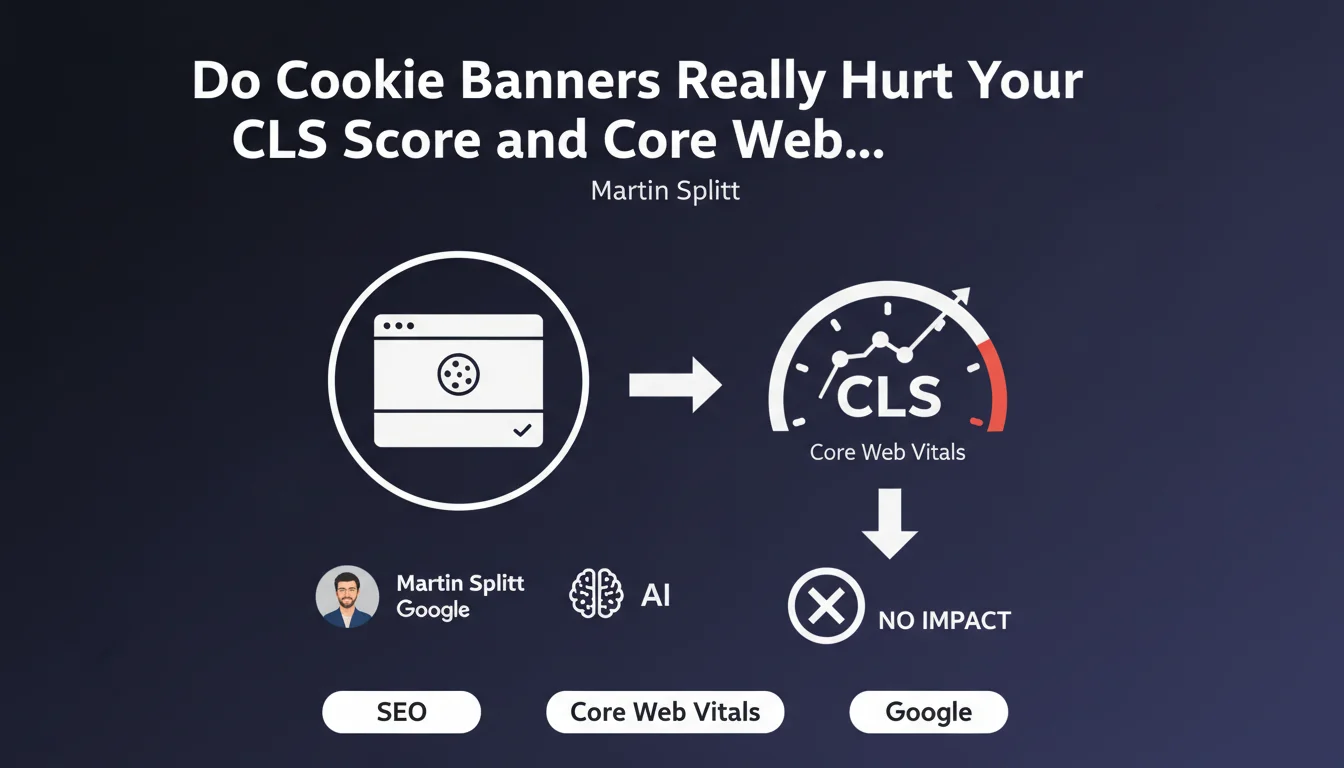
Google has clarified its position: cookie banners do not negatively impact CLS when properly implemented. Certain technical solutions allow these elements to be displayed without creating layout shifts.
- CLS remains a ranking signal through Core Web Vitals
- Mandatory cookie banners are not inherently penalizing
- Technical implementation makes all the difference
- Google distinguishes between "normal" shifts and real UX problems
SEO Expert opinion
This clarification is consistent with what we observe in our technical audits. Sites with properly implemented banners (in fixed/sticky position, with reserved space) indeed show no CLS degradation.
However, it's important to nuance: not all consent solutions are created equal. Some poorly optimized third-party scripts can load late and cause shifts. The problem isn't the banner itself, but its display method and loading timing.
In practice, modern consent management solutions (CMPs) are generally optimized for this criterion. But technical verification remains essential, especially for custom implementations.
Practical impact and recommendations
- Audit your cookie banner with PageSpeed Insights and Search Console to verify its actual impact on CLS
- Favor an overlay display (fixed or absolute position) rather than insertion into the document flow
- Load your banner script as early as possible to avoid late display creating a shift
- Reserve the necessary space or use CSS techniques to prevent any content reflow
- Test your implementation on mobile and desktop, behaviors may differ
- If you use a third-party solution (CMP), verify that it's optimized for Core Web Vitals
- Avoid banners that display after several seconds of navigation
- Document performance before/after implementing your consent solution
Cookie banners should not be a source of concern for your Core Web Vitals, provided they are properly implemented. The technical challenge is to display them without causing shifts in existing content.
Core Web Vitals technical optimizations often require deep expertise in web performance and a thorough understanding of interactions between JavaScript, CSS, and browser rendering. If you're experiencing problematic CLS scores despite your efforts, working with an SEO agency specializing in technical performance can help you identify the precise causes and implement solutions tailored to your specific technology stack.
💬 Comments (0)
Be the first to comment.