
Official statement
What you need to understand
Why does this content age question even come up?
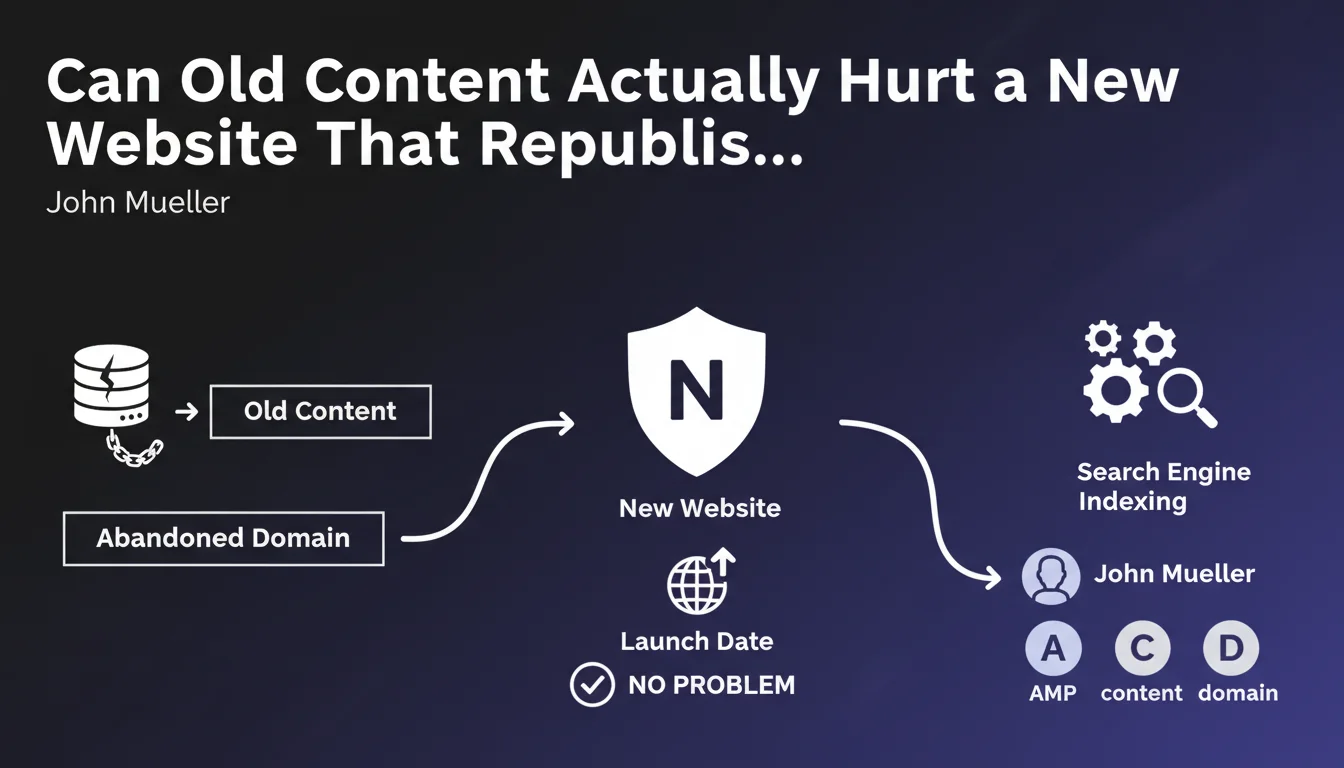
When a company launches a new domain name while recovering content from an old site, a legitimate concern arises. Will the search engine detect an inconsistency between the domain's creation date and the content's age?
This situation is common during redesigns, rebranding efforts, or SEO migrations. Practitioners worry that Google might interpret this as a manipulation attempt or a confusing signal.
What exactly does Google say about this?
The official position is clear: there's no problem if content is older than the domain hosting it. Google perfectly understands that websites evolve and that legitimate content can be moved.
The search engine evaluates content based on its intrinsic quality and relevance, not on some supposed temporal consistency with the domain's age.
What elements does Google actually take into account?
- The quality and relevance of the content for current users
- Freshness signals such as updates and engagement
- Thematic continuity between the old and new site
- Properly implemented 301 redirects from the old domain
- Overall consistency of the new site's architecture
SEO Expert opinion
Does this statement hold up against real-world observations?
Absolutely. In my practice, I've supported numerous domain migrations where content several years old was transferred to brand new domains. SEO performance was maintained or even improved.
Google has a historical memory through web archives, backups, and its own index. The engine identifies migrated content and understands the connections between old and new domains, especially with appropriate redirects.
What important nuances should be considered?
Be careful though: if you're recovering old content, make sure it remains relevant and up to date. A technical article from 2015 that hasn't been updated could be penalized not for its age, but for its obsolescence.
The difference is subtle but crucial: content age isn't a criterion, but information freshness is. Old content that's regularly updated will outperform recent but already obsolete content.
In what contexts does this rule particularly apply?
This clarification is valuable for corporate redesigns, brand acquisitions, or consolidations of multiple sites into one. It's also reassuring for technical migrations to new infrastructures.
It also validates the approach of archiving and republishing quality historical content in a new architecture, a strategy often overlooked but potentially very profitable for SEO.
Practical impact and recommendations
What should you actually do when migrating content?
When transferring old content to a new domain, implement 301 redirects from each old URL to its new destination. This is the strongest signal for Google.
Preserve the original publication dates in schema.org markup (datePublished) while adding a modification date (dateModified). This transparency helps Google understand the content's history.
Update the content to ensure its current relevance. Add a note explaining the content's origin if it adds value for your readers.
What common mistakes should you absolutely avoid?
- Don't artificially modify dates to make content appear recent
- Don't import obsolete content without substantial updates
- Don't neglect 301 redirects from the old domain
- Don't forget to update internal links to the new URLs
- Don't remove historical metadata that provides context
How can you verify the migration is properly handled?
Use Search Console to verify that redirects are detected and new URLs are properly indexed. Monitor ranking changes in the 4-6 weeks following migration.
Analyze server logs to confirm that Googlebot is following redirects and crawling the new content. A temporary drop is normal, but it should be limited and brief.
Monitor Core Web Vitals and user engagement: if old content continues generating engagement on the new domain, that's the best signal for Google.
💬 Comments (0)
Be the first to comment.