
Official statement
What you need to understand
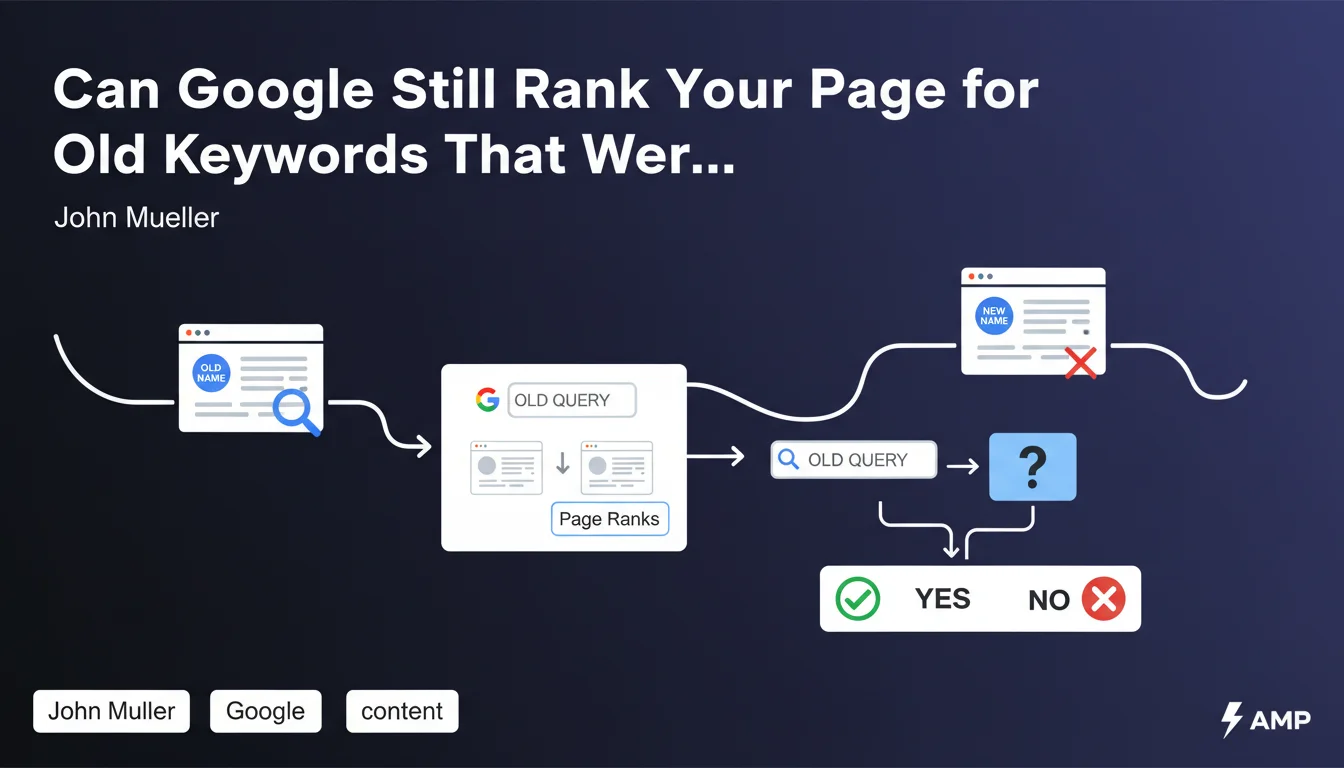
Google has a historical memory capacity that allows it to continue displaying a page in search results for terms that are no longer physically present on it. This feature is particularly visible during company name changes or content overhauls.
The search engine therefore keeps a record of a page's past content and maintains its ranking for old associated queries. This means that a page can continue to rank for expressions it no longer textually contains.
This semantic memory likely relies on artificial intelligence systems that establish connections between old and new terms, treating them as synonyms or contextual equivalents.
- Google memorizes previous versions of a page's content
- A page can remain ranked for terms removed from current content
- The system treats old and new versions as linked entities
- This feature facilitates transitions during brand or terminology changes
SEO Expert opinion
This revelation confirms what many SEO practitioners have been observing for years: residual ranking effects after content modification. This is consistent with Google's modern semantic approach that no longer limits itself to simple keyword matching.
However, this memory capacity must be nuanced. It works effectively for known entities (brands, companies) where Google has multiple confirmation signals (external mentions, links, Knowledge Graph). For less established content or pages with low authority, this memory may be more limited over time.
Practical impact and recommendations
- During a name change or rebranding, temporarily maintain both versions (old and new) on the page to facilitate the transition
- Create a dedicated page explaining the change that explicitly mentions both the old and new names to reinforce the semantic association
- Implement progressive 301 redirects rather than abruptly removing old content
- Monitor rankings for old queries for several months to measure the duration of Google's memory
- Update backlinks and external mentions so they incorporate the new terminology while mentioning the old one
- Use schema.org markup (alternateName, formerName) to explicitly signal naming changes
- Don't rely indefinitely on this memory: plan a repositioning strategy for new target queries
💬 Comments (0)
Be the first to comment.