
Official statement
What you need to understand
Why does this question of author identification matter for SEO?
Since the introduction of E-E-A-T criteria (Experience, Expertise, Authoritativeness, Trustworthiness), identifying content authors has become a concern for SEO professionals. Many wonder whether they need to use real names rather than pseudonyms.
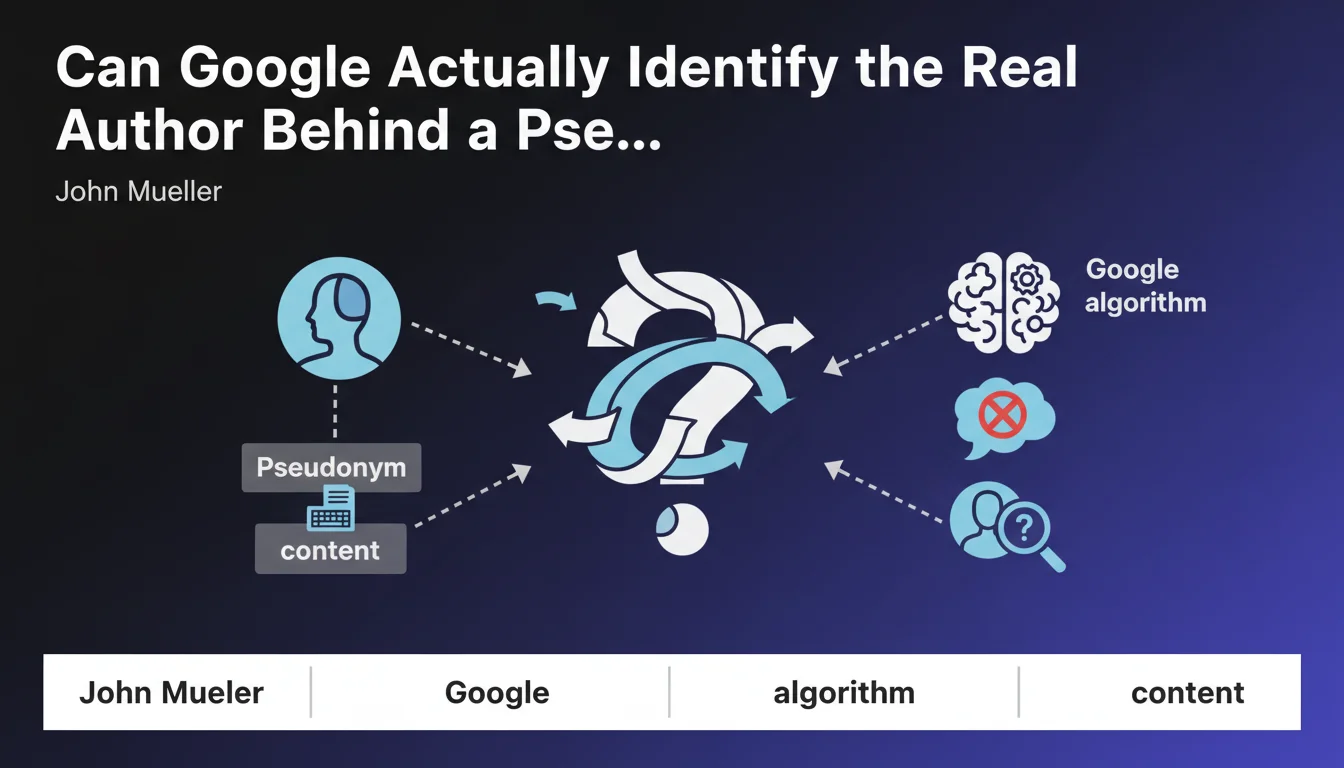
John Mueller clarifies that Google doesn't attempt to verify the reality of an author's name. The algorithms cannot determine whether "John Smith" is a real name or a pseudonym, nor can they connect an avatar to a real identity.
What does this actually mean for authority signals?
This statement reveals that Google evaluates an author's authority and credibility not by their civil identity, but by the signals associated with that name or pseudonym. What matters is the consistency and traceability of this identity within the digital ecosystem.
If an avatar is used consistently and professionally across different platforms, it can develop a reputation equivalent to that of a real name. It's the construction of authority that counts, not the administrative authenticity of the name.
What elements can Google actually analyze?
Google focuses on measurable signals rather than identity verification. The algorithms examine online presence, mentions, backlinks to author profiles, and contribution recurrence.
- The consistency of name/pseudonym usage across different content and platforms
- Structured and complete biographies associated with the author
- Mentions and citations of this author on other authoritative sites
- The quality and regularity of content published under this signature
- Linked social and professional profiles (LinkedIn, Twitter, etc.)
- External references validating this author's expertise
SEO Expert opinion
Is this statement consistent with practices observed in the field?
Absolutely. In my 15 years of experience, I've observed that many sites using established pseudonyms perform just as well as those using real names. Famous pseudonyms in specialized niches even benefit from considerable authority.
What truly matters is building a coherent digital identity. An avatar with a strong presence, regular contributions, and demonstrated expertise can outperform a real name without digital history. Google measures reputation, not civil status.
What nuances should we add to Mueller's statement?
Although Google doesn't verify name authenticity, certain sectors require increased transparency. For YMYL (Your Money Your Life) content like health or finance, using verifiable identities remains strongly recommended.
In these sensitive areas, even though a pseudonym isn't technically penalized, users and Google place greater value on content signed by identifiable professionals. Human trust remains an indirect but powerful factor.
In which cases might using a pseudonym pose problems?
Problems arise when pseudonyms are used inconsistently or to mask a lack of expertise. Changing avatars, empty or contradictory biographies, or a total absence of associated online presence harm credibility.
Additionally, multiplying pseudonyms for the same author dilutes authority signals. It's better to build the reputation of a single solid avatar than to disperse your expertise under several unconnected identities.
Practical impact and recommendations
What should you actually do with this information?
If you use a pseudonym, fully own it and build it as a personal brand. Create a detailed biography, maintain a consistent presence on professional networks, and ensure this name appears uniformly.
Develop complete author profiles on your site with credibility elements: publication history, areas of expertise, possible professional qualifications (even under a pseudonym), and links to your other online contributions.
For sites with multiple contributors, implement a robust author page system. Each author, real or pseudonym, should have their dedicated page with a photo (even stylized), a substantial bio, and a portfolio of their articles.
What mistakes should you absolutely avoid?
Don't use generic or multiple pseudonyms without consistency. "Admin," "Editorial Team," or changing names destroy any possibility of building author authority measurable by Google.
Also avoid leaving your author tags empty or poorly structured. Use Schema.org markup for authors correctly, even with pseudonyms, so Google can establish connections between your content.
- Verify that each piece of content has clear and consistent author attribution
- Create or optimize author profile pages with detailed biographies
- Implement Schema.org Author markup on all content
- Establish a consistent external presence for each pseudonym used (social networks, professional profiles)
- Maintain consistency in spelling and presentation of the pseudonym
- Create links between the author's different profiles (website, Twitter, LinkedIn, etc.)
- Document the author's expertise and experience in their biography
- Avoid using the same pseudonym across multiple sites without thematic consistency
How can you ensure your author strategy is optimal?
Regularly audit the consistency of your author signatures across your site and the digital ecosystem. Search for your pseudonym on Google to see what authority signals are associated and identify reinforcement opportunities.
Monitor your Core Web Vitals and E-E-A-T signals to understand whether your author pages contribute positively to your overall authority. Tools like Google Search Console can reveal whether your content benefits from recognized expertise.
💬 Comments (0)
Be the first to comment.