
Official statement
What you need to understand
What exactly is author entity reconciliation at Google?
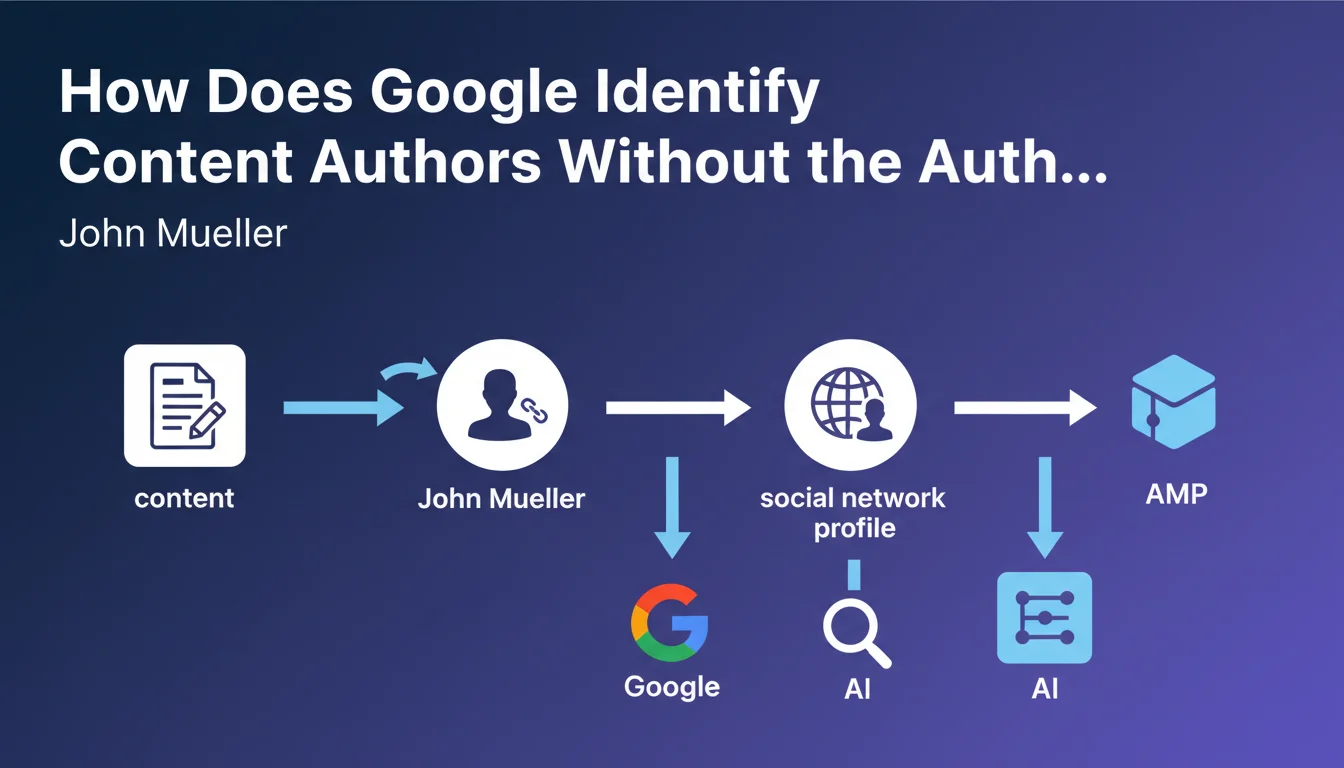
Google removed the authorship tag several years ago, but this doesn't mean the search engine has given up on identifying authors. The system now uses a process called entity reconciliation to recognize that the same person has written different pieces of content across the web.
This reconciliation works by analyzing the links between author pages and centralized profiles. When Google detects that an author name on a page links to a common profile, it can understand that multiple articles share the same creator and group them as coming from a single author entity.
Why does Google still care about identifying authors?
Author identification remains crucial for assessing the credibility and expertise of content. Within the framework of E-E-A-T criteria (Experience, Expertise, Authoritativeness, Trustworthiness), Google seeks to understand who produces information in order to better evaluate its quality.
A recognized and identifiable author in a specific field can confer more semantic value to the content they sign. This reconciliation also allows Google to build a richer knowledge graph around people and their expertise.
What are the technical mechanisms that enable this identification?
The system primarily relies on linking signals between author pages and external profiles. This can include links to social networks, professional profile pages, or any centralized page presenting the author.
- Google analyzes the hyperlinks from the author's name to a common profile
- The search engine compares these profiles across different sites to identify the same entity
- Structured data can strengthen this reconciliation but is no longer mandatory
- Consistency of information (name, photo, bio) facilitates identification
- This technique works even without formal authorship markup
SEO Expert opinion
Does this approach align with what we're seeing in the field?
Absolutely. Analysis of high-performing sites does indeed show that content with detailed author pages and links to social profiles tends to rank better in the SERPs, particularly for YMYL (Your Money Your Life) queries.
We also observe that sites that have invested in rich author profiles with complete biographies, professional photos, and coherent links see their content better valued. Reconciliation seems particularly effective when authors have an established presence on LinkedIn, Twitter, or recognized professional platforms.
What nuances should we add to this statement?
Not all content requires the same level of author identification. For basic informational content or e-commerce product pages, the impact of author reconciliation remains limited. It's mainly for expert articles, analyses, and content requiring an authority endorsement that this strategy is crucial.
Moreover, the quality of the centralized profile matters as much as its existence. An abandoned or poorly documented social profile won't provide the same reconciliation value as an active profile consistent with the author's area of expertise.
In which contexts does this strategy become essential?
For news sites, health, finance, and all YMYL domains, clear author identification is no longer optional. Recent algorithmic updates systematically penalize sensitive content without clear attribution.
Technical expertise blogs, professional advice sites, and specialized media must also invest heavily in this strategy. Author reconciliation becomes a major competitive differentiator against competitors who neglect this aspect.
Practical impact and recommendations
What exactly should you implement on your site?
The first step is to create dedicated author pages for each regular contributor to your site. These pages should contain a detailed biography, professional photo, areas of expertise, and especially links to the author's social or professional profiles.
Next, ensure that each article includes a clickable link on the author's name pointing to this profile page. This link must be consistent across all content from the same author to facilitate reconciliation by Google.
On external social profiles (LinkedIn, Twitter, personal website), add backlinks to your site to create a validation loop. This bidirectional consistency strengthens Google's confidence in identifying the author entity.
What common mistakes should you absolutely avoid?
Never link multiple different author names to the same social profile. This inconsistency confuses reconciliation algorithms and can even harm your credibility. Each author must have their own unique and identifiable profile.
Also avoid empty or generic author pages with just a name. Google looks for depth signals: substantial biography, publication history, evidence of expertise. A minimal profile adds no value to reconciliation.
- Don't create author profiles for non-verifiable pseudonyms
- Don't use stock images for author photos
- Avoid copy-pasted or overly generic biographies
- Don't link to social profiles that have been inactive for a long time
- Ensure spelling consistency of the name across all platforms
How can you verify that the configuration is optimal?
Start with a manual audit of all your author pages and their links. Verify that each link works, that external profiles are active and consistent, and that the information corresponds to a real person.
Use schema.org Author structured data with the sameAs property pointing to social profiles. Test this data with Google's Rich Results Test tool to ensure it's correctly interpreted.
- Create detailed profile pages for each recurring author
- Add clickable links on all author names to these pages
- Insert links to professional social profiles (LinkedIn, Twitter)
- Implement schema.org Author markup with sameAs property
- Keep social profiles up-to-date and active
- Ensure consistency of information (name, photo, bio) everywhere
- Add backlinks from external profiles to the site
- Enrich biographies with expertise details and achievements
- Regularly test links and validity of structured data
💬 Comments (0)
Be the first to comment.