
Official statement
What you need to understand
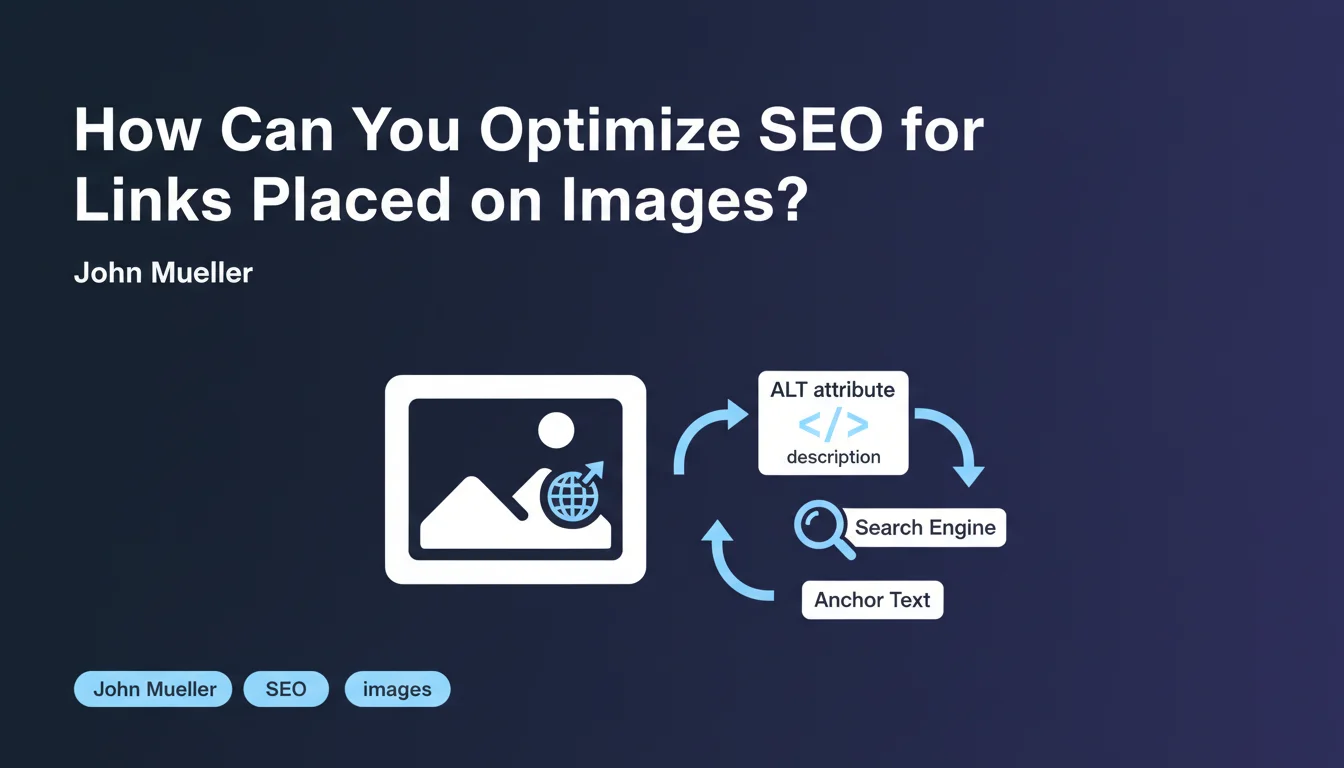
When a hyperlink is placed on an image rather than on text, Google needs to understand the context and destination of that link. Without visible text, the search engine turns to the image's ALT attribute to extract this information.
Concretely, the ALT attribute plays exactly the same role as classic anchor text. It tells Google the theme of the destination page and passes link equity accordingly. It's therefore a determining factor for internal linking and link building.
This official confirmation removes any ambiguity about a technical point that's often overlooked. Many sites use clickable images without optimizing their ALT attribute, thus losing a valuable opportunity for semantic optimization.
- The ALT attribute of a clickable image serves as anchor text for the link
- Google treats these anchors like classic textual anchors
- An empty or generic ALT wastes the SEO benefit of the link
- This rule applies to internal linking as well as backlinks
SEO Expert opinion
This statement confirms what experienced SEO practitioners have been observing for years in their audits. Sites that properly optimize their ALT attributes on clickable images benefit from more effective internal linking and better PageRank distribution.
However, some nuance is needed: the impact is particularly visible on e-commerce sites and blogs where product thumbnails and illustration images are often clickable. In these contexts, an optimized ALT can make the difference between a well-ranked page and an invisible one.
We also observe that Google values consistency between the image, its ALT, and the destination page. A misleading or irrelevant ALT can be considered an attempt at manipulation and degrade the trust granted to the site.
Practical impact and recommendations
- Systematically audit all links placed on site images (banners, buttons, product thumbnails, clickable illustrations)
- Ensure that each clickable image has a descriptive and optimized ALT attribute with relevant keywords
- Avoid generic ALTs like "image", "photo", "click here" or worse, leaving them empty
- Favor natural descriptions that incorporate the target keyword of the destination page
- Check semantic consistency between the image, its ALT, and the content of the linked page
- Pay particular attention to navigation images (graphic menus, CTA buttons) that are often neglected
- For e-commerce sites, optimize the ALTs of product thumbnails that link to detailed product pages
- Don't over-optimize: the ALT must remain descriptive and accessible, not stuffed with keywords
- Include this verification in content creation and publishing processes
The rigorous implementation of these optimizations across an entire site can represent a substantial technical project, requiring a structured methodology and powerful audit tools. For large sites or complex architectures, support from a specialized SEO agency ensures effective implementation that complies with best practices, while avoiding the pitfalls of over-optimization.
💬 Comments (0)
Be the first to comment.