
Official statement
Other statements from this video 1 ▾
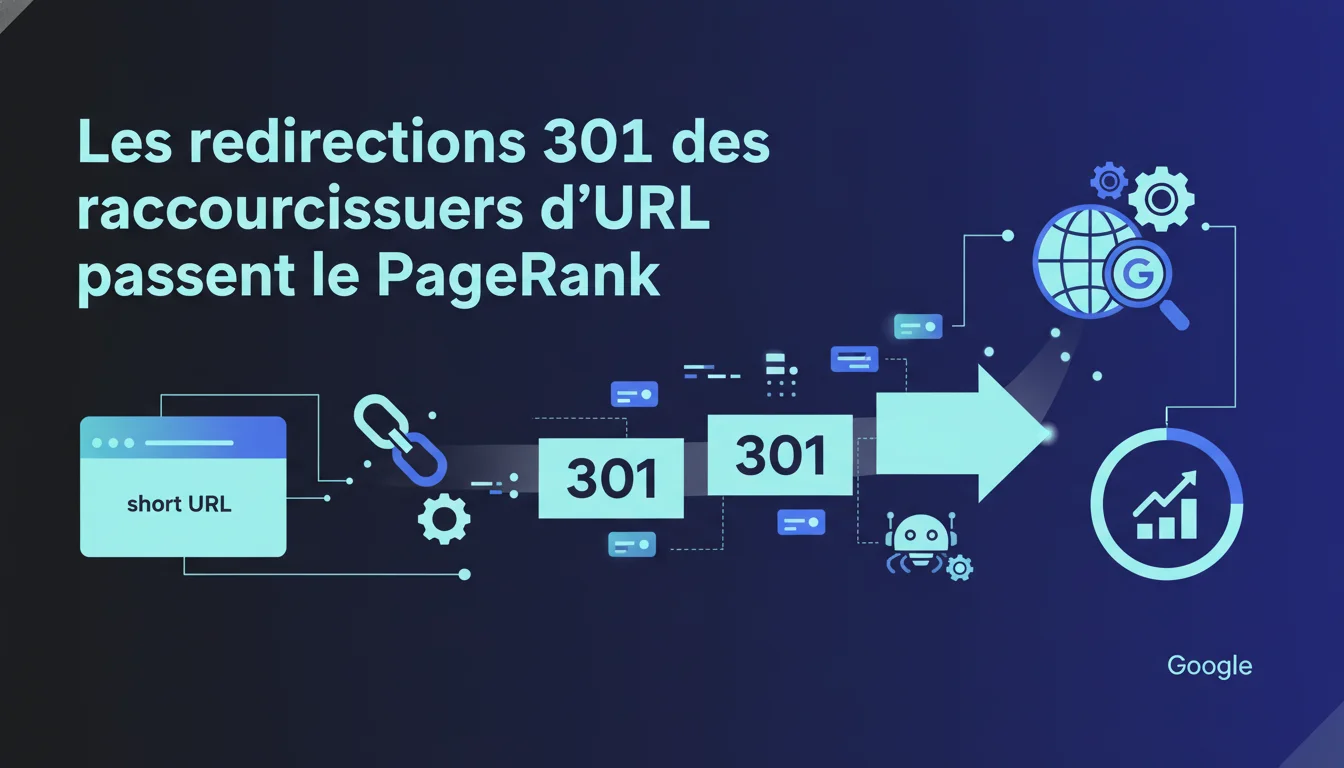
Google confirms that URL shorteners using 301 redirects pass PageRank to the final destination. This works correctly with well-configured popular services. It's important to monitor the quality of the service used and avoid multiple redirect chains that slow down crawling and potentially dilute the transmission.
What you need to understand
Why does Google clarify the use of URL shorteners?
URL shorteners like Bitly, TinyURL, or custom solutions have long caused confusion among SEO practitioners. The central question is: does a 301 redirect via a third-party domain really pass PageRank as a direct redirect would?
Google clears the ambiguity. 301 redirects from shorteners do pass link juice. But this statement has a nuance: "as long as they are well configured." In practical terms, this means the issue lies not in the technical principle of the redirect but in the quality of implementation of the service.
What’s the difference between a standard and a custom shortener?
Public shorteners (bit.ly, goo.gl before its shutdown) use shared domains for millions of links. Custom shorteners, on the other hand, operate on your own domain or subdomain — typically using tools like Rebrandly or Short.io.
The SEO difference is minor on paper: in both cases, the 301 redirect passes PageRank. However, a shortener on your own domain gives you full control over configuration, link lifespan, and avoids reliance on a third-party service that could shut down overnight.
What does Google mean by "well configured"?
This vague wording hides several critical technical points. First, the redirect must be a true 301, not a temporary 302 or a JavaScript redirect. Next, the service must not insert a advertising or confirmation interstitial page before the final destination.
The "popular services" mentioned by Google generally have a solid infrastructure: fast response times, high availability, and no unnecessary redirect chains. A poorly coded or unstable shortener can slow down crawling, or even block Googlebot if the service crashes regularly.
- 301 redirects via shorteners pass PageRank to the final destination
- Transmission works only if the service is well configured (true 301, no interstitial, correct response time)
- Stable and popular services are generally safe for SEO
- A shortener on your own domain offers more control and longevity
- Avoid multiple redirect chains that slow down crawling and complicate PageRank tracking
SEO Expert opinion
Does this statement truly reflect on-the-ground observations?
Yes, generally speaking. Practical tests have shown for years that shortened links via Bitly or other serious services count in backlink profiles. Tools like Ahrefs or Majestic detect these links and follow the redirect to the final destination.
But note: the transmission of PageRank is not instantaneous. Google must first crawl the shortened link, follow the redirect, and then recalculate the graph. If the shortened link is published on a highly crawled platform (Twitter, LinkedIn), the transmission will be quick. On an obscure blog, it may take weeks. [To be verified]: Google does not provide a precise timeframe for the transmission.
What real risks exist with third-party shorteners?
The first risk is the closure of the service. Google itself shut down goo.gl, turning millions of links into redirects to a warning page. All those links lost their value overnight. A personal shortener eliminates this risk.
The second risk is the domain reputation. If a public shortener is heavily used for spam, Google could decide to devalue all links passing through that domain. This is rare but not impossible. With a personal domain, you control the usage and quality of the links.
When should you absolutely avoid shorteners?
For high-authority strategic backlinks, never use a shortener. A direct link from a DR 80+ site to your target page is cleaner, faster to crawl, and eliminates any intermediary. The risk isn’t worth the reward.
Shorteners remain useful for social tracking, email campaigns, or temporary shares. However, for sustainable link building or permanent redirects after a redesign, always prioritize direct 301 redirects on your own domain.
Practical impact and recommendations
What should you do if you already use shorteners for your backlinks?
Audit your existing shortened links in Ahrefs or Majestic. Check that they appear correctly in your backlink profile and point to the right destinations. If important links go through a third-party shortener, consider asking publishers to replace them with direct links.
For social links or one-off campaigns, keep the shorteners. But for any quality editorial link, a direct link eliminates risks and speeds up PageRank transmission. It’s a matter of prioritization: where the juice really matters, be direct.
How can you verify that a shortener is well configured?
Use a tool like Screaming Frog or Redirect Path (Chrome extension) to test the type of redirect. You should see an HTTP code of 301 Moved Permanently, never a 302 or 307. Also check the response time: a slow shortener (>500ms) can hinder Google’s crawl.
You can also test with the URL Inspection Tool in Search Console. Ask Google to crawl a shortened link pointing to one of your pages. If Googlebot correctly follows the redirect and indexes the final destination, the service is functioning properly for SEO.
Should you migrate to a custom shortener?
If you heavily use shortened links for sustainable content or link building, yes. A shortener on your own domain or subdomain (e.g., go.yourdomain.com) gives you full control and removes the risk of sudden service closure.
Tools like Rebrandly, Short.io, or YOURLS (self-hosted open-source solution) allow you to create a custom shortener in just a few hours. The investment is minimal compared to the risk of losing hundreds of backlinks if a third-party service shuts down.
- Audit your existing shortened links in your preferred backlink tools
- Check the type of redirect (301) with Screaming Frog or Redirect Path
- Test the response time of the shortener (< 500ms ideally)
- For strategic backlinks, always prefer direct links without intermediaries
- If you heavily use shorteners, consider a custom solution on your domain
- Document all your shortened links in a spreadsheet to avoid losing mapping if the service shuts down
❓ Frequently Asked Questions
Un raccourcisseur en 301 transmet-il 100% du PageRank ou y a-t-il une perte ?
Les redirections 302 des raccourcisseurs transmettent-elles aussi le PageRank ?
Peut-on utiliser plusieurs raccourcisseurs en chaîne sans perdre de PageRank ?
Les liens raccourcis sur Twitter ou LinkedIn comptent-ils pour le SEO ?
Faut-il rediriger les anciens liens raccourcis goo.gl après sa fermeture ?
🎥 From the same video 1
Other SEO insights extracted from this same Google Search Central video · duration 1 min · published on 11/04/2011
🎥 Watch the full video on YouTube →
💬 Comments (0)
Be the first to comment.