
Official statement
Other statements from this video 1 ▾
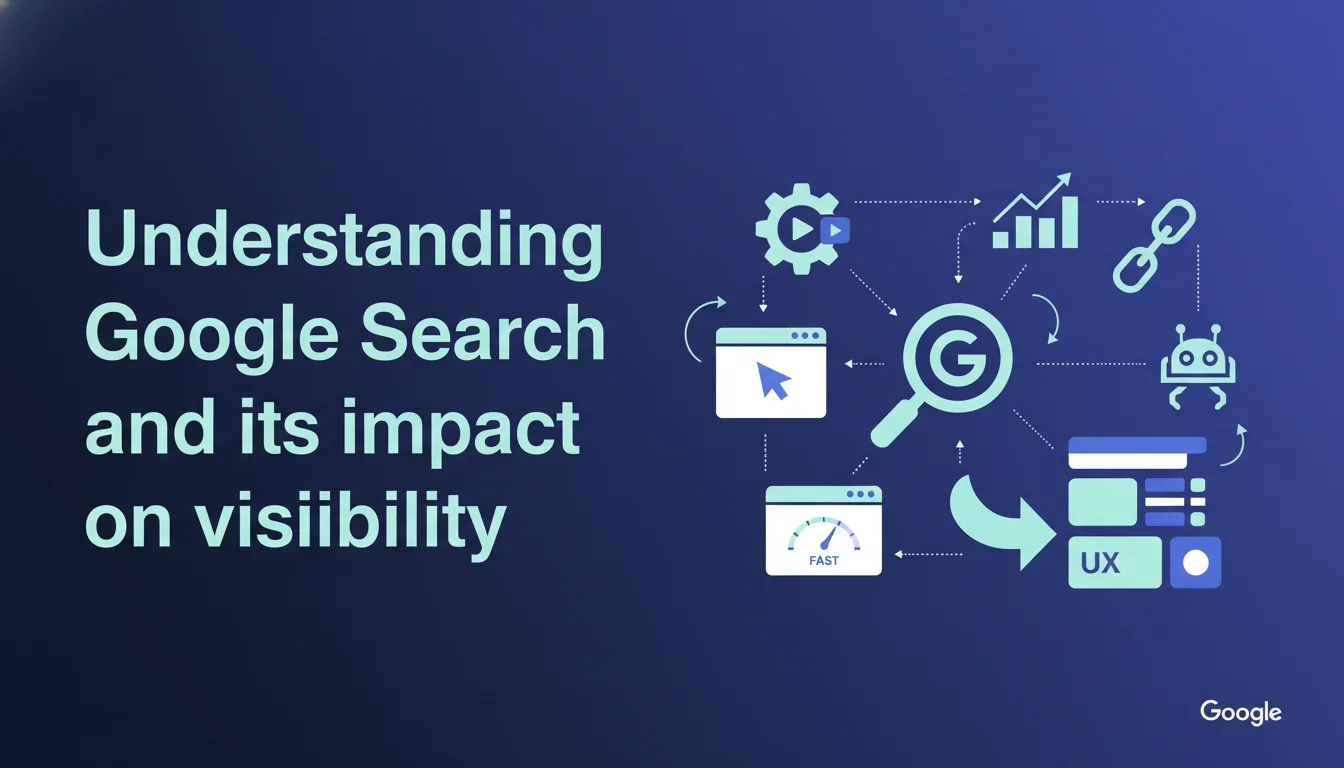
Google reveals the basic mechanics of visibility in Search: crawling, indexing, and displaying results. For SEO practitioners, this serves as a reminder that mastering these three pillars remains the foundation of any strategy — however, Google remains deliberately vague about the actual ranking criteria. The practical implication? Ensure that your site isn’t technically blocked before even considering ranking.
What you need to understand
Why does Google revisit these fundamentals?
This statement is not revolutionary. Google is putting back on the table the basics of how Search works: how a site is crawled, indexed, and then displayed in results. What catches the eye is the timing — this type of reminder generally comes when Google notices that many sites encounter basic issues preventing them from being visible.
Specifically? A site can have the best content in the world; if Googlebot cannot access it, or if the pages are not indexable, no ranking is possible. Google emphasizes these foundations because too many projects fail at this stage — even before tackling semantic optimization or linking.
What does "visibility" really mean for Google?
Google merges two distinct concepts here. On one hand, presence in the index: does your site exist in Google's database? On the other, ranking in the SERPs: are you visible on strategic queries?
The statement focuses on the first aspect — which is logical, yet incomplete. Being indexed does not guarantee any commercial visibility. You can have 10,000 pages in the index and generate zero traffic if they are ranked on page 12. Google remains vague on what differentiates "present in the index" from "visible to users".
How can I change what appears in results?
Google addresses the issue of displayed metadata: title, meta description, rich snippets. The underlying message? You have some control over how your results appear, but Google reserves the right to rewrite your tags if it deems them not fitting for the query.
In practice, this means that your optimized title tags can be ignored. Google increasingly generates its own titles from the page content, search context, and anchor texts pointing to you. This control is diminishing — this is a ground reality that this statement confirms without stating it outright.
- Crawl and technical accessibility: without Googlebot access, no indexing is possible.
- Conditional indexing: being crawled does not guarantee indexing — perceived quality plays a role.
- Display in SERPs: Google is increasingly rewriting metadata, reducing control for webmasters.
- Actual visibility vs presence in the index: two distinct issues that Google intentionally mixes.
- Essential diagnostic tools: Search Console remains the go-to tool for identifying technical blocks.
SEO Expert opinion
Is this statement consistent with field practices?
Yes, regarding technical fundamentals. Google is not lying when it states that accessibility and indexability are prerequisites. We regularly see sites with poorly configured robots.txt, chain redirects, or disastrous response times wondering why they aren’t ranking.
However, the part about "how to change what appears" is less transparent. Google claims that webmasters can control display via tags, but in reality, the engine rewrites titles in 60 to 70% of cases according to some studies. The gap between rhetoric and reality is evident. [To be verified]: Google doesn’t specify the extent to which it ignores the provided metadata.
What nuances should be added to this discourse?
Google overly simplifies. It presents visibility as a linear process: crawl > indexing > display. In reality, it is much more complex. Indexing is conditional — Google can crawl a page and decide not to index it if deemed duplicate, thin content, or low quality.
Another point: the statement doesn’t mention crawl budget. For a 500-page site, this is not a problem. For an e-commerce site with 50,000 URLs, it is critical. Google will not explore everything, let alone index it all. Therefore, prioritization is necessary — filter facets, technical pages, etc. This silence is revealing.
In what cases does this logic not apply?
First case: sites with a strong brand signal. If you are a known brand, Google will index you and rank you even if your technical setup is mediocre. Tolerance for technical errors is not the same for everyone — this is an unspoken fact that Google never officially acknowledges.
Second case: content subjected to specific algorithmic filters (YMYL, E-E-A-T, etc.). You can be perfectly indexed and technically flawless, but if Google deems your site lacks authority on a medical or financial topic, you will never rank. The statement completely overlooks these layers of post-indexing filtering.
Practical impact and recommendations
What concrete actions should be taken to ensure your site’s indexing?
Start by auditing technical accessibility. Ensure that Googlebot can reach all your strategic pages: no robots.txt blocking, no unintended noindex, no chain redirects. Use Search Console to identify pages crawled but not indexed — this is often symptomatic of quality or duplication issues.
Next, optimize your internal linking. Google follows links to discover content. If a page is more than 4-5 clicks from the homepage, it may never be crawled, especially on a large site. Prioritize high-value pages by bringing them up in the hierarchy and creating contextual links from already well-crawled pages.
What mistakes should be avoided in managing visibility?
Don’t confuse indexing and ranking. Having 100% of your pages in Google’s index is of no use if they are all on page 8. Some sites over-index low-quality content — which can even harm the overall perception of the site by Google.
Another common mistake: frantically rewriting your title and meta description without understanding why Google ignores them. If the engine systematically rewrites your titles, it is often because they are too generic, misleading, or misaligned with the actual content of the page. Before multiplying A/B tests, ensure your tags accurately reflect what the user will find.
How can I verify that my site meets Google's expectations?
Use Search Console as your main dashboard. The "Coverage" tab shows which pages are indexed, excluded, or have errors. The "Page Experience" tab reveals issues with Core Web Vitals. The "Sitemaps" tab confirms that Google has received your sitemap.
Complement this with manual tests: query site:yourdomain.com to estimate the extent of indexing, URL inspection to force a re-crawl, analyze server logs to see what Googlebot is actually doing. Declarative data (Search Console) and real data (logs) don’t always match — it is in this gap that problems often lie.
- Check that robots.txt doesn’t block access to critical resources (CSS, JS, strategic pages).
- Ensure that no meta robots="noindex" tag inadvertently blocks important pages.
- Audit server response time — a Time to First Byte (TTFB) > 600 ms penalizes crawling.
- Optimize internal linking so that strategic pages are no more than 3 clicks from the homepage.
- Remove or consolidate low-quality pages that dilute crawl budget.
- Submit a clean XML sitemap, free from blocked, redirected, or 404 error URLs.
❓ Frequently Asked Questions
Comment savoir si mon site est indexé par Google ?
Pourquoi Google réécrit-il mes title tags ?
Être indexé garantit-il d'apparaître dans les résultats de recherche ?
Combien de temps faut-il à Google pour indexer une nouvelle page ?
Le fichier robots.txt peut-il empêcher l'indexation d'une page ?
🎥 From the same video 1
Other SEO insights extracted from this same Google Search Central video · duration 0 min · published on 23/10/2019
🎥 Watch the full video on YouTube →
💬 Comments (0)
Be the first to comment.