
Official statement
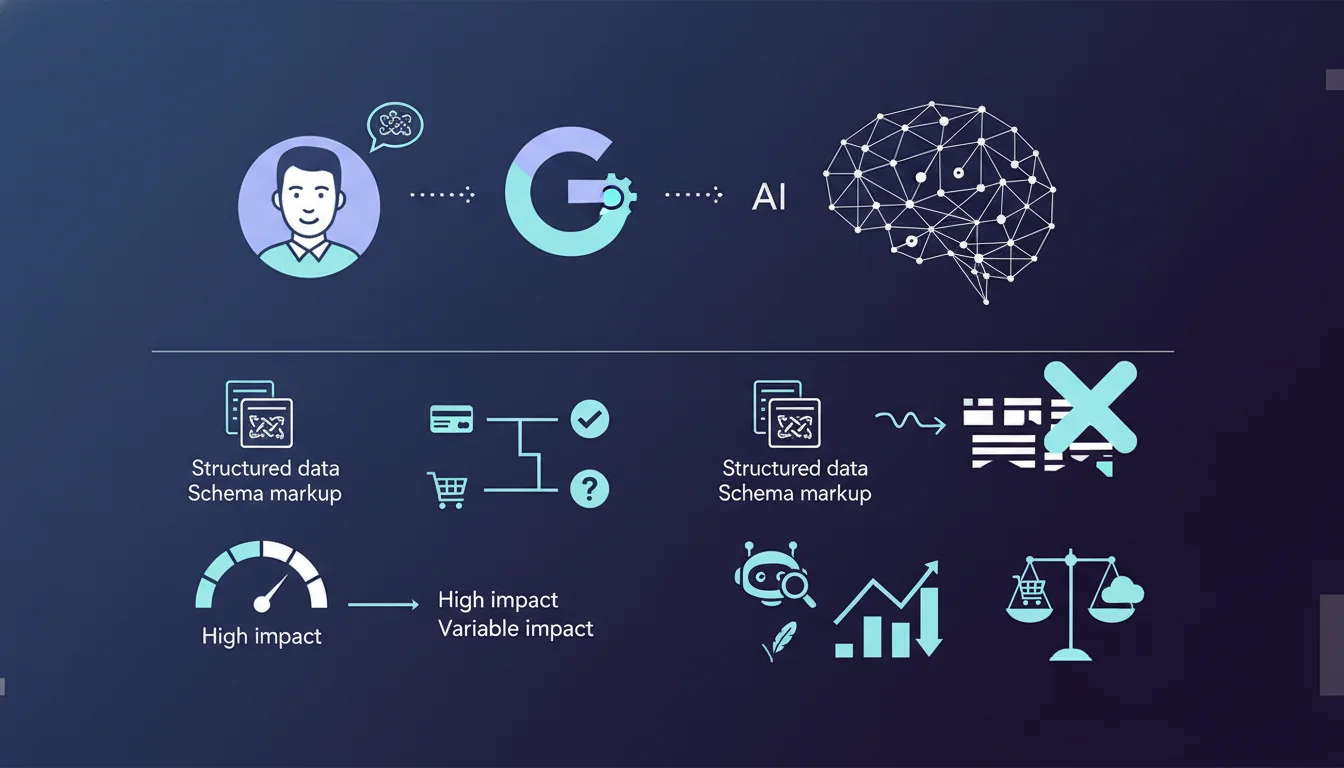
John Mueller also explains that it's much easier for machines to read structured data rather than interpret a page in different languages. However, he warns against excessive optimism surrounding certain types of data, notably citing the example of how useless an "Insurance" markup is on an insurance comparison site.
What you need to understand
John Mueller recently nuanced the impact of Schema markup on mentions in responses generated by language models (LLMs) and artificial intelligence. Contrary to popular belief, integrating structured data doesn't automatically guarantee better visibility in these new result formats.
This statement comes at a time when many SEO practitioners are heavily banking on Schema.org hoping to optimize their presence in responses generated by ChatGPT, Bard, or Google's AI Overviews. Mueller reminds us that the effectiveness of these markups varies considerably depending on use cases.
According to him, certain sectors benefit more from structured data than others. E-commerce, for example, derives significant value from these markups, while other types of markup prove barely relevant, or even useless.
- How effective is Schema really? It strongly depends on the targeted feature and how each search engine or LLM uses it
- Why do structured data matter for machines? They facilitate machine reading, especially for multilingual content
- Are all markup types created equal? No—some provide real added value, others are superfluous
- What does the Insurance markup example tell us? It shows that a markup can be totally unsuitable for certain types of sites (comparison sites)
SEO Expert opinion
Mueller's position is perfectly consistent with field observations from recent years. We indeed observe that rich snippets and SERP features depend on structured data in highly variable ways depending on sectors.
The important nuance to make concerns the distinction between visibility in traditional SERPs and mentions in LLMs. For traditional search results, Schema remains crucial for obtaining rich snippets (reviews, recipes, FAQs, products). However, for AI responses, LLMs rely on more complex mechanisms that go beyond simple parsing of structured data.
The Insurance markup example is particularly revealing: implementing a schema that's unsuited to your business model serves no purpose. A comparison site is not an insurer, and Google knows this perfectly well. This logic applies to many cases where sites attempt to force markups that don't correspond to their reality.
Practical impact and recommendations
- Audit your existing Schema markups to identify those that truly correspond to your business and eliminate unsuitable markups
- Prioritize high-value schemas for your sector: Product, Offer, and Review for e-commerce; Article and FAQPage for informational content; LocalBusiness for local businesses
- Don't rely solely on Schema for LLMs: work in parallel on editorial clarity, semantic structure, and informational quality of your content
- Systematically test your structured data with Google tools (Rich Results Test, Search Console) to verify their technical validity
- Avoid markup spam: don't implement markups just because they exist, but because they accurately describe your content
- Keep your schemas up to date with Schema.org vocabulary evolutions and Google's recommendations
- Document your markup strategy by justifying the choice of each schema type implemented according to your business model
In summary: Schema markup remains a valuable SEO tool, but its impact on LLMs and AI responses is variable and unpredictable. Focus on markups relevant to your actual business rather than trying to cover all possible cases.
Optimizing structured data requires sharp technical expertise and deep understanding of different Schema vocabularies, their interactions with algorithms, and their constant evolution. These implementations, when poorly calibrated, can represent a considerable time investment without measurable return. For sites with high commercial stakes, partnering with a specialized SEO agency allows you to benefit from a custom markup strategy, adapted to your industry sector and business objectives, while avoiding technical pitfalls that can compromise your performance.
💬 Comments (0)
Be the first to comment.