
Official statement
Other statements from this video 1 ▾
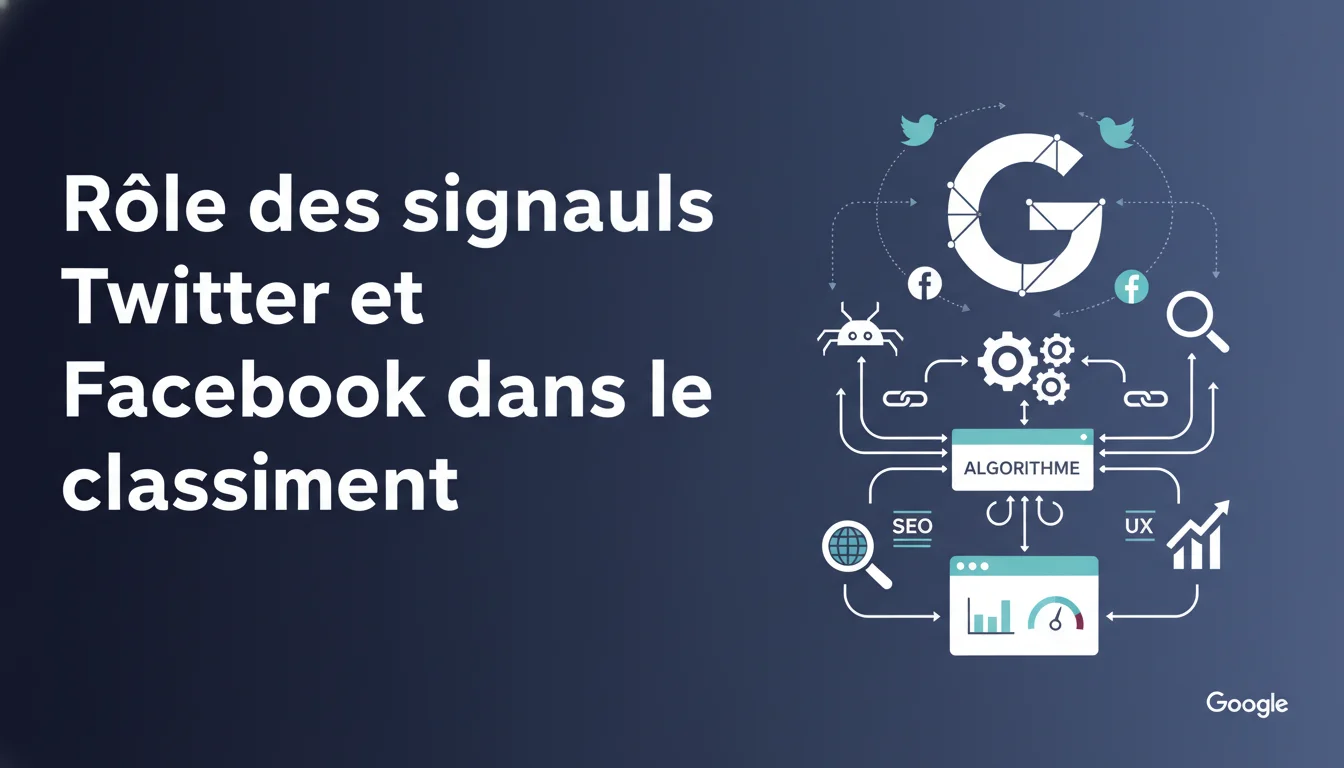
Google states that social signals (likes, shares, followers) are not direct ranking factors. Facebook and Twitter pages are crawled like any web content, without preferential treatment. For SEO, this means that investing heavily in social metrics to gain positions is a waste of time if the goal is purely ranking.
What you need to understand
Why does Google exclude social signals from its algorithms?
Google justifies this choice with two major technical constraints. The first: access to social data is not guaranteed. Facebook and Twitter can block crawling at any time, change their APIs, or restrict access to profiles.
The second reason relates to the instability of social metrics. A tweet can go viral and then disappear within hours. An account can buy 10,000 fake followers overnight. Google cannot base a ranking algorithm on such volatile and manipulable data.
How does Google actually treat social media pages?
Public profiles on Facebook, Twitter, or LinkedIn are indexed like any standard HTML page. The crawler reads the text content, follows links, and assesses relevance according to the same criteria as for a blog or corporate site.
No bonus is given because a page belongs to a social network. A tweet with 50,000 retweets won't be ranked better than an equivalent blog post in terms of semantic relevance and backlinks. What matters is the content itself and traditional external signals.
Does this mean social media is useless for SEO?
No, but their impact is indirect and not accounted for as a ranking signal. Viral content on Twitter can generate natural backlinks, referral traffic, brand mentions. It is these side effects that influence ranking, not the social metrics themselves.
The mistake would be to confuse correlation and causality. Yes, well-ranked content often has a strong social presence. But this is generally because it is high quality and naturally generates both engagement AND backlinks, not because likes boost ranking.
- Social metrics (likes, shares, followers) are not direct ranking criteria for Google
- Social media pages are crawled and indexed like any standard web content
- Indirect SEO impact exists through backlinks and traffic generated by social virality
- The volatility of social data and access restrictions hinder reliable integration into the algorithm
- Investing in social remains relevant for overall visibility, not for pure organic ranking
SEO Expert opinion
Is this statement consistent with real-world observations?
Empirical tests largely confirm this position. Experiments conducted on identical content with radically different levels of social engagement show no significant ranking variation. An article with 10,000 Facebook shares does not systematically outperform an equivalent piece without social engagement.
Some SEO tools still display correlations between social signals and positions. The problem? They measure correlation, not causality. Content that ranks well is often shared because it is already visible, not the other way around. Confusing the two leads to ineffective strategies.
What nuances should be added to this rule?
Google talks about direct ranking signals, but the ecosystem is more complex. A viral piece on LinkedIn can attract the attention of journalists, who then create high-quality editorial backlinks. These backlinks clearly count in the algorithm.
Similarly, a strong Twitter presence can enhance a brand's perceived authority, which indirectly influences link behaviors and mentions. The effect exists, but it operates through intermediary mechanisms that Google can measure (backlinks, citations) rather than through social metrics themselves.
Another nuance: this statement concerns the main web search algorithm. In enriched results, tweet carousels or social integrations may appear, but this is a separate circuit from classic organic ranking. [To be verified]: the potential impact on featured snippets or People Also Ask remains poorly documented.
When does this rule not fully apply?
For brand name or person searches, social profiles often appear on the first page, sometimes ahead of the official site. This is not due to social metrics, but because Google identifies these pages as reference entities for the specific query intent.
Ephemeral content (stories, live tweets) presents another issue. Google may index them temporarily, but their lifespan makes analyzing their ranking impact nearly impossible. Their SEO value is essentially zero, except for instant freshness on real-time events.
Practical impact and recommendations
What should you do with this information?
Immediately stop buying likes, followers, or shares in the hope of boosting your organic positions. These tactics do nothing for pure SEO and may even harm your credibility if the engagement is clearly artificial.
Focus your social efforts on generating qualified traffic and natural backlinks. Content shared with a relevant community can trigger editorial citations, mentions in articles, and links from specialized blogs. This is where the real SEO impact occurs.
What mistakes should you avoid in your content strategy?
Do not build your editorial strategy solely on presumed social virality. A clickbait title that performs well on Twitter but generates a 90% bounce rate and zero backlinks won’t improve your SEO. Aim for a balance between social engagement and content depth.
Avoid massively duplicating content between your website and social profiles without differentiated added value. Google may consider your own social posts as duplicate content if the text is strictly identical. Vary the angles, formats, and depth according to platforms.
How to smartly integrate social into your overall SEO mix?
Use social media to amplify the initial reach of your pillar content. The more often content is quickly seen, the more likely it is to be linked by other creators. Social speeds up discovery, SEO maintains visibility.
Identify active influencers and journalists on Twitter or LinkedIn in your niche. Engage with them authentically. A mention from a high-authority account can trigger a cascade of indirect backlinks, even if the initial tweet doesn’t count as a ranking signal.
These optimizations require a delicate coordination between content strategies, social media, and technical SEO. Many companies underestimate the complexity of orchestrating these levers coherently. If you lack internal resources or cross-channel expertise, hiring a specialized SEO agency can help you structure an integrated approach without scattering your efforts.
- Stop any purchase of artificial social metrics (likes, followers, shares)
- Concentrate social efforts on communities likely to create editorial backlinks
- Avoid strict duplication of content between website and social profiles
- Use social to speed up initial discovery, SEO to sustain visibility
- Engage authentically with influencers and journalists in your niche
- Measure social impact through referral traffic and generated backlinks, not vanity metrics
❓ Frequently Asked Questions
Un tweet avec 10 000 retweets aide-t-il au classement de la page liée ?
Google peut-il crawler tous les profils Facebook et Twitter ?
Faut-il encore intégrer des boutons de partage social sur un site web ?
Les signaux sociaux comptent-ils différemment selon le secteur d'activité ?
Un profil LinkedIn bien développé peut-il remplacer un site web pour le SEO ?
🎥 From the same video 1
Other SEO insights extracted from this same Google Search Central video · duration 3 min · published on 22/01/2014
🎥 Watch the full video on YouTube →
💬 Comments (0)
Be the first to comment.