
Official statement
Other statements from this video 10 ▾
- 0:33 Les données de requêtes sont-elles vraiment la clé du SEO ou un piège de focalisation ?
- 1:45 Faut-il vraiment exploiter les données de requêtes de la Search Console pour optimiser son SEO ?
- 3:45 Pourquoi le CTR dans les SERP révèle-t-il la qualité réelle de vos balises title et meta ?
- 5:17 Le mode incognito suffit-il vraiment pour analyser des résultats non personnalisés ?
- 5:21 Le taux de clics influence-t-il vraiment le classement SEO ?
- 5:44 Faut-il vraiment arrêter de cibler des requêtes génériques pour se concentrer uniquement sur le trafic qualifié ?
- 5:44 Faut-il vraiment abandonner les requêtes à fort volume au profit du trafic qualifié ?
- 5:48 Pourquoi trier vos requêtes par clics avant toute optimisation SEO ?
- 11:03 Faut-il utiliser vos pages à forte visibilité pour pousser celles qui stagnent ?
- 11:06 Pourquoi Google Webmaster Tools limite-t-il l'historique des requêtes à trois mois ?
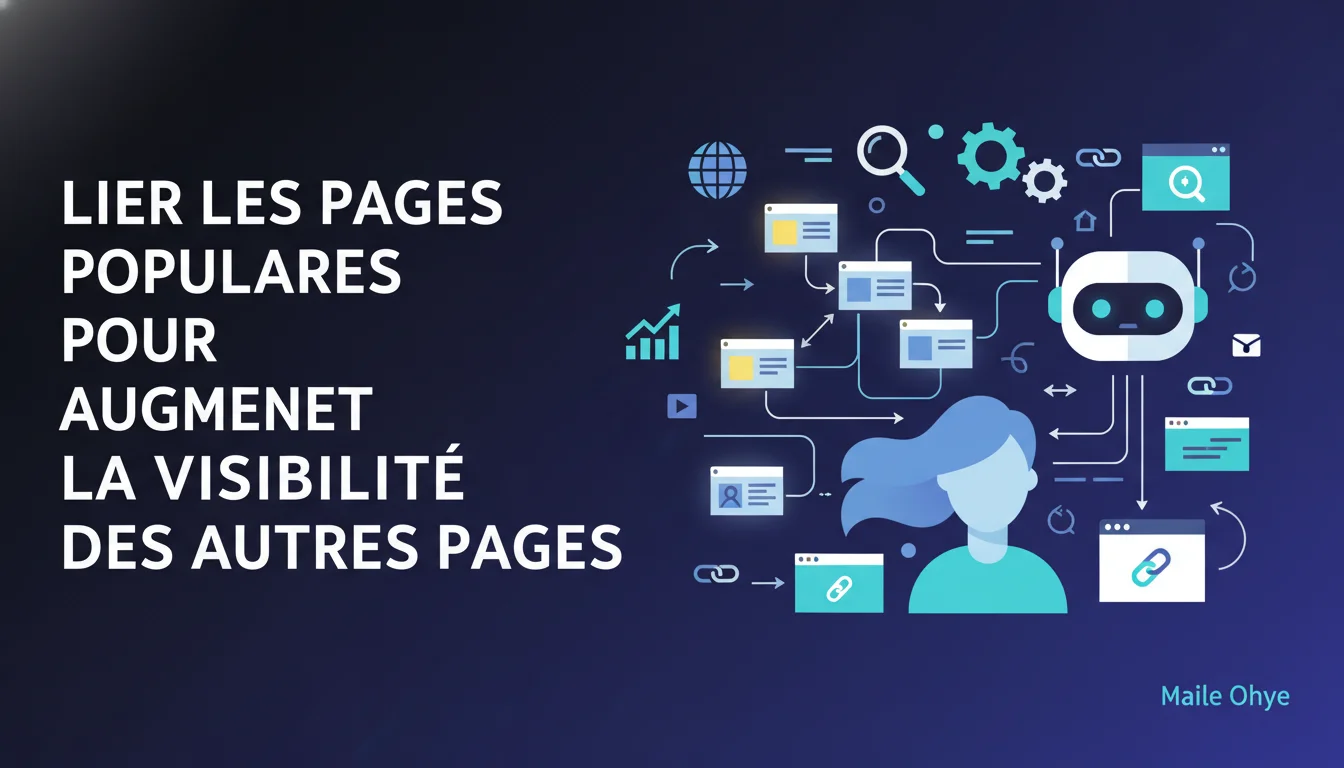
Google confirms that pages generating a lot of impressions in the SERPs can serve as a springboard to enhance the visibility of quality content that is underutilized. The strategy involves using <strong>strategic internal linking</strong> from these high-performing pages to less visible content. Essentially, this redistributes internal PageRank and creates relevant navigation paths for users and crawlers.
What you need to understand
What does Google mean by pages with numerous impressions?
A page generates impressions each time it appears in the search results, whether clicked or not. These star pages capture significant search volume, appear regularly in the SERPs, and thus possess established organic visibility.
Google Search Console allows you to accurately identify these pages via the Performance report, filtered by impressions. These are usually your contents ranked on the first page for queries with medium or high volume, even if the click-through rate is not optimal.
Why is linking from these pages particularly effective?
Internal PageRank flows differently depending on the popularity of the source pages. A page receiving a lot of traffic and engagement signals transfers more SEO juice than an isolated or rarely visited page.
By placing internal links from your high-performing pages, you create crawl highways to content that would otherwise remain buried in the architecture. Crawlers follow these priority paths and reassess the relevance of the linked pages.
How does this approach enhance user experience?
Beyond the pure SEO benefit, strategically linking your content addresses a logic of contextual navigation. Users reading a high-performing article often seek to deepen their understanding of the topic or explore related themes.
By providing relevant links to complementary content, you increase the time spent on the site, reduce the bounce rate, and create coherent reading paths. Google values these positive behavioral signals.
- Identify your high-impression pages via Search Console (Performance filter > Impressions)
- Prefer contextual links in the body of the content rather than in the sidebar
- Ensure the linked target pages are indeed high quality and deserve this visibility
- Use descriptive anchors that clearly indicate the benefit of the click
- Check that the linked content is technically crawlable and indexable
SEO Expert opinion
Is this recommendation aligned with real-world observations?
Absolutely. Tests conducted on editorial and e-commerce sites confirm that a strategic linking from high-traffic pages produces measurable results within 4 to 8 weeks. Typically, an increase in impressions of 15 to 40% is observed on target pages, depending on thematic relevance and semantic proximity.
What works particularly well is linking from evergreen content that generates recurring traffic. These stable pages continuously transmit a trust signal, unlike content that has spikes in traffic only occasionally.
What are the limitations and pitfalls to avoid?
The main risk is turning your high-performing pages into link farms. If you overload content with 10-15 non-contextual internal links, you dilute the transmitted PageRank and degrade the user experience. Google may interpret this as over-optimization.
Another classic pitfall is linking to low-quality pages simply because they have little visibility. [To be verified] Google's statement implies that target content is of high quality, but how to objectively define this criterion remains unclear. If a page is invisible because it is poor, internal linking will not change that sustainably.
What is the best frequency for updating internal links?
Unlike external backlinks that you cannot control, internal linking can and should evolve with your content strategy. A common mistake is to consider internal links as static once the site is published.
A good practice is to audit your star pages quarterly via Search Console, identify new linking opportunities, and remove links to content that did not perform despite the boost. This iterative approach maximizes the ROI of internal linking.
Practical impact and recommendations
How can you precisely identify pages suitable for linking?
Log into Google Search Console, go to the Performance section, and sort your pages by the number of impressions over the last 3 months. Export the 20-30 pages that generated the most impressions, regardless of the click-through rate. These are your priority candidates.
Cross-reference this data with your analytics tool to identify which pages generate high engagement time and a low bounce rate. These behavioral metrics confirm that the audience finds the content relevant and will be receptive to complementary reading suggestions.
What criteria should be used to choose content to boost?
Target pages that rank between positions 11 and 30 for significant volume queries. These contents have demonstrated thematic relevance in Google's eyes but lack signals to cross the threshold of the first page.
Ensure strong semantic coherence between the source page and the target page. An article on organic gardening techniques can logically point to a composting guide but not towards a product page for electric tools without contextual transition.
What link architecture should be prioritized to maximize impact?
Integrate 2 to 4 contextual links per high-performing page, placed naturally in the body of the content and not in the footer or sidebar. Use descriptive anchors that contain the main keyword of the target page without being exactly identical to the title.
Favor a thematic silo structure: your star pages should point to other content within the same semantic cluster, thereby creating relevance clusters that Google values. Avoid random cross-links that disrupt topical coherence.
- Audit your 30 most viewed pages in Search Console impressions
- Identify 3-5 quality contents per star page that would deserve more visibility
- Check the semantic proximity between source and target pages (tools: Semrush Topic Research, Ahrefs)
- Write natural contextual transitions to introduce each internal link
- Use varied descriptive anchors (avoid keyword stuffing)
- Measure the evolution of impressions and rankings over 8 weeks post-deployment
❓ Frequently Asked Questions
Combien de liens internes maximum peut-on placer depuis une page performante sans pénalité ?
Les liens en sidebar ou footer ont-ils le même impact que les liens contextuels ?
Faut-il privilégier les pages à fort trafic ou à fort taux de conversion pour le linking ?
Cette stratégie fonctionne-t-elle aussi pour les sites e-commerce avec des fiches produits ?
Combien de temps faut-il pour observer un impact mesurable sur les positions ?
🎥 From the same video 10
Other SEO insights extracted from this same Google Search Central video · duration 12 min · published on 20/02/2013
🎥 Watch the full video on YouTube →
💬 Comments (0)
Be the first to comment.