
Official statement
What you need to understand
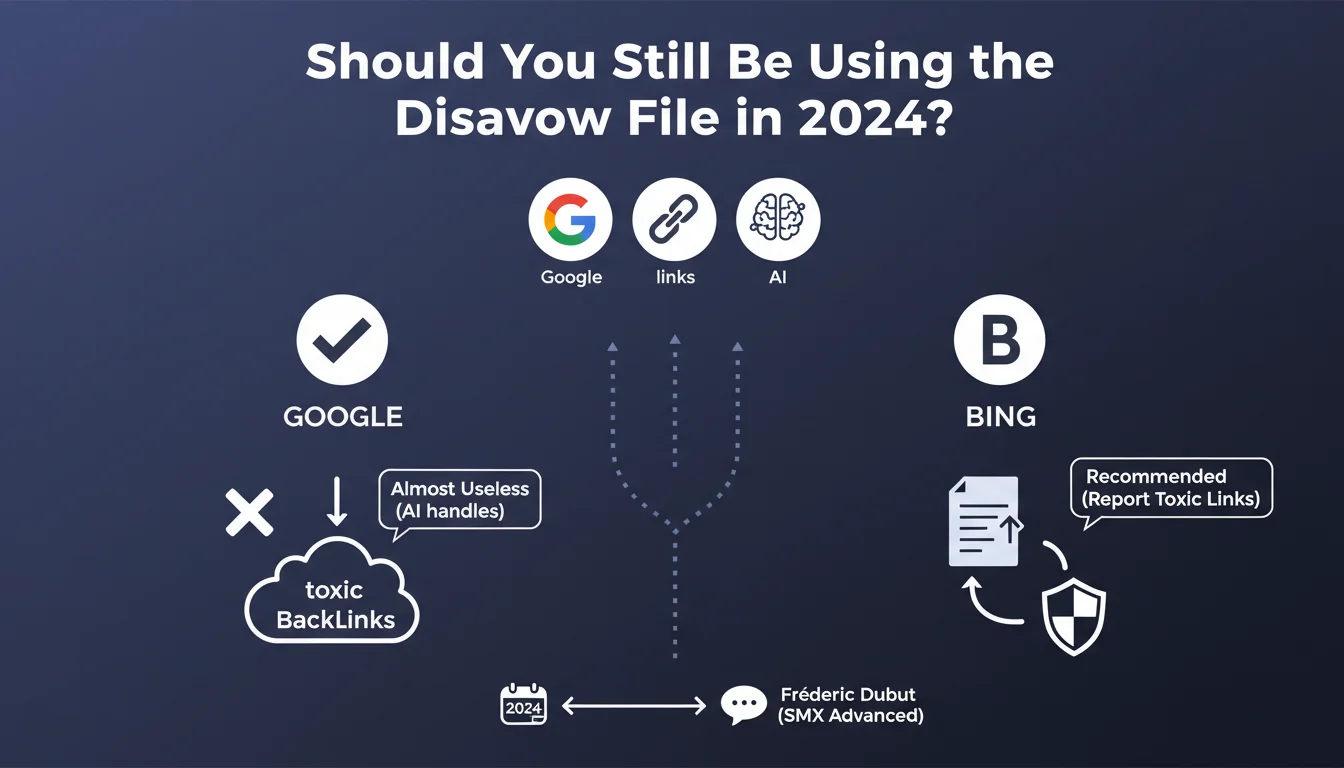
The disavow file allows webmasters to report incoming links considered toxic or unnatural to search engines. This statement reveals a major divergence between the two main search engines.
At Google, the usefulness of the disavow file has been progressively minimized over the years. The search engine claims to be capable of automatically identifying and ignoring poor-quality links, making manual intervention almost useless in the majority of cases.
In contrast, Bing actively maintains its disavow system since 2012 and still encourages its use. This difference in approach is explained by less sophisticated algorithms for detecting toxic links or a different philosophy in handling negative signals.
- Google considers the disavow file largely obsolete
- Bing actively recommends its use to report toxic links
- Both engines have different algorithmic approaches to handling questionable backlinks
- The disavow file remains available on both platforms despite these differences
SEO Expert opinion
This statement perfectly reflects what I've been observing for several years. At Google, I now only recommend the disavow file in very specific cases: documented manual penalties, massive and recent negative SEO attacks, or pre-acquisition audits to legally secure a site purchase.
For Bing, the situation is different. The search engine represents approximately 3 to 8% of traffic depending on sectors, but this share can be significant in certain B2B niches or demographics. If you identify a genuinely problematic link profile, disavowing on Bing remains a relevant practice.
The real question isn't "should I disavow" but "which links truly deserve disavowal". A weak or irrelevant link isn't necessarily toxic. Focus on clearly manipulative links: identifiable link networks, massive over-optimized anchors, penalized sites, or characterized spam.
Practical impact and recommendations
- For Google: Only use the disavow file in case of confirmed manual penalty or documented negative SEO attack
- For Bing: Maintain an updated disavow file if you actively target this search engine and identify clearly toxic links
- Always prioritize direct removal of problematic links by contacting webmasters rather than disavowal
- Conduct a quarterly backlink audit to identify new suspicious links, particularly if you're in a competitive sector
- Document each disavow decision with the precise reason: this will prevent you from disavowing legitimate links by mistake
- Never disavow preemptively or "just in case": the negative impact can outweigh the supposed benefit
- Use backlink analysis tools to assess real toxicity before disavowing, without blindly trusting automatic scores
- If your site has a history of aggressive link building, focus on dilution through acquiring quality links rather than massive disavowal
💬 Comments (0)
Be the first to comment.