
Official statement
Other statements from this video 3 ▾
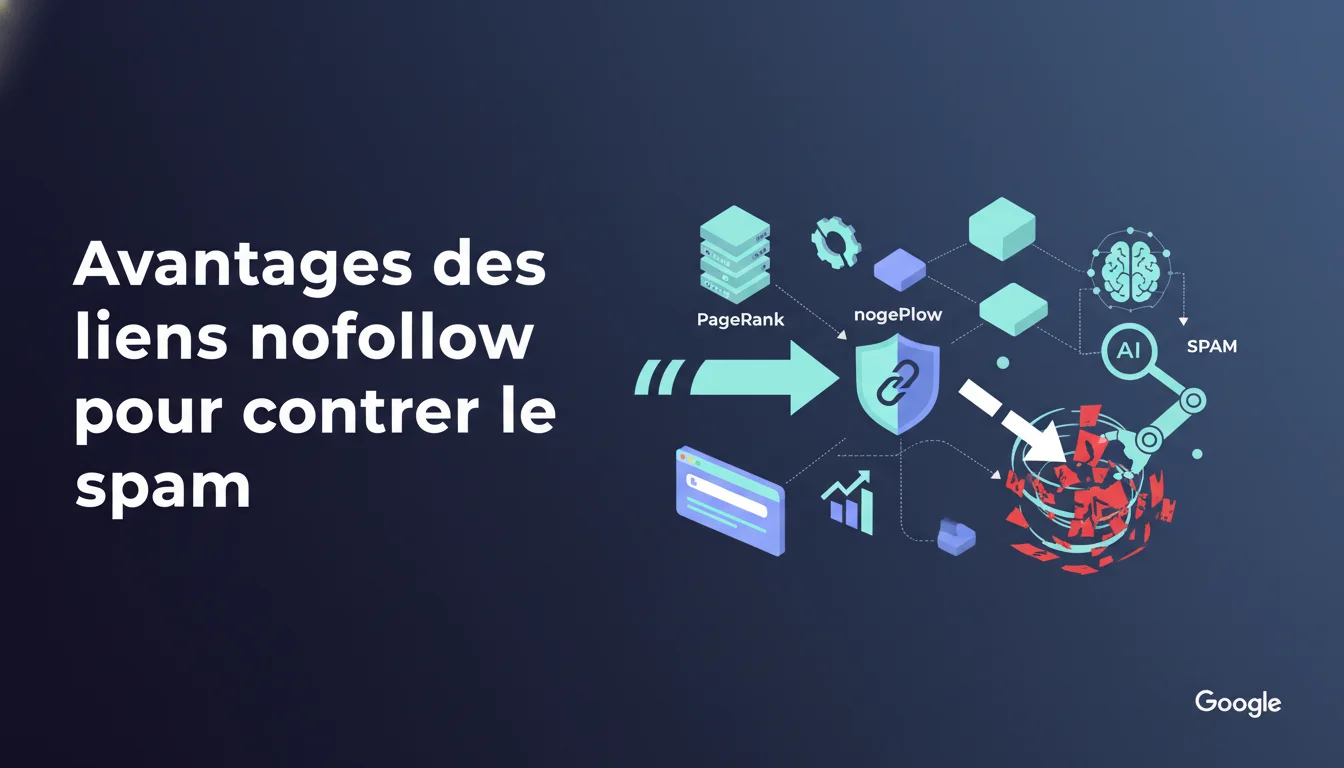
Google claims that the widespread use of nofollow, especially on Wikipedia, limits the transmission of PageRank and therefore discourages link spam. For an SEO professional, this confirms that placing links on platforms that systematically apply nofollow yields no juice. The nuance: Google now treats nofollow as a hint rather than a strict directive, complicating the situation.
What you need to understand
Why Does Google Promote the Nofollow Attribute as an Anti-Spam Weapon?
The nofollow attribute was introduced to allow webmasters to signal to Google that a link should not pass PageRank. The initial idea was to discourage spammers who flooded forums, comments, and wikis with links to artificially inflate their authority.
Wikipedia perfectly illustrates this strategy. All external links there are nofollow by default, making it an unattractive target for spammers. If placing a link doesn't yield any SEO juice, why bother? This is the logic defended by Google: cut the economic incentive for spam.
What is the Real Significance of This Statement for Practitioners?
For an SEO, the message is clear: platforms that apply widespread nofollow do not contribute to building a link profile. Forums, social media, strict UGC sites… these environments offer nothing in terms of authority transfer.
But be careful, Google introduced a major nuance: since March 2020, nofollow is treated as a hint rather than an absolute directive. In practice, Google can decide to follow a nofollow link if it deems it relevant. This flexibility changes the game: a contextual and natural nofollow link can theoretically count, even if that's far from systematic.
Is Nofollow Really Sufficient to Combat Spam?
No, not by itself. Google combines multiple signals: algorithmic detection of suspicious link patterns, manual penalties, quality analysis of source sites. The nofollow attribute is just one filter among others.
Moreover, spammers have evolved. They now target less monitored sites, sometimes without nofollow, or use PBN (Private Blog Networks) with dofollow. Nofollow discourages amateurs, not structured players investing in controlled site networks.
- Nofollow blocks PageRank but Google can interpret it as a hint since March 2020
- Wikipedia and large UGC platforms use nofollow to protect themselves from massive spam
- Spam adapts: PBNs, paid guest posting, and less monitored sites remain active vectors
- A contextual nofollow link can have an indirect impact (traffic, notability) even without direct SEO juice
- Google's algorithmic detection goes far beyond just the nofollow attribute
SEO Expert opinion
Is This Statement Consistent with What We Observe in the Field?
Yes and no. Historically, nofollow effectively blocks PageRank and makes platforms like Wikipedia less attractive to hardcore spammers. Spam-infested forums have largely disappeared thanks to this measure combined with better moderation and automated detections.
But the reality of SEO spam has mutated. Sophisticated players no longer target blog comments or forum profiles. They invest in controlled site networks, paid guest posting on legitimate blogs, or triangular link exchanges. Nofollow does not affect these practices, which remain lucrative as long as they evade algorithmic detection.
What Nuances Should We Consider Regarding This Claim?
Google presents nofollow as an effective solution, but that's a partial view. [To Verify]: the real efficacy of nofollow depends entirely on Google's ability to detect other forms of spam. If the algorithms are fallible, nofollow becomes a band-aid on a larger leak.
Second nuance: since nofollow has become a hint rather than a directive, Google allows itself to override it in some cases. This means a well-contextualized nofollow link, on a quality page with a relevant anchor, could theoretically count. But how often does Google make that choice? No public data clarifies this, leaving room for all interpretations.
In What Cases Does This Rule Not Fully Apply?
Nofollow does not protect against negative SEO. A competitor can point thousands of toxic links at your site, even if they're nofollow, creating a suspicious profile. Google claims to ignore these links, but in practice, a massive influx can trigger alerts and require a manual disavow.
Another case: authority sites that inconsistently mix dofollow and nofollow. A news site that mistakenly or due to editorial policy places certain links as nofollow can create opportunities for SEOs who know how to identify these flaws. Nofollow is effective only when applied consistently and intelligently.
Practical impact and recommendations
What Should You Do with Nofollow Links?
Stop chasing links on platforms that systematically use nofollow. Wikipedia, Reddit, moderated forums: these environments provide no direct SEO juice. Focus your efforts on sites that pass real PageRank, with contextual dofollow links.
That said, a nofollow link remains useful for notability and referral traffic. A well-placed link on a Wikipedia article viewed thousands of times per month can generate qualified visits. Don’t completely neglect these opportunities, but don’t count them in your pure linking strategy either.
What Mistakes Should Be Avoided in Using Nofollow?
First mistake: nofollow all external links by default on your site. Google has explicitly stated that this practice is counterproductive and can harm your ranking. Reserve nofollow for sponsored links, unmoderated UGC, or content you do not want to endorse.
Second mistake: believing that a nofollow link automatically protects you from penalties. If you sell links or participate in a manipulative link scheme, just adding nofollow isn’t enough. Google can detect the overall context and penalize despite the attribute. Nofollow is not an invisibility cloak.
How to Audit the Use of Nofollow on Your Site?
Use Screaming Frog or Ahrefs to list all outgoing links and their attributes. Identify dofollow links to low-quality sites or unreported business partners: these should be changed to sponsored or nofollow.
Also check that your internal links are not erroneously set as nofollow. Some poorly configured CMS or plugins can incorrectly apply the attribute, which blocks internal PageRank flow and harms your linking structure. A semi-annual audit is usually sufficient to correct these issues.
- Do not target nofollow systematic platforms for pure linking
- Reserve nofollow for UGC content, sponsored links, or unaffiliated sources
- Regularly audit your outgoing links to avoid configuration errors
- Never set your internal links as nofollow unless in very specific cases
- Use sponsored for paid links rather than nofollow alone
- Do not neglect nofollow links for traffic and notoriety, even without SEO juice
❓ Frequently Asked Questions
Un lien nofollow a-t-il encore une valeur SEO ?
Faut-il mettre tous les liens externes en nofollow pour protéger son site ?
Le nofollow protège-t-il d'une pénalité si je vends des liens ?
Pourquoi Wikipedia met-il tous ses liens en nofollow ?
Les liens nofollow comptent-ils dans un audit de backlinks ?
🎥 From the same video 3
Other SEO insights extracted from this same Google Search Central video · duration 2 min · published on 24/02/2011
🎥 Watch the full video on YouTube →
💬 Comments (0)
Be the first to comment.