
Official statement
What you need to understand
When Does Google Recommend Conducting a Backlink Audit?
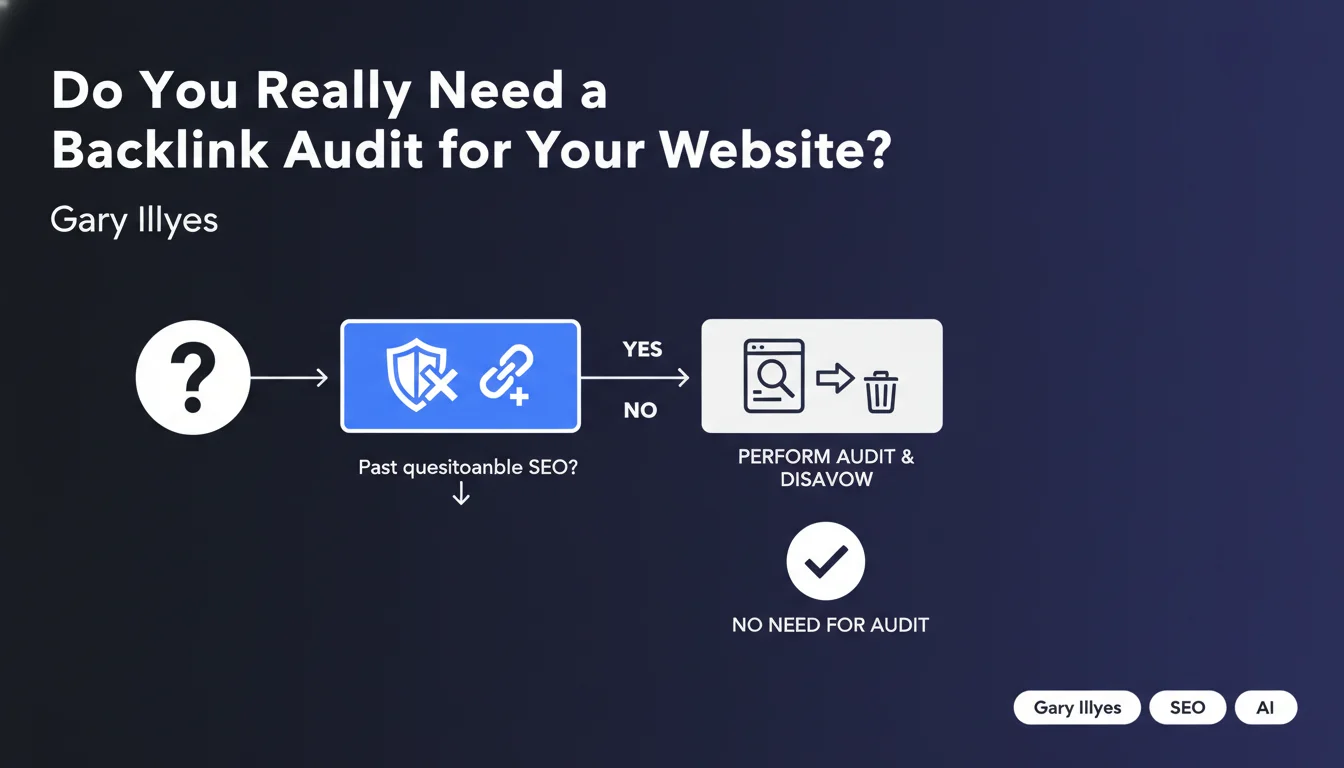
According to Google's Gary Illyes, a backlink audit would only be necessary in one specific case: when a site has been the victim of dubious SEO practices in the past. This statement suggests that Google considers its filters robust enough to automatically ignore poor-quality links.
This official position aims to reassure webmasters that Google does not systematically penalize a site for a few toxic backlinks. The search engine claims it can distinguish natural links from artificial links without manual intervention.
What Does This Position Actually Mean for SEO Professionals?
Google wants to reduce the paranoia surrounding negative link building and prevent webmasters from spending too much time disavowing links. The disavow tool remains available, but its use should be limited to extreme cases.
This approach implies that for a "clean" site with no spam history, backlink audits would be nothing more than a waste of time and money according to Google's perspective.
- Official position: backlink audits are useless except after black hat SEO practices
- Google's philosophy: the search engine automatically ignores bad links
- Disavow tool: to be reserved exclusively for confirmed manual penalties
- Key message: don't worry excessively about a few questionable backlinks
Why Does This Statement Seem Overly Simplistic?
The editorial comment raises a legitimate objection: a backlink audit doesn't only serve to identify toxic links. It provides a comprehensive view of your link profile at a specific point in time.
This analysis can reveal opportunities for improvement, identify link sources to develop, or measure the effectiveness of a link building strategy. Google's position ignores these strategic dimensions.
SEO Expert opinion
Is This Statement Consistent with Real-World Experience?
With 15 years of experience, I observe a disconnect between the official discourse and SEO practitioners' observations. If Google perfectly ignored all bad links, we wouldn't see sites losing rankings after acquiring low-quality backlinks.
The reality is more nuanced: Google is constantly improving in detecting artificial links, but its system isn't infallible. Some toxic links can still negatively impact a site, especially in competitive niches.
What Are the Real Benefits of a Backlink Audit?
Reducing a backlink audit to merely hunting for toxic links is an extremely limited vision. A comprehensive audit helps identify over-optimized anchors, detect unnatural patterns, and evaluate the diversity of link sources.
It also reveals untapped opportunities: lost links to reclaim, unlinked brand mentions, competitor strategies to analyze. It's a strategic management tool, not just a defensive mechanism.
In Which Situations Does an Audit Remain Essential?
Beyond cases of confirmed penalties, several situations fully justify an audit: before purchasing an existing domain name, after a migration, during unexplained traffic drops, or to optimize a growth strategy.
For e-commerce sites and major platforms, an annual audit helps maintain a healthy link profile and detect potential issues early. It's a proactive approach, not just reactive.
Practical impact and recommendations
What Should You Actually Do About Your Link Building?
Rather than blindly following Google's minimalist recommendation, adopt a balanced approach. Conduct a backlink audit at least once a year for established sites, and systematically during major events (migration, redesign, traffic drop).
Focus on proactively building quality links rather than being paranoid about toxic links. A natural and diversified profile will better withstand algorithmic fluctuations.
How Can You Assess Whether Your Link Profile Requires Intervention?
Use tools like Google Search Console, Ahrefs, or Majestic to analyze your backlinks monthly. Monitor key indicators: dofollow/nofollow ratio, referring domain diversity, anchor quality.
If you notice a sudden increase in suspicious links, over-optimized commercial anchors exceeding 10%, or links from identified networks, it's time to deepen your analysis.
- Conduct a comprehensive backlink audit at least once a year
- Monitor new backlinks monthly via Search Console
- Analyze competitors' link profiles to identify opportunities
- Document the evolution of your link profile over time
- Disavow only in cases of confirmed manual penalty or massive spam
- Prioritize creating natural, high-quality editorial links
- Verify the diversity of referring domains and link types
- Identify unlinked brand mentions to reclaim links
What Mistakes Should You Avoid in Your Link Building Strategy?
Don't fall into the opposite extreme: completely ignoring your link profile is no wiser than obsessing over it. The main mistake would be neglecting the strategic opportunities revealed by a well-executed audit.
Also avoid mass disavowing links as a precaution: this action can be counterproductive if it eliminates links that, although modest, contribute positively to your authority.
💬 Comments (0)
Be the first to comment.