
Official statement
What you need to understand
Why does this question keep coming up among SEO professionals?
Many SEO practitioners manage multiple websites and wonder about the impact of their Google configuration. The main concern relates to digital footprints: could Google detect a network of sites through Analytics and Search Console accounts?
This concern is particularly present among those managing sites in competing niches or using distributed content strategies. The idea that a single Google identifier could link all these sites is legitimately worrying.
What is Google's official position on this matter?
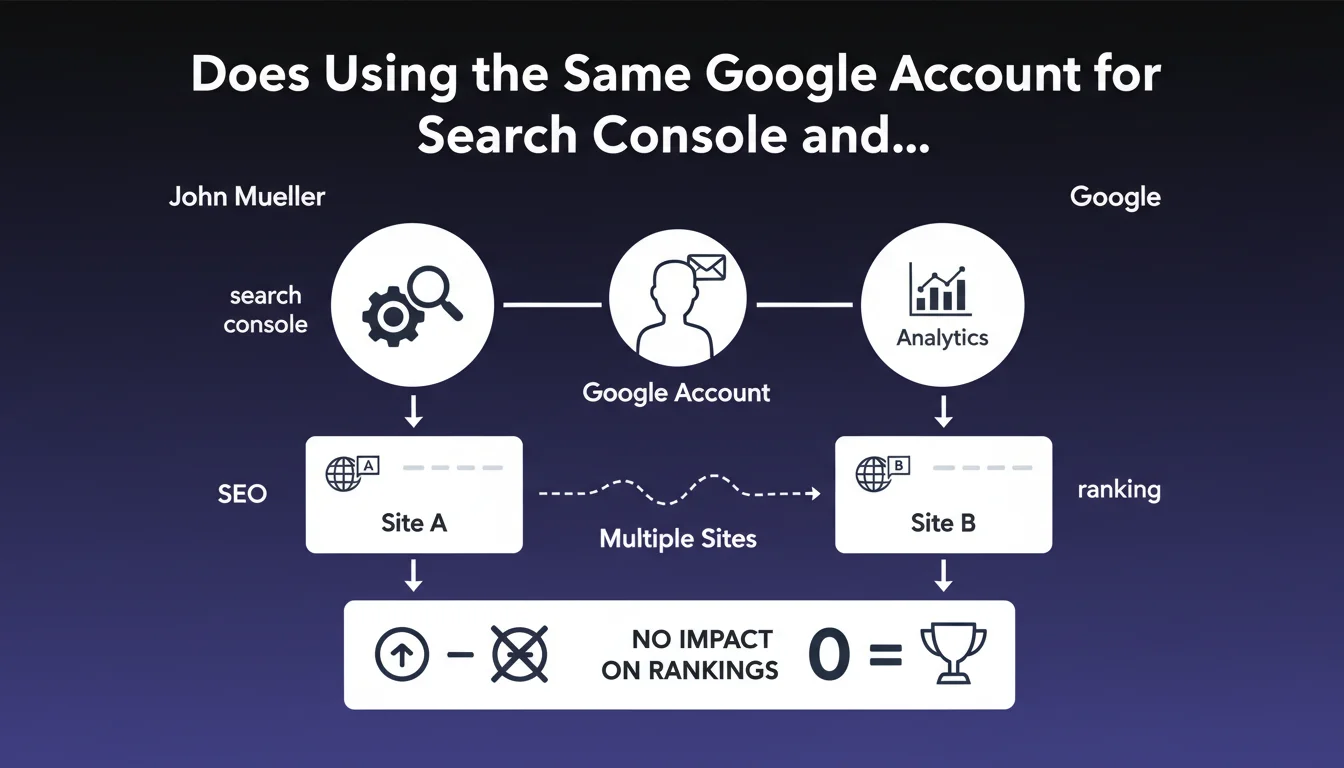
Google clearly states that using the same Google account to manage Search Console and Analytics across multiple sites has no impact on rankings. Neither positive nor negative.
This statement means that login and webmaster tool management data are completely isolated from ranking algorithms. Google separates operational systems from relevance analysis systems.
What are the key takeaways from this clarification?
- Google Analytics and Search Console accounts are not ranking signals
- Managing multiple sites with the same Google identifier is a completely legitimate practice
- The fear of digital footprints through these tools is unfounded from an SEO perspective
- Google clearly distinguishes measurement tools from ranking criteria
- This neutrality applies whether you manage 2 sites or 200 sites with the same account
SEO Expert opinion
Is this statement consistent with real-world observations?
After 15 years of experience, this position is perfectly consistent with what we observe. Sites using a single Google account show no performance variations related to this configuration.
SEO agencies managing hundreds of client sites often use centralized accounts without experiencing penalties. If this practice were problematic, the entire SEO industry would have identified this pattern long ago.
What important nuances should be added to this statement?
The neutrality of Google accounts doesn't mean that all configurations are equivalent. If your sites share the same technical infrastructure, same servers, or similar content, Google can link them through other means.
The real problematic footprints concern technical signatures: same IP addresses, same link patterns, duplicate content, or identical structures. These are the elements that can reveal a site network, not Google identifiers.
In what cases might this configuration raise questions?
Although without direct SEO impact, using a single account can pose organizational problems. In case of a dispute with a client or sale of a site, access management becomes complex.
From a security and privacy perspective, a compromised account gives access to all data. For governance reasons, some companies prefer to isolate properties even if SEO isn't at stake.
Practical impact and recommendations
What should you actually do for your sites?
You can organize your accounts according to your operational needs without fearing SEO impact. The priority should be ease of management and security, not a non-existent SEO optimization.
For agencies, using a main account with delegated rights to clients remains best practice. This facilitates the transition when the client takes control of their properties.
What mistakes should you avoid in managing your Google tools?
The main mistake would be to unnecessarily multiply accounts thinking you're protecting your SEO. This fragmentation complicates management without providing any ranking benefits.
Also avoid neglecting access documentation. A poorly documented single account can create continuity problems if the primary manager leaves the organization.
How can you optimize your configuration for performance and security?
- Use the configuration that simplifies your daily workflow without worrying about SEO
- Enable two-factor authentication on all Google accounts managing properties
- Clearly document the owners and administrators of each Search Console property
- Configure email alerts to be notified of detected technical issues
- Use appropriate permission levels (owner, administrator, user) according to needs
- Plan quarterly audits of access to remove inactive users
- Always maintain at least two owners per property to avoid lockouts
In summary: Managing your Google Analytics and Search Console accounts is a matter of operational organization, not SEO optimization. Focus on content quality, technical architecture, and link strategy.
This clarification allows you to simplify your processes and reduce management costs. However, overall SEO optimization remains a complex field requiring in-depth expertise across many technical and strategic aspects. For companies managing multiple web properties with significant business stakes, working with a specialized SEO agency provides personalized support that goes well beyond simple tool configuration, integrating a strategic vision tailored to your specific objectives.
💬 Comments (0)
Be the first to comment.